








South African motorists are being warned that speeding fines are unlikely to “fall away” simply because the national AARTO rollout remains uncertain. While government has postponed the broader implementation of the Administrative Adjudication of Road Traffic Offences system to 1 July 2026, traffic enforcement continues through existing laws and through increasingly connected national and municipal systems.
The warning comes amid growing public confusion about what happens to unpaid fines during AARTO delays. Industry voices tracking fines and road traffic compliance say the bigger shift is not AARTO itself, but the rapid modernisation of enforcement methods, including wider use of speed cameras, average-speed monitoring, and digital platforms that allow officers to check a driver’s compliance history in real time.
AARTO has been postponed, and the timeline is under pressure
The Department of Transport confirmed in a public statement that AARTO implementation, previously scheduled to begin on 1 December 2025, was deferred to 1 July 2026 after an assessment found readiness gaps in municipalities earmarked for the first phase. The department cited unfinished training and the need to harmonise law enforcement systems across municipalities.
Parliament’s Portfolio Committee on Transport has also publicly noted the suspension, calling for outstanding readiness issues to be addressed so the system can be implemented in a way that is punitive but fair.
Even with a new date on the table, media reporting in February indicated that the Road Traffic Infringement Agency is seeking private sector capacity through a “turnkey” tender linked to AARTO’s core supporting systems. That reporting has raised fresh questions about whether further delays could follow and whether a private operator model could create problematic incentives.
The result is a public gap: many drivers are unsure which rules apply, when enforcement becomes stricter, and whether old fines will still be pursued.
The key message: enforcement is tightening outside AARTO
The central warning from compliance and fines platforms is that motorists should not assume offences will be lost in administrative confusion.
Business reporting this week highlighted that several authorities are continuing to develop enforcement systems outside AARTO, meaning that infringements can still be detected, logged, and escalated through existing processes. The same reporting emphasised that technology is changing what happens at roadblocks and roadside stops, where officers can increasingly access information beyond what they can see on the vehicle.
Engineering News carried similar warnings, citing growing use of speed cameras, average-speed monitoring systems, and digitally integrated enforcement platforms that record and track traffic offences more consistently than in the past.
In plain terms, the risk for motorists is shifting from “a fine that might never arrive” to “a fine that appears later, and then surfaces at the worst possible moment”, such as during a roadblock, licence renewal, or a routine traffic stop.
What is changing at roadblocks
A common misconception is that roadblocks are only about visible offences such as an unroadworthy vehicle, no seatbelt, or a driver who appears intoxicated. While those checks remain central, legal and compliance guidance shows that roadblocks and roadside checks also allow officers to request specific documents and verify compliance more broadly.
Road safety and legal guidance published by Arrive Alive explains that roadblocks are regulated under section 13(8) of the South African Police Service Act and that written authorisation is required in most cases, including details such as the place, duration, and objective of the roadblock. It also explains that roadside checks are treated differently, and that traffic officers can require a driver to stop under the National Road Traffic Act.
Importantly for ordinary motorists, the same guidance lists the documents traffic officers can require a driver to produce under road traffic and transport legislation. These include a driver’s licence and a vehicle licence disc, among other items required for specific operations such as professional driving permits and operator cards.
This is where digital systems matter. Once an officer verifies identity and vehicle information, connected systems can reveal additional compliance issues, including expired documentation and outstanding enforcement actions, depending on what databases are available to the authority on the day.
Speed cameras and average-speed monitoring are increasing the likelihood of detection
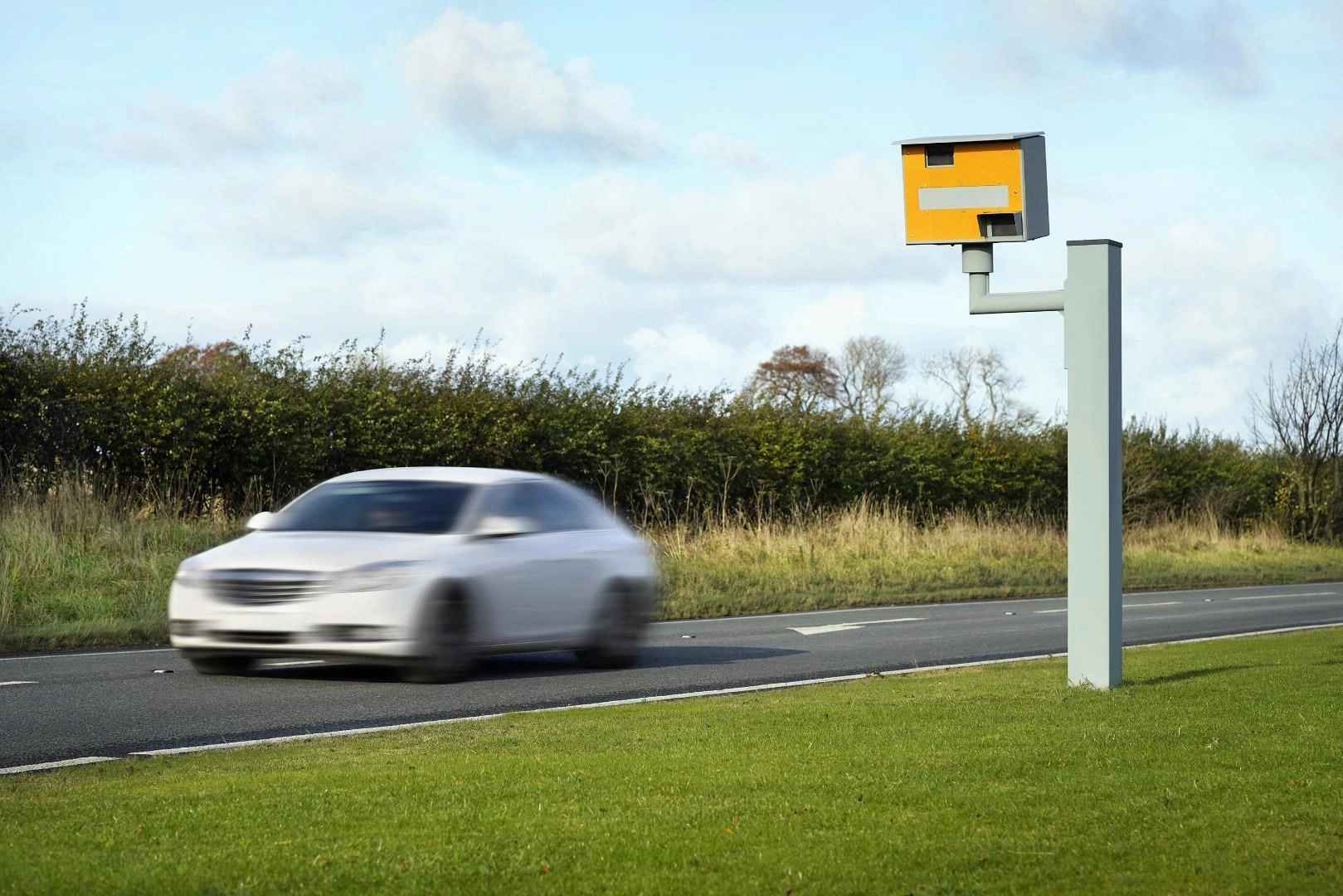
While traditional roadside enforcement still plays a role, automated enforcement has become a larger part of traffic policing, particularly on major corridors where speed cameras and average-speed monitoring can identify repeat speeding patterns.
Compliance platforms and transport commentators have pointed to a steady rise in automated detection, which reduces the chance that speeding goes unnoticed. Average-speed monitoring is especially significant because it targets sustained speeding over a measured distance rather than only momentary speed at a single point.
The practical implication is that “slowing down for the camera” provides less protection where average-speed systems are used, because the measured behaviour is the entire stretch, not only the camera location.
Why late fine notifications remain a major problem
Even where enforcement is improving, late notifications remain a widespread complaint across multiple provinces. Drivers often report learning about fines only after early payment windows have expired.
Business reporting on the latest warning acknowledged the issue, noting that delays in notification can mean motorists only become aware of infringements once discounts or early settlement periods are no longer available.
This is a key part of the risk profile for motorists: the longer a driver goes without checking, the more likely it becomes that an infringement escalates to a higher-cost stage, or becomes an administrative problem during a roadblock, licence disc renewal, or vehicle sale.
What drivers can do to reduce risk
The warning being issued is not only about speeding. It is about basic compliance readiness as systems become more connected.
Practical steps that can reduce disruption include:
1) Keep core documents current
Ensure the driver’s licence is valid and carried when driving. Ensure the vehicle licence disc is current and displayed as required.
2) Treat fines as a compliance item, not an occasional surprise
Where possible, check for outstanding fines periodically through official channels or recognised municipal systems, particularly if the vehicle travels regularly through camera-heavy corridors.
3) Pay attention to the source of fine notifications
South Africa has experienced repeated waves of fake fine scams, particularly through SMS and WhatsApp. Drivers should verify any fine notice through an official portal or a confirmed reference number before making payment.
4) Recordkeeping matters
Keep proof of payments and correspondence, especially where disputes arise about service, late notification, or duplicated notices.
5) Understand the difference between arguing at the roadside and resolving a matter properly
Roadside disputes rarely help. Enforcement is increasingly driven by records and systems. Where a motorist believes a notice is incorrect, the correct route is usually a formal dispute or representation process, not an argument at a checkpoint.
Why this matters for public safety and for household budgets
Speeding remains a major contributor to serious crashes in South Africa, and government has repeatedly framed road enforcement as a safety issue, not only revenue collection. At the same time, households are under pressure and transport costs are rising, which makes fines and administrative penalties more financially damaging.
The current warning lands in that tension. On one side is the public safety case for tighter enforcement. On the other is a compliance environment that can become costly and stressful when notifications are late or systems are unclear.
As AARTO remains delayed, the more immediate reality for motorists is that enforcement technology is moving ahead anyway. Drivers who treat the delay as a pause in accountability may find the opposite. Offences can still be detected, recorded, and later brought back into view through connected systems.
What happens next
In the short term, the Department of Transport’s 1 July 2026 target remains the official date for the deferred AARTO implementation, while Parliament continues to monitor readiness and road safety outcomes.
In the medium term, scrutiny is likely to increase around how the Road Traffic Infringement Agency delivers its systems and whether new procurement decisions affect timelines.
For motorists, the takeaway is simpler. Speeding fines are not expected to disappear, and the technology used to detect and surface outstanding infringements is becoming harder to ignore.