


South Africa’s government has called for urgent diplomatic efforts to de-escalate the rapidly worsening Middle East situation, warning that the escalation carries wide humanitarian, diplomatic and economic consequences. The call came as airspace closures in parts of the Gulf region began disrupting flights linked to South Africa’s main international gateways.
Airports Company South Africa has confirmed that the closure of United Arab Emirates airspace has already affected flights operated by Emirates and Qatar Airways, with cancellations recorded at O.R. Tambo International, Cape Town International and King Shaka International Airport. The disruptions followed reports of military strikes and retaliation across the region, which triggered emergency aviation restrictions and heightened security warnings.
South Africa’s official position: diplomacy and international law
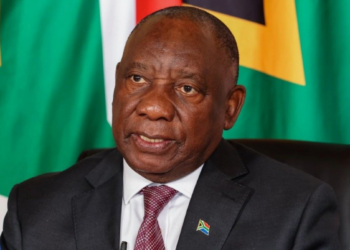
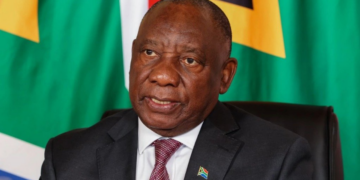
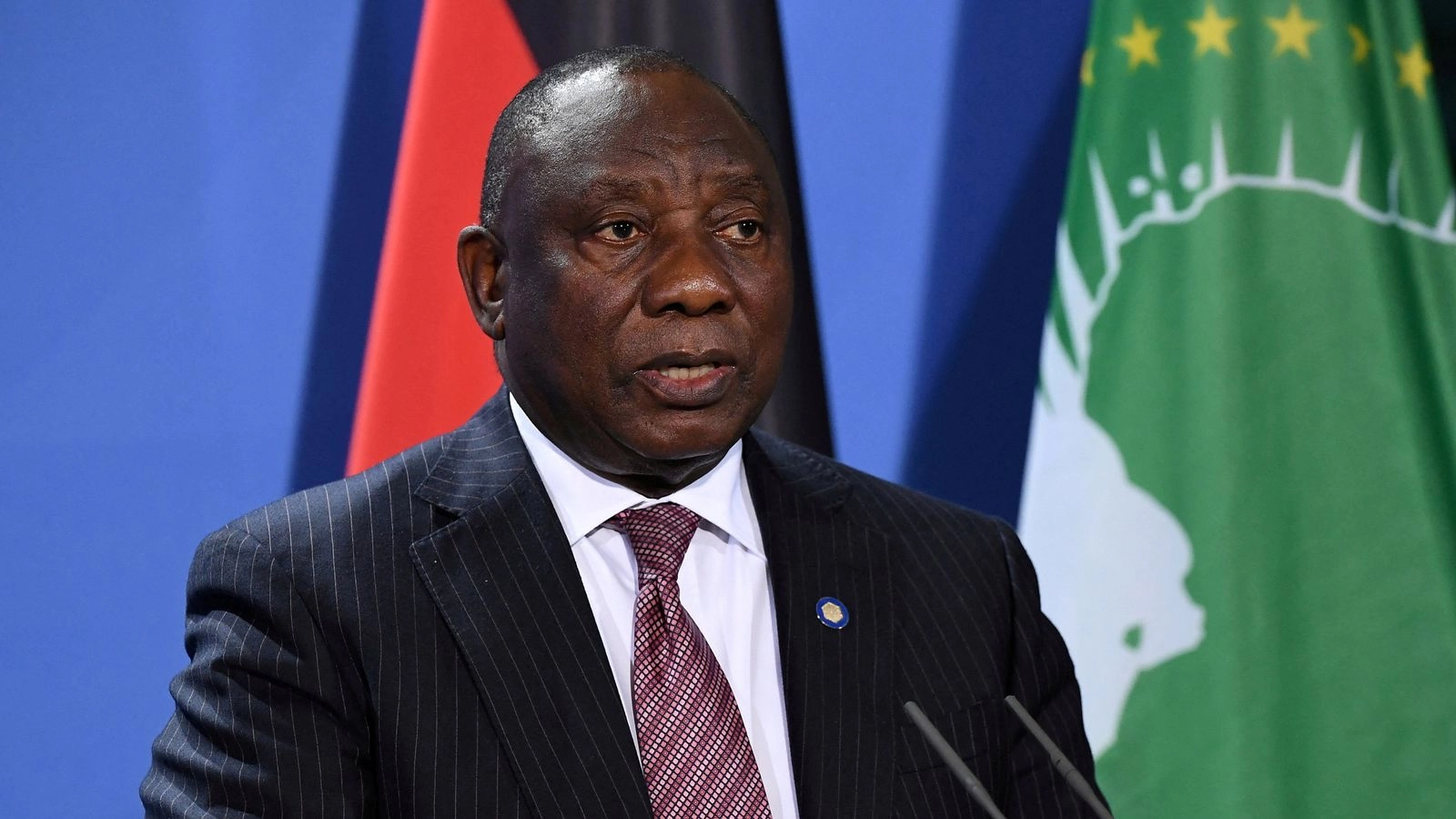
In an official statement issued from Pretoria, President Cyril Ramaphosa urged “maximum restraint” by all parties and called for conduct consistent with international law, international humanitarian law and the principles of the United Nations Charter.
The statement placed specific emphasis on Article 51 of the UN Charter, which addresses self-defence. It stressed that self-defence applies when a state has been subjected to an armed invasion and warned that anticipatory self-defence is not permitted under international law.
The Presidency framed the crisis as fundamentally political and argued that military confrontation does not deliver sustainable peace. The statement said long-term stability can only be achieved through inclusive dialogue and a genuine commitment to justice and coexistence.
Ramaphosa urged the international community, multilateral institutions and regional partners to “redouble efforts” aimed at mediation and peaceful resolution. Government messaging also referenced South Africa’s own experience of conflict resolution through negotiation and reconciliation, positioning dialogue as the only credible path to de-escalation.
Political parties in South Africa condemn the strikes
The escalation has also prompted public reactions from major South African political parties, with messaging that reflects South Africa’s wider foreign policy debates and domestic political divisions.
eNCA reported that the ANC and the EFF condemned US and Israeli strikes on Iran, with the EFF describing the attacks as illegal, unjustified and provocative, and warning that they risk intensifying the conflict.
The same report carried comments from an ANC representative who said the party’s position is rooted in the Freedom Charter’s call for peace and friendship, and that it does not support attacks on the sovereignty of another state. The ANC comments also referenced non-alignment and suggested that government would articulate an official position through state channels.
These statements are politically significant because they show the Middle East conflict continuing to reverberate inside South Africa’s domestic political landscape, where foreign policy is frequently tied to questions of international law, sovereignty, and Pretoria’s relationships with major powers.
A separate voice: Iranian community statement published in South Africa
The escalation has also triggered statements from communities in South Africa with direct connections to the region.
A statement published by the SA Jewish Report and attributed to the Iranian community in South Africa condemned Iran’s leadership and called on the South African government to end what it described as political alignment with the Iranian regime. The statement argued that the regime does not represent the Iranian people and praised the United States and Israel for confronting what it described as tyranny.
This message differs sharply from the tone of South Africa’s official statement, which focused on restraint, international law and diplomacy. It illustrates how the conflict is producing contrasting responses within South Africa, including strong political language from parts of civil society and diaspora-linked communities.
Flight cancellations at South Africa’s key airports
While official statements have focused on diplomacy, South Africans have already begun feeling the crisis through travel disruptions.
Airports Company South Africa said it recorded the following cancellations linked to Middle East airspace closures:
- O.R. Tambo International Airport: eight cancellations, including seven outbound and one inbound
- Cape Town International Airport: four cancellations, all outbound
- King Shaka International Airport: two cancellations, all outbound
ACSA advised passengers to contact airlines or relevant embassies directly for schedule updates and said its priority remains traveller safety.
These cancellations matter because Emirates and Qatar Airways are major connectors between South Africa and long-haul routes into Europe, North America and Asia. When Gulf airspace restrictions tighten, disruption can spread quickly through missed connections, aircraft and crew displacement, and downstream cancellations across multiple days.
What travellers and businesses should expect next
Even if airspace closures are temporary, airline schedules often take time to normalise. A single day of disruption can lead to:
- aircraft positioned in the wrong city for subsequent rotations
- crew duty-time limits being exceeded, forcing additional delays
- reduced seat availability as passengers are rebooked onto later flights
- pressure on cargo capacity, especially where freight depends on passenger aircraft belly hold space
For businesses, the risk is not only travel disruption. Longer flight routings and reduced capacity can raise transport costs and complicate time-sensitive supply chains.
For travellers, the practical priority is to verify flight status before travelling to the airport, confirm rebooking rules for connecting itineraries, and keep essential medication and documentation in hand luggage.
How Pretoria is likely to manage the situation
South Africa’s government response is likely to continue along two parallel tracks.
The first is diplomatic messaging, anchored in international law and calls for de-escalation through multilateral channels. The Presidency statement makes clear that Pretoria wants intensified diplomatic efforts and continued negotiations rather than escalation.
The second is practical management of local effects, including travel disruption and consular support where needed. With flight cancellations now confirmed at major airports, travellers may also look for additional guidance from government agencies as the situation evolves.
What to watch in the coming days
Three developments will likely shape the South African impact:
- Whether airspace restrictions expand or relax across the Gulf region
- Whether major carriers resume stable operations on South Africa routes
- Whether government issues further advisories related to travel, consular assistance, or diplomatic engagement at international forums
For now, South Africa’s official position is a call for restraint and dialogue, while the domestic impact is already visible in airport cancellation boards and mounting uncertainty for travellers.