







What we know so far
South African Airways (SAA) Group Chief Executive Officer Professor John Lamola has resigned, deepening a leadership crisis at the country’s oldest airline. Transport Minister Barbara Creecy, acting as shareholder representative, and the SAA Board accepted his resignation on 10 April 2026, effective at the end of the month.
Lamola’s departure was confirmed in a statement issued by SAA after a board meeting on Friday, 10 April. The airline said acting Group CEO Matshela Seshibe, current head of SAA catering subsidiary Air Chefs, will step in while a permanent successor is recruited.
The CEO’s exit did not occur in isolation. SAA said the board had also noted the recent resignation of three non-executive directors, among them deputy chair Fathima Gany. The airline’s acting Chief Financial Officer, Lindsay Olitzki, retired days before the close of the 2026 financial year on 31 March, after more than 14 years with the carrier.
Taken together, the departures have removed the airline’s CEO, its CFO and three board members within weeks. SAA said Minister Creecy had expressed confidence that the remaining 10 board members retained the expertise to discharge their fiduciary duties.
Why it matters
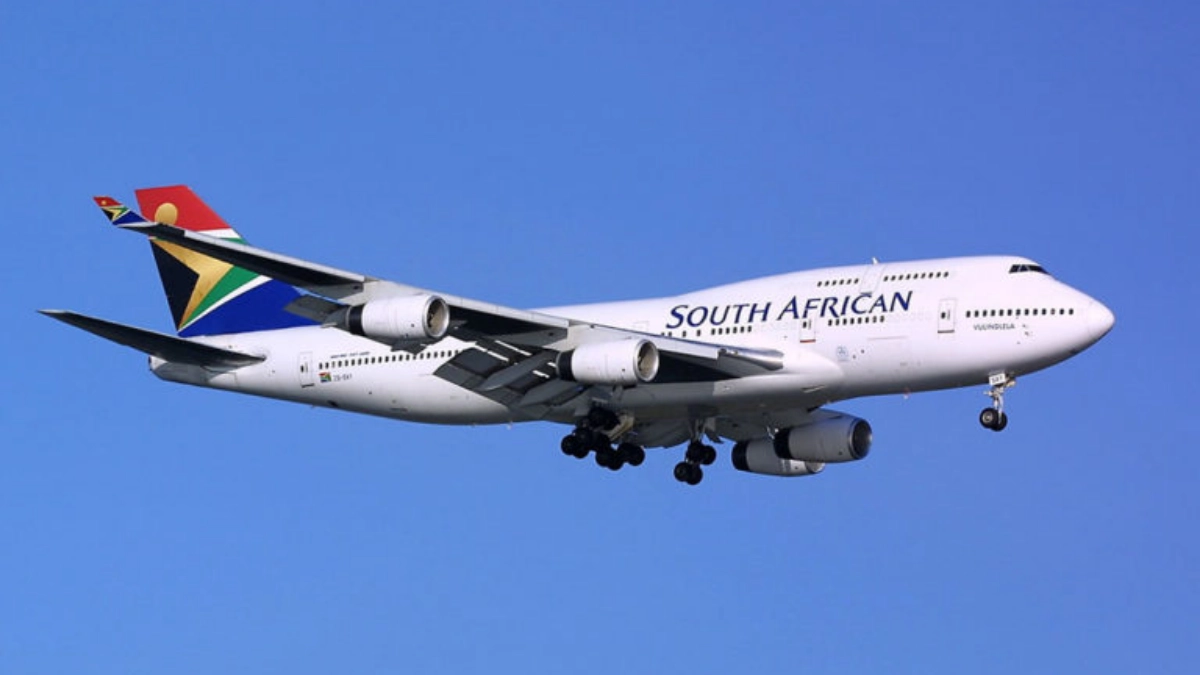
SAA, founded on 1 February 1934, is the country’s oldest continuously operating airline and its state-owned flag carrier. The latest leadership upheaval places renewed pressure on a turnaround that government has backed with roughly R38 billion in bailouts since 2018, according to figures presented to parliament by the Office of the Auditor-General.
The timing is significant. Lamola’s resignation followed publication of SAA’s 2024/25 annual results in February 2026, after the airline missed the statutory 30 September 2025 deadline for tabling its annual report under the Public Finance Management Act. SAA claimed a R155 million group net profit and a R336 million operating profit for the year to 31 March 2025, on revenue of R8.8 billion.
That reported return to profitability has been questioned. Auditor-General Tsakani Maluleke’s report for the same period raised concerns about the airline’s financial sustainability, including material uncertainties related to going concern. These are the conditions that must be resolved if SAA is to avoid a repeat of its 2019 slide into business rescue.
Aviation analyst Guy Leitch told the Daily Maverick and The Citizen that the cluster of senior departures pointed to deeper structural problems inside the airline, describing the pattern as reminiscent of governance ruptures last seen at SAA around 2012. Organisation Undoing Tax Abuse (Outa) chief executive Wayne Duvenage said the resignation was expected given mounting questions around the 2025 annual report sign-off.
Key details and figures
The Auditor-General’s findings sit at the centre of the governance concerns. According to the AGSA report referenced by Daily Maverick and Daily Investor, SAA recorded a negative EBITDA of R443 million for the 2024/25 year, missing its own target of positive R241 million by a wide margin.
The Auditor-General also flagged irregular expenditure of R504 million, with no investigations into the irregular expenditure performed during the reporting period. The AGSA report recorded a material uncertainty relating to SAA’s ability to continue as a going concern, while the airline’s board maintained that the business remains a going concern, citing a favourable equity position of R6.6 billion.
The financial reporting questions are not new. For the 2023/24 financial year, an initially reported R60 million profit was restated as a R354 million loss after auditors identified that R431 million in business rescue debt derecognition had been incorrectly classified as “sundry income,” according to analysis published by aviation trade title Flightline Weekly and aligned with Daily Maverick’s reporting on the airline’s financial disclosures.
Under Lamola’s watch since May 2022, SAA expanded its fleet from 5 to 19 aircraft and grew its route network from 6 to 17 destinations across Africa, Australia and South America, including the reinstatement of long-haul services to São Paulo in October 2023 and Perth in April 2024. Those operational gains are the airline’s main argument for recovery.
Lamola himself noted on departure that he was the longest-serving CEO and board director at SAA, with the average CEO tenure at the airline since 2001 standing at two years and six months. Aviation Week reported that SAA has had 15 chief executives since 2010.
What happens next
The SAA board has said recruitment for a permanent Group CEO will commence shortly. Seshibe takes over as acting CEO with no public aviation operating background before his role at Air Chefs, a factor already drawing criticism from commentators cited by Aviation Week and the South African press.
Several questions remain unresolved. SAA has not publicly stated the specific reasons for Lamola’s resignation or for the departures of the three non-executive directors. Daily Maverick reported that it had requested reasons from the airline and had not received a full explanation by the time of its publication on 12 April 2026.
The 2024/25 financial statements also remain under scrutiny. The Auditor-General’s report contains the material uncertainty flag, and opposition and civil society voices have called for further examination of the financial reporting signed off during Lamola’s tenure. SAA said the process to recruit a permanent Group CEO would “commence shortly,” but has not published a timeline.
The airline has said it remains committed to its growth plan, including a stated intention to return to the United States route network by the end of 2026 and a request for proposals for 28 new-generation aircraft for delivery from 2032. Whether the next CEO will inherit a carrier on course or one facing another recapitalisation debate is the central question for SAA’s shareholder and for treasury through 2026.