









The decision lands on 23 September
The repo rate September 2026 announcement is due on Wednesday 23 September, when the Reserve Bank’s Monetary Policy Committee meets for the fourth of its six scheduled meetings this year. The repo rate has been at 7% since the May meeting, which puts the prime lending rate at 10,5%.
Two things have happened in the last fortnight that pull the committee in opposite directions, and both landed after most forecasts were written.
What changed in the last two weeks
The economy contracted. Gross domestic product fell by 0,2% in the second quarter of 2026. A contraction is the classic argument for cutting, or at least for not tightening.
Fuel is heading for a record. Early Central Energy Fund data for September points to a large increase from 7 October, on top of the September increases of R1,34 a litre for petrol and up to R3,14 for diesel. Brent crude pushed above $99 a barrel this week on Middle East supply fears. Our note on the September fuel increase covers what already took effect.
Fuel feeds inflation through transport, food and services. That is the classic argument for holding or hiking.
Where the rate sits now
| Meeting | Outcome |
|---|---|
| November 2025 | Cut 25 basis points to 6,75% |
| January 2026 | Held at 6,75%, two members favoured a cut |
| March 2026 | Middle East conflict named as the key development |
| May 2026 | Increased, taking the repo rate to 7% |
| July 2026 | Held at 7% |
| 23 September 2026 | Next decision |
The remaining 2026 meeting after this one is 19 November.
The target changed, and that is the whole story
In November 2025 National Treasury and the Reserve Bank replaced the old 3% to 6% inflation target range with a 3% point target and a tolerance band of one percentage point either side. It was the first change to the framework in 25 years.
That matters now. Under the old range, inflation at 5% sat comfortably inside the band. Under the new one, 5% sits a full percentage point above the top of it.
June 2026 inflation came in at 5,0%, a ten month high, with passenger transport inflation jumping from 4,0% in May to 12,5% in June, almost entirely fuel pass-through. July then came down to 4,3%, as set out in our inflation coverage.
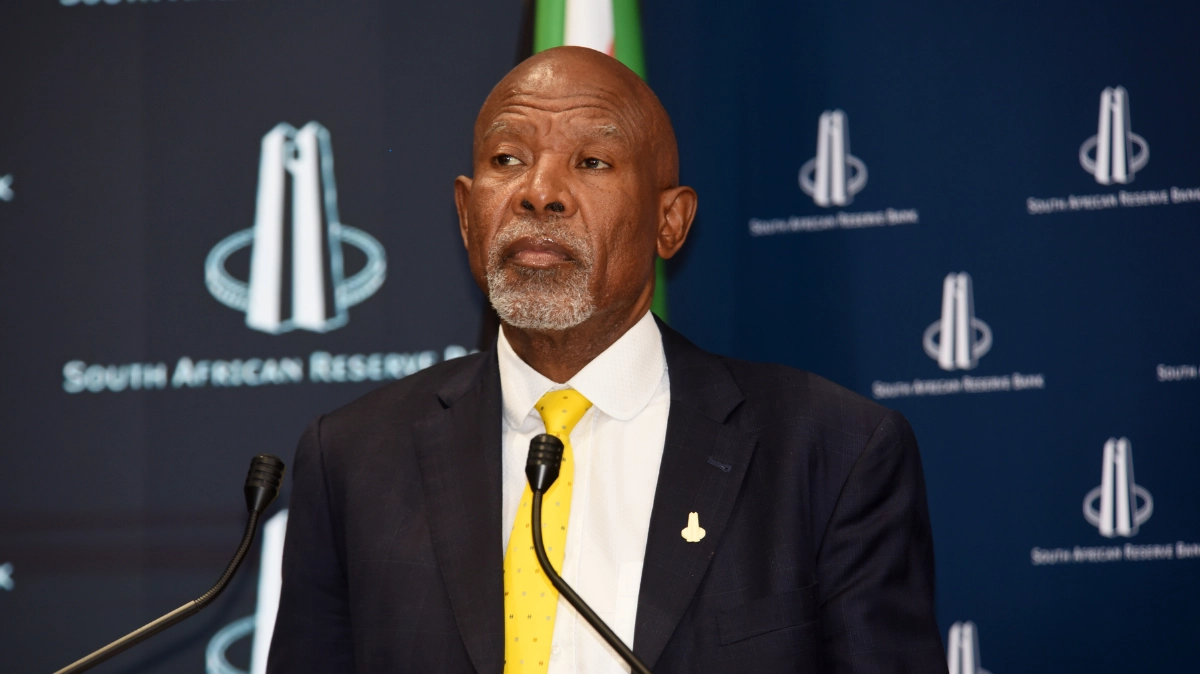
Governor Lesetja Kganyago has publicly defended the 3% target through the oil shock, which is generally read as a signal that the Bank does not intend to look through fuel-driven increases.
What each outcome costs you
A 25 basis point move changes a R1 million bond over 20 years by roughly R168 a month. On R500 000 it is about R84.
| Repo rate | Prime | Monthly repayment on R1m over 20 years |
|---|---|---|
| 6,75% | 10,25% | About R9 816 |
| 7,00% | 10,50% | About R9 984 |
| 7,25% | 10,75% | About R10 152 |
Those figures assume the full prime rate on the outstanding balance with no additional fees, so your own bond statement is the number that counts.
Car finance, credit cards and overdrafts move with prime too, usually within a month of the announcement. Fixed rate agreements do not.
What to watch on the day
- The vote split. A unanimous hold reads very differently from a hold with two members pushing for a hike.
- The updated inflation forecast for 2026 and 2027. The Bank publishes revised numbers with each statement.
- Whether the statement treats the fuel shock as temporary or as something feeding into expectations. That language usually signals the next move.
- The growth forecast, given the second quarter contraction.
Do not lock in a financial decision on a forecast. Economists were split on the July meeting and the outcome was still described as a surprise, as our report on the July hold at 7% set out.
Where to check
The Reserve Bank publishes the Monetary Policy Committee statement at www.resbank.co.za immediately after the Governor’s televised press conference on the day of the decision. The statement includes the vote, the revised inflation and growth forecasts and the quarterly projection model path. Statistics South Africa publishes the consumer price index at www.statssa.gov.za, and the August figure is due before the meeting.