






What happened at the Pretoria driving range
Lightning deaths South Africa records each year run well above the global rate, and the summer storm season that produces them has just started.
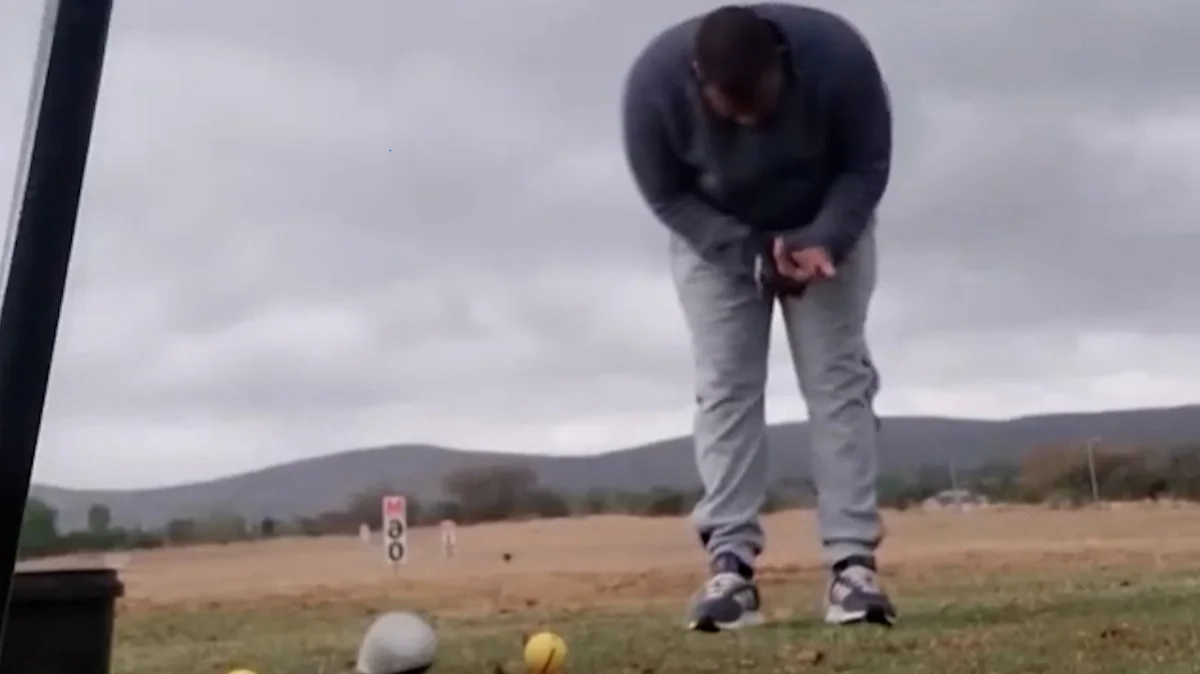
That season announced itself at a Pretoria driving range this week. Kgotatso Nape had his phone propped up filming his swing, a routine he uses to review his technique, when he was struck by lightning. He survived.
“It was scary and painful on my hands, so I went home then immediately went to the hospital to go get myself checked out,” Nape told video agency Storyful. The footage, published on 8 September 2026, has circulated widely since.
Nape’s account is the only public information on his condition. No emergency service or hospital statement has been issued, and Southafriworld is not reporting anything further about his injuries.
The circumstances matter more than the video. He was outdoors, on open ground, holding a metal club, in Gauteng, in early September. Every element of that sits inside the risk profile that South African lightning research has described for two decades.
The lightning deaths South Africa records each year
| Measure | Figure |
|---|---|
| Lightning deaths in South Africa each year | About 100 |
| Death rate per million people per year | Between 1.5 and 8.8 |
| How that compares globally | About four times the global average |
| Flash density, Highveld and eastern escarpment | 10 to 15 flashes per square kilometre per year |
| Flash density, Democratic Republic of the Congo | More than 60 flashes per square kilometre per year |
| Lightning-related insurance claims in South Africa | More than R500 million a year |
| Global lightning deaths each year | Around 24,000 |
The annual death figure comes from Professor Ryan Blumenthal, a forensic pathologist at the University of Pretoria’s Faculty of Health Sciences, who has said lightning-related deaths make up most of South Africa’s weather-related fatalities.
The death rate range and the four-times comparison come from research published in the South African Journal of Science, which also records the insurance figure and notes that almost all insurance-related queries received by the South African Weather Service are lightning related.
Globally, around 24,000 people die from lightning each year and around 240,000 survive being struck, which is the ratio that makes Nape’s outcome the ordinary one rather than the miracle it is usually described as.
Why the death rate is high when the strike rate is not
The framing that gets repeated is that South Africa is one of the most lightning-prone countries on earth. On strike frequency, that is not what the researchers say.
Dr Hugh Hunt of the University of the Witwatersrand’s Lightning Research Laboratory has pointed out that South Africa does not experience particularly high levels of lightning strikes in global comparison. Equatorial countries record far more. The Democratic Republic of the Congo records more than 60 flashes per square kilometre per year and Gabon around 30, against 10 to 15 over South Africa’s Highveld and eastern escarpment.
So the country is not struck unusually often. It loses unusually many people when it is.
The explanation in the published work is exposure rather than meteorology. Blumenthal’s study of lightning deaths on the Highveld, covering 38 fatalities recorded at six large medicolegal mortuaries between 1997 and 2000 in a population of roughly seven million, found that 95% of victims were black, 79% were male, and the average age was 36.
That study attributed the elevated risk to a largely urban population, much of it with low socioeconomic status and limited housing and infrastructure, and therefore greater exposure to strikes. Informal structures, outdoor work and open ground do the damage that flash counts do not.
Reporting quality also shapes the picture. Researchers working on an Africa-wide lightning casualty database, which had passed 2,100 entries by June 2026 across 46 countries, note that South Africa appears more often in the data partly because it has better reporting systems, wider media coverage and a predominantly English-speaking population, which makes incidents easier to document.
The same research found that 87% of lightning fatality incidents in Africa involved more than one victim, against fewer than 10% in developed countries.
The season that starts now
The timing of Nape’s strike is not incidental. Blumenthal’s Highveld study found that lightning strikes causing death occurred from September through to April, matching the summer rainfall period, and that most took place in the late afternoon, between 15:00 and 18:00.
That is a small and now dated sample, and it describes the Highveld rather than the country. But it points at a window that anyone planning outdoor activity in Gauteng should know about, and September is its opening month.
Southafriworld reported this week on the severe thunderstorm warnings issued for the province as a cut-off low moved across the interior, and on the El Niño outlook for the coming summer, which the weather service has warned could bring a high frequency of severe heatwaves alongside thunderstorm activity.
The Weather Service’s impact-based warnings carry excessive lightning among their listed hazards, and the practical guidance is unchanged: move indoors or into a hard-topped vehicle when thunder is audible, and stay there.
Some things are not established. No national figure for lightning injuries in South Africa is published, only the death estimate. The 1.5 to 8.8 deaths per million range is wide enough that the true national rate is not settled. And the studies underpinning the Highveld timing and demographic findings are more than two decades old, with no comparable national update published since.
What has not changed is the arithmetic of the season. South Africa’s lightning months run from now until April, and the research says most fatal strikes land in the late afternoon.