









What we know so far
South Africa faces the prospect of severe weather over the coming months as international forecasters warn that one of the strongest El Niño events in decades is developing in the Pacific Ocean.
The US National Oceanic and Atmospheric Administration’s Climate Prediction Center has issued an El Niño Advisory, confirming that El Niño conditions are present and strengthening. The agency’s latest outlook puts a 97% probability on the event developing into a strong El Niño that persists into early 2027.
Forecasts indicate that during the second half of 2026 and the first half of 2027, the event could rank among the strongest recorded since 1950, according to an analysis of the NOAA outlook by Investec chief economist Annabel Bishop.
The World Meteorological Organisation has warned that El Niño conditions are forecast to strengthen rapidly over the coming months, increasing the likelihood of heatwaves, droughts, heavy rainfall and other extreme weather events. The organisation said forecast models show remarkable agreement, providing high confidence in the outlook, with ocean temperatures expected to exceed 2°C above average in key monitoring regions.
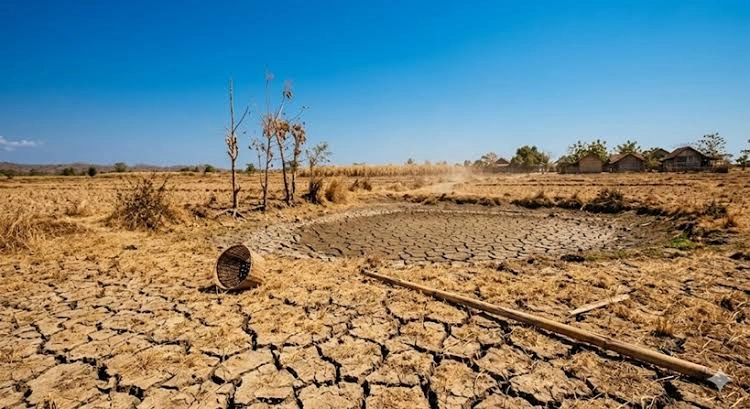
For South Africa, El Niño events are historically associated with below-average summer rainfall and drought conditions across the country’s main farming regions.
Why it matters
South Africa has felt the force of El Niño before. The country experienced major events in 1991/92, 2015/16 and 2023/24, and the 2015/16 episode triggered the worst drought in 35 years, driving sharp increases in food prices.
Grain South Africa has warned that prolonged high temperatures and drought could significantly damage crops this season. The organisation said yield reductions during extreme conditions can reach as high as 5% per day, meaning severe heat can quickly translate into substantial losses in the maize belt and other growing regions.
The industry body also cautioned that El Niño typically brings adverse rainfall conditions in the second half of the summer season, with drought remaining a normal feature of these climate events.
Beyond the farm gate, the effects reach households through food prices. During the 2015/16 drought, cereal inflation accelerated from 4.7% to 17.5% year on year, contributing 1.1 percentage points to the overall rise in consumer inflation between the end of 2014 and the end of 2016, according to Bishop’s analysis.
Water supply is a further pressure point. Extended dry conditions strain municipal systems and dam levels, and prolonged heat increases electricity demand, adding stress to infrastructure already under pressure in parts of the country.
Key details and figures
While the weather outlook is serious, Bishop’s analysis suggests the inflation impact may be more contained than in past El Niño cycles, because food carries less weight in South Africa’s consumer price basket than it once did.
Food and non-alcoholic beverages now account for 18.23% of the Consumer Price Index basket, down from 25.66% in 2006, a shift Statistics South Africa attributes to changing household spending patterns as incomes and services expenditure have grown.
Within the basket, the impact of El Niño depends heavily on which products are affected. Meat accounts for more than 5% of the CPI basket and cereal products for nearly 4.5%, so drought-driven increases in grain and livestock prices feed directly into headline inflation.
By contrast, fish and seafood make up just 0.43% of the basket. During the 2015/16 event, fish and seafood inflation jumped from 8.0% to 11.3% year on year, yet contributed less than 0.1% to CPI, an outcome Bishop described as negligible. A similar pattern held in the 2023/24 El Niño, when fish and seafood prices rose 11.7% without registering meaningfully in overall inflation.
Bishop also noted that food was not the main driver of the inflation spike in the last severe event. Food and non-alcoholic beverages contributed 3.4 percentage points to the rise in CPI over the 2015/16 period, with housing and utilities adding 3.0 percentage points, transport 1.8 and insurance and financial services 1.7.
What happens next
The El Niño event is forecast to strengthen through the end of 2026, with the NOAA outlook indicating it is likely to remain in place into early 2027. Its full impact on South African rainfall will only become clear as the summer season unfolds from October onwards.
The South African Weather Service’s seasonal forecasts over the coming months will show how strongly the global pattern translates into local rainfall deficits, and farmers’ planting decisions in spring will be the first practical test of the outlook.
For consumers, the effect on food prices will depend on the severity of the drought, the size of grain harvests and the exchange rate, with any impact typically arriving with a lag of several months after poor rainfall.
Key uncertainties remain. Not every strong El Niño produces a severe South African drought, and the 2023/24 event passed with less damage than feared. What forecasters agree on is that the coming event is highly likely to be strong, and that the season ahead carries materially higher weather risk for agriculture, water supply and prices than a normal year.