






South Africa is moving closer to introducing a new form of income support for unemployed adults, with the Department of Social Development saying it will begin consultations with National Treasury in March 2026 to secure funding for a Basic Income Support, or BIS, grant.
The BIS concept has been discussed for years under different names, including a “basic income grant”, but government has repeatedly said any long-term grant must be affordable, targeted, and linked to broader social and economic outcomes. The latest update signals a shift from political commitment toward the practical work of funding design, eligibility rules, and implementation planning.
For now, government has confirmed that the Social Relief of Distress, or SRD, grant will continue for another 12 months from 1 April 2026 to 31 March 2027 at R370 per month, giving policymakers time to finalise options for a longer-term grant while maintaining support for millions of recipients.
What government is proposing, and why it matters
The BIS grant is intended to cover a gap in South Africa’s social protection system: adults of working age who are unemployed and do not qualify for existing grants such as the older persons grant, disability grant, or child support grant.
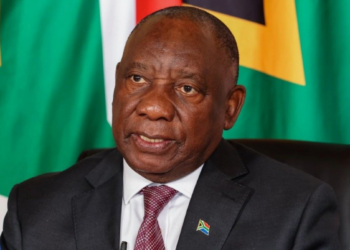
In practice, this group has relied heavily on the SRD grant since it was introduced during the COVID-19 era. President Cyril Ramaphosa has said the SRD grant will be used as the basis for a sustainable form of income support for unemployed people, signalling that the next grant may evolve from SRD rather than replacing it overnight.
If BIS becomes a permanent or longer-term benefit, it would represent one of the most significant changes to social assistance since the post-1994 expansion of grants. It would also carry large fiscal implications, because even small monthly amounts become substantial when multiplied across millions of beneficiaries.
The BIS grant is no longer pitched as universal
One of the clearest shifts in the current plan is that BIS is no longer framed as a universal basic income paid to all adults. The Department of Social Development has indicated that the design has been reshaped over time to reflect South Africa’s fiscal constraints and the need to prioritise those most in need.
In a recent parliamentary reply referenced in public reporting, Social Development Minister Sisisi Tolashe said the department is refining macroeconomic impact and implementation models and that the BIS approach has been reworked to strengthen links to sustainable livelihoods and economic opportunities.
This redesign matters because it points to a grant model that is likely to be targeted and conditional in some way, rather than a flat, universal payment. The department has indicated the grant will likely focus on linking beneficiaries aged 18 to 59 with employment, training, and enterprise opportunities.
What the BIS grant could look like in practice
Government has not published final BIS rules yet, and key details remain undecided. However, based on official policy direction and the way SRD currently operates, the next grant model is likely to include several features:
- A defined target group, primarily unemployed adults aged 18 to 59
- Means testing, using income and bank verification rules similar to those used for SRD
- A link to labour market activation, such as job-seeking, skills development, public employment programmes, or enterprise support
- Stronger integration across government data systems to confirm eligibility and reduce fraud
Officials have framed the overall goal as shifting social assistance from a survival mechanism into a tool that can support transition into work, where that is realistic.
Funding is still the main obstacle
The biggest barrier is money. Any permanent or expanded grant must be financed within a budget already under pressure from rising service delivery demands, debt-service costs, and competing priorities.
Treasury has consistently required detailed costing, as well as evidence of how a new grant would be funded over the medium term. The current BIS process is therefore moving into the most difficult phase: agreeing on the size of the grant, the number of beneficiaries, and how the state pays for it.
Budget 2026 has already confirmed that social grants remain the largest share of social development spending. It also shows that SRD continues to be treated as temporary funding, even though it has become a long-running pillar of household income support. This is one reason a BIS redesign is on the table: government is trying to create a longer-term structure rather than repeating annual SRD extensions.
SRD is extended again, and stays at R370
While BIS is being developed, government has formalised another extension of the SRD grant.
The Department of Social Development has published a process to operationalise the 12-month extension from 1 April 2026 to 31 March 2027. The department has said the R370 monthly amount will be paid to successful applicants during this period.
Budget reporting also confirms that SRD remains unchanged in value, even as other social grants are increased. This has created debate among civil society groups who argue SRD is too low relative to basic living costs, while Treasury focuses on affordability and longer-term reform design.
What is known, and what is not yet known
There is real policy movement, but the BIS plan is not yet a final, legislated grant. The current position can be summarised as follows.
What is known:
- Government intends to use SRD as a foundation for sustainable income support for unemployed people.
- SRD continues to 31 March 2027 at R370.
- Social Development plans funding consultations with National Treasury in March 2026 on BIS.
- The BIS approach is expected to focus on working-age adults and may link support to employment and training pathways.
What is not yet known:
- The BIS grant value, whether it will match SRD or be set higher or lower.
- The final eligibility rules, including income thresholds and verification steps.
- The implementation date for BIS, whether in 2026, 2027, or later.
- Whether BIS will replace SRD entirely or run alongside it during a transition.
- Whether Parliament will need new legislation, or whether BIS can be introduced through a policy and regulatory route linked to existing frameworks.
Why the timing matters for households and the economy
For recipients, the most immediate issue is certainty. Millions rely on SRD and other grants for basic household expenses such as transport, food, and electricity. Repeated extensions help prevent a sudden income cliff, but they also leave recipients uncertain about how long support will last and whether eligibility rules will change.
For the wider economy, social grants influence spending in local communities and support demand in township and rural retail markets. A stable, predictable income support framework can also help government plan better, reduce administrative churn, and improve fraud controls through more permanent systems.
However, the fiscal trade-offs are unavoidable. Expanding income support at scale can require either new revenue, spending cuts elsewhere, or higher borrowing. That is why the March 2026 consultation phase with Treasury is central. It will determine whether BIS is a near-term launch, a longer-term redesign, or a narrower programme tied to specific work-linked pathways.
What happens next
The next milestones to watch are practical rather than political.
- Treasury and Social Development funding consultations in March 2026
- Any release of an updated BIS policy document for public comment
- Clear guidance on whether BIS is planned as a 2026 reform or a later rollout
- Changes to SRD rules, if government begins shifting SRD toward the BIS model through eligibility and activation requirements
- Signals in the next fiscal updates about whether SRD funding is being replaced by a permanent line item or redesigned into a new grant
For now, government’s position is that SRD will continue while BIS options are finalised, and that the eventual goal is a more sustainable income support model for unemployed adults.