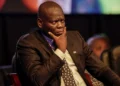





Veteran politician and anti-apartheid activist Mosiuoa Gerard Patrick Lekota has died at the age of 77, prompting tributes that highlighted his role in the liberation struggle, his time as a Cabinet minister, and his later years as a founder of opposition politics in democratic South Africa. Mosiuoa Lekota’s legacy will be remembered for his unwavering commitment to democracy.
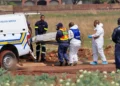
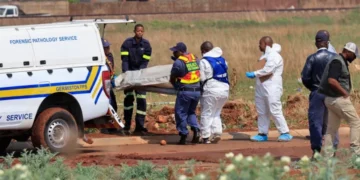
COPE confirmed Lekota’s death on Wednesday, 4 March 2026. Reports said he died in the early hours of the morning at a Johannesburg hospital after a long illness, and the party said the family asked for privacy.
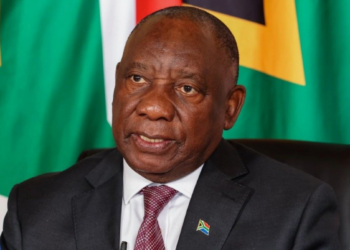
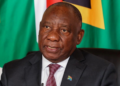
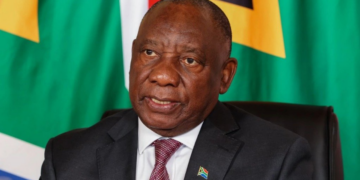
President Cyril Ramaphosa issued a condolence message describing Lekota as a patriot and a champion of non racial democracy, reflecting the high standing he held across political lines even after leaving the ANC.
Death confirmed by COPE and government
eNCA reported that COPE confirmed Lekota’s death on Wednesday morning, saying he died at a Johannesburg hospital and was 77 years old. The party’s statement, as carried in the report, conveyed condolences to the family and supporters and asked that privacy be respected as arrangements are made.
Government communication carried by SAnews said Ramaphosa extended heartfelt condolences to Lekota’s family, to COPE, and to political associates across the spectrum. The statement emphasised that Lekota’s life was deeply intertwined with South Africa’s liberation and democratic journey.
Lekota had stepped back from active politics in 2025 to focus on his health, according to reporting that described an illness that had kept him out of public life in recent months.
From Kroonstad to Robben Island
SAnews said Lekota was born on 13 August 1948 in Kroonstad in the Free State. He became politically active while still young, including involvement in student structures during apartheid.
According to SAnews and international reporting, Lekota was imprisoned on Robben Island in 1974 and spent eight years in prison, including time alongside Nelson Mandela, before his release in 1982. Those years shaped his reputation as a committed organiser and a figure who could bridge political currents within the broader struggle.
After his release, Lekota returned to activism during a period when opposition to apartheid was intensifying across the country. SAnews said he became a leading figure in the United Democratic Front, a broad coalition formed in 1983 to oppose apartheid era political reforms such as the tricameral parliament.
SAnews also referred to the Delmas Treason Trial, in which the state pursued senior UDF leaders. It said Lekota was convicted in 1988 and sentenced to 12 years, but the conviction was overturned in 1989.
Senior roles in the ANC and the democratic state
Lekota’s post 1994 career included senior roles inside the ANC and government.
Reuters and Associated Press described him as a close ally of former President Thabo Mbeki and said he served as South Africa’s minister of defence from 1999 to 2008. Associated Press also reported that he held the role of national chairperson of the ANC, placing him among the party’s most influential figures during the early democratic period.
His defence portfolio years coincided with major institutional transitions in the security sector, including efforts to consolidate a defence force that had to integrate former statutory and liberation movement forces while adapting to a new constitutional framework.
Even as South Africa’s politics became more competitive, Lekota remained known for blunt speech and a willingness to criticise peers, a trait supporters described as principled and critics described as confrontational.
Break with the ANC and the formation of COPE
Lekota’s departure from the ANC became one of the defining political moments of the late 2000s.
Reuters reported that his relationship with the ANC soured after Mbeki was removed as the country’s president in 2008. Lekota later co founded the Congress of the People in 2008, a breakaway party formed in the aftermath of internal ANC conflict.
Associated Press reported that COPE became the third biggest opposition party after the 2009 elections, winning just over 7 percent of the national vote and 30 seats in the 400 seat National Assembly. The party’s early result was seen as a signal of voter appetite for alternatives even as the ANC remained dominant.
Over time, COPE’s influence declined amid internal disputes and changing voter dynamics. Reuters noted that its vote share fell below 1 percent in every national election after 2009.
Why he was known as “Terror”
Lekota’s nickname “Terror” became widely used in political coverage and tributes.
Reuters and SAnews both said the nickname came from his fearsome skills on the soccer pitch as a young man, a detail that frequently appeared in profiles and helped humanise a figure often associated with hard politics and conflict era history.
Tributes and what they reveal about his legacy
The first tributes emphasised three themes: struggle credentials, democratic institution building, and the importance of credible opposition politics.
Government communication carried by SAnews said Ramaphosa described Lekota as a patriot and a champion of non racial democracy. That framing positioned Lekota not only as a liberation veteran but as someone who remained committed to constitutional politics even after leaving the governing party.
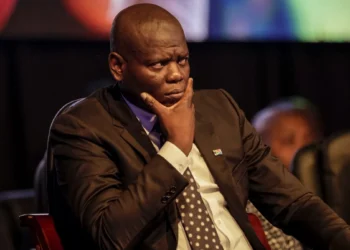
Associated Press quoted Bantu Holomisa, deputy minister of defence and leader of the United Democratic Movement, saying Lekota strengthened the voice of opposition parties by forming COPE. The tribute reflects how Lekota’s break with the ANC is remembered by many as a moment that broadened political contestation, regardless of COPE’s later electoral decline.
eNCA reporting included colleagues praising his fearlessness and the willingness to speak plainly, a quality that defined his public persona across decades.
What happens next
At the time of writing, COPE had not announced funeral and memorial details publicly in the reports available. The party said the family requested privacy, and further information is expected once arrangements are confirmed.
For South Africans, Lekota’s death closes a chapter linked to both the liberation struggle and the early decades of democratic politics. His career traced a route from underground and mass mobilisation politics to Cabinet governance, and then to a high profile breakaway that reshaped opposition politics at a key moment in the country’s electoral history.