




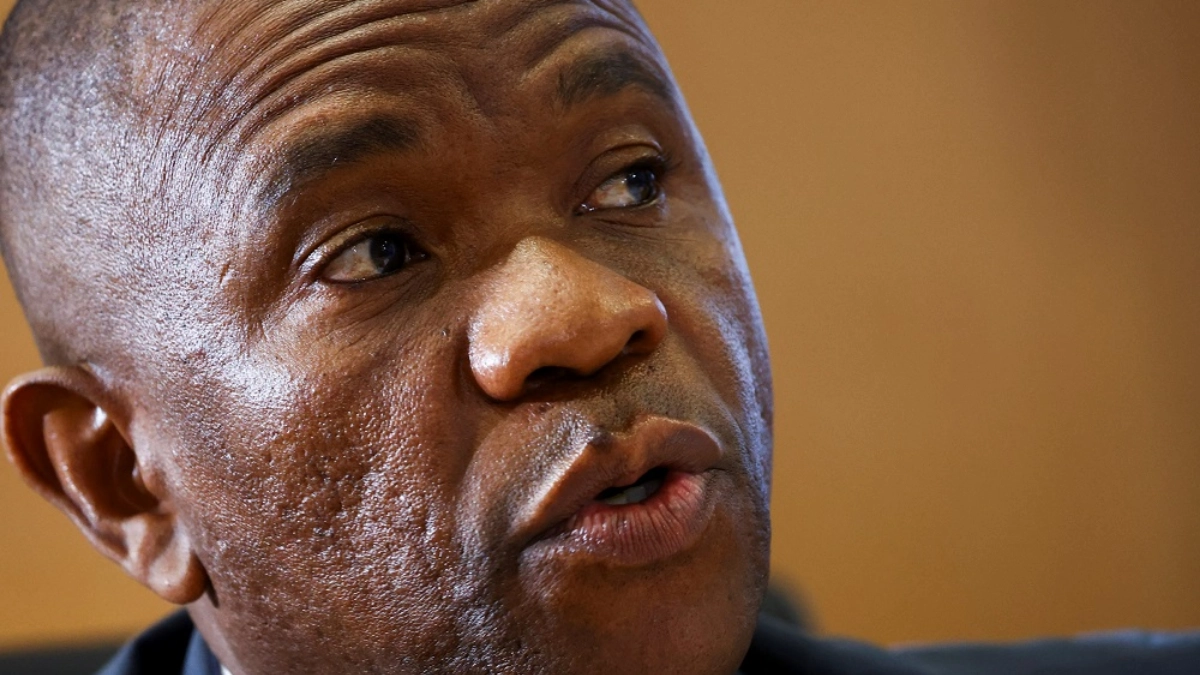
KwaZulu-Natal police commissioner Nhlanhla Mkhwanazi has used his latest appearance before Parliament’s ad hoc committee to push back against allegations made by businessman Vusimuzi “Cat” Matlala, saying the accused businessman was used to discredit him. Matlala had earlier told the same committee that a private meeting between the two men was linked to his troubled SAPS contract and that Mkhwanazi made veiled threats during that engagement.
The dispute matters because it sits inside one of South Africa’s most sensitive police oversight processes. Parliament’s ad hoc committee was set up to examine allegations of corruption, criminal infiltration and political interference in the criminal justice system, and the clash between Mkhwanazi and Matlala has become one of the most contested parts of that broader inquiry.
What happens next is now clearer. Parliament has said the oral hearings have ended and the committee will move into deliberations on the evidence and testimony it has received. No finding has yet been made against either man, and many of the most serious claims remain disputed.
What we know so far
The central issue is a meeting in Umhlanga, Durban, that both men accept took place, but describe very differently.
Matlala told Parliament in November 2025 that former police minister Bheki Cele arranged the meeting so that Mkhwanazi could assist him with problems around a R360 million SAPS tender awarded to his company. According to Matlala’s account, the discussion was tied to frustration over how the contract was being handled and whether it was being deliberately undermined.
Matlala went further than that. In his testimony, he claimed Mkhwanazi suggested he could be “taken care of” if national police commissioner Fannie Masemola believed his life was in danger because of the fallout around the cancelled police contract. Matlala also linked Mkhwanazi to the wider tender dispute, presenting the commissioner as someone who was not merely gathering information but actively inserted into a high-stakes procurement battle.
Mkhwanazi’s version is markedly different. Returning to the ad hoc committee on 18 March 2026, he said the Umhlanga meeting was never about assisting Matlala with a contract and was instead part of an investigation into Gauteng criminal networks. He said Matlala had approached him as an informer, appeared frightened during the encounter and shared information that could have compromised his own safety.
Mkhwanazi also defended his earlier decision not to disclose the meeting when he first testified before Parliament. He said the information exchanged was sensitive and that public disclosure at the time could have placed Matlala and his family at risk if it exposed him as someone “snitching” on dangerous people.
Mail & Guardian reported that Mkhwanazi told the committee he still believed Matlala had been used by key individuals in organised crime to damage his credibility. That framing is important because it shows Mkhwanazi is not simply denying Matlala’s allegations. He is presenting them as part of a wider campaign to weaken him inside a contested policing and political environment.
The argument sits against the background of Matlala’s own legal troubles. Eyewitness News reported this week that Matlala, his wife and three co-accused are facing 25 charges, including 11 counts of attempted murder, in a separate criminal matter now before the Johannesburg High Court.
Why it matters
The clash matters because it cuts to the credibility of two very different figures who have both become central to South Africa’s police crisis.
For Mkhwanazi, the issue is whether he acted as a senior police official gathering intelligence in a dangerous environment, or whether he crossed into an improper relationship with a businessman whose name had already become associated with political and policing controversy.
For Matlala, the issue is whether his evidence points to real police interference and pressure around the SAPS contract, or whether his allegations are part of a self-serving attempt to recast his role in a much larger scandal.
There is also a broader institutional concern. Parliament’s inquiry is not examining a personal feud in isolation. It is trying to understand whether organised crime, politics and senior policing became entangled in ways that distorted investigations, procurement and accountability. The Mkhwanazi-Matlala dispute matters because it sits at the intersection of all three.
The tender at the heart of the dispute adds another layer. Parliament’s own report on the closing phase of hearings said the Medicare24 contract awarded to Matlala’s company was later cancelled in April 2025 after an internal audit found irregularities. That means the argument is tied not only to claims about a secret meeting, but also to an already controversial procurement process that was formally reversed.
For the public, the practical concern is confidence in state institutions. When an inquiry hears one witness say a police commissioner privately threatened him, and the commissioner later says the same witness was an informer used to smear him, the result is more uncertainty, not less. Until Parliament reaches conclusions, the dispute remains a set of competing allegations inside a process meant to test them.
Key details and figures
Some of the most important verified details in the dispute are these:
- The meeting both men refer to took place in Umhlanga, Durban.
- Matlala told Parliament the meeting happened in April 2025 and was arranged by former minister Bheki Cele.
- The contract at the centre of the dispute was a R360 million SAPS tender awarded to Matlala’s company.
- Parliament says that contract was later cancelled in April 2025 after an internal audit found irregularities.
- On 18 March 2026, Mkhwanazi returned to Parliament’s ad hoc committee to respond to allegations made against him.
- Parliament says oral hearings have now concluded and the committee will begin deliberations.
- Matlala is separately facing 25 charges, including 11 counts of attempted murder, in an ongoing Johannesburg High Court matter.
The significance of those details is that the clash is no longer based on political rumour alone. It is now part of a formal parliamentary record, supported by witness testimony, committee hearings and public institutional documentation.
Timeline
November 2025
Matlala appeared before Parliament’s ad hoc committee from custody and said Cele arranged a meeting between him and Mkhwanazi to discuss problems linked to his SAPS contract. He also alleged that Mkhwanazi made veiled threats during that engagement.
January 2026
Other witnesses and related testimony kept the meeting in public focus, with growing scrutiny over whether it reflected intelligence work, improper influence or a deeper relationship around Matlala’s business and police connections.
18 March 2026
Mkhwanazi returned to Parliament’s ad hoc committee and defended the secret meeting, saying it was part of an investigation into Gauteng criminal networks. He said Matlala had approached him as an informer and was later used to discredit him.
After 18 March
Parliament said oral hearings had concluded and the committee would begin deliberating on the evidence before preparing its next steps.
What officials and witnesses are saying
Mkhwanazi’s central message is that the meeting has been mischaracterised. He told the committee there was no need to present it earlier because it had helped an investigation uncover information linked to what a Gauteng team was probing. He said Matlala looked afraid and was sharing material that could endanger him.
Matlala’s evidence points in the opposite direction. His version is that the meeting was not a covert intelligence exercise but part of efforts to deal with the fallout from the police tender, and that Mkhwanazi’s language during the encounter carried an implied threat.
Parliament itself has not endorsed either version. Its public position so far is procedural rather than substantive. The institution has confirmed the hearing schedule, the end of oral testimony and the start of committee deliberations, but it has not yet issued a final view on which claims it accepts.
What happens next
The next phase is Parliament’s deliberative stage. With oral hearings complete, the ad hoc committee must now weigh contradictory testimony, documentary material and the wider body of evidence collected over months of hearings.
That step matters because this dispute is unlikely to be settled by rhetoric alone. The committee will have to decide what weight to attach to Matlala’s testimony, how credible Mkhwanazi’s explanation is, and whether the broader evidence supports either man’s account of the Umhlanga meeting.
There is also a parallel legal backdrop. Matlala’s separate criminal case continues in court, while the wider police corruption saga remains connected to the Madlanga Commission and other official processes. That means the parliamentary dispute is only one part of a much larger picture.
For now, the most accurate position is that Mkhwanazi and Matlala have placed conflicting allegations on the public record, and that Parliament has not yet made findings on either version. The hearing phase is over, but the judgment phase has not yet begun in public.