





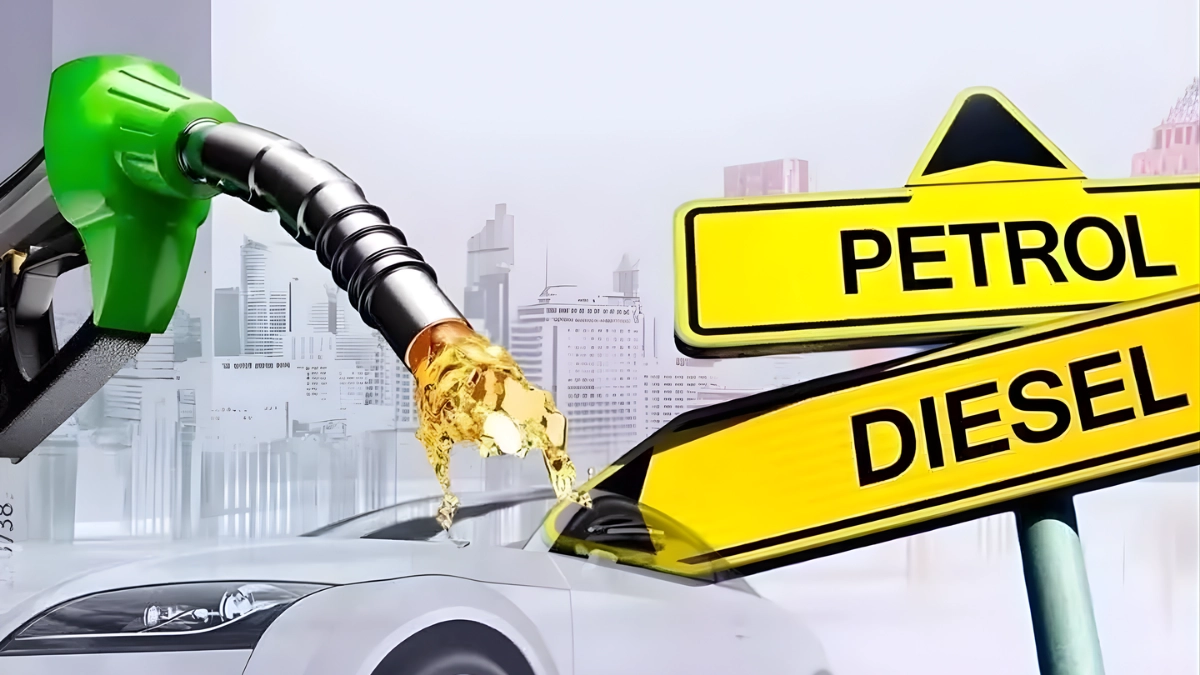
South Africa has received some limited good news on petrol and diesel, with government and the fuels industry both saying there is currently no immediate risk of fuel shortages in the country. The reassurance comes as the Middle East conflict continues to unsettle oil markets and raise concern over supply routes such as the Strait of Hormuz.
What changed is that the Department of Mineral and Petroleum Resources, followed by the Fuels Industry Association of South Africa, moved to calm fears about fuel availability after global energy markets came under renewed strain. Why it matters is clear in South Africa, where imported crude and refined fuel still play a major role in local supply. What happens next is equally important: authorities say fuel remains available for now, but both the supply outlook and the next official price adjustment will depend on how long global disruption lasts.
What we know so far
The clearest official message came from the Department of Mineral and Petroleum Resources on 10 March 2026. The department said there is currently no immediate risk of fuel shortages in South Africa and that it remains in continuous contact with oil companies to protect supply stability while monitoring developments in the Middle East and their impact on oil markets and local prices.
The department also gave practical reasons for that reassurance. It said South Africa still has two operational crude oil refineries, NATREF and Astron Energy, in addition to the Sasol Secunda coal-to-liquids plant, which continues to play a critical role in domestic fuel production. Although Astron Energy is in a planned maintenance shutdown, the department said the company had already secured enough imported fuel to cover supply requirements during that period.
The Fuels Industry Association of South Africa reinforced that position in its own 10 March statement. It said South Africa’s fuel supply remains stable for the time being, that the industry has not observed any systematic fuel shortages, and that the bulk of March imports remains secure and is expected to arrive as planned. The association also said suppliers are exploring alternative sourcing routes outside the Strait of Hormuz to regions less affected by the current conflict.
That is the heart of the good news. The concern at present is not an immediate nationwide shortage of petrol or diesel. Instead, the official position is that supply is being managed, March cargoes remain largely on track, and industry is actively trying to reduce exposure to the most vulnerable shipping corridor.
Why it matters
This matters because South Africa’s fuel system is more exposed to global shocks than it once was. The country has lost refining capacity over several years, which has increased the importance of imported crude and refined products. That means any disruption in major oil-producing regions, or in strategic shipping routes, can quickly become a domestic economic issue.
The Strait of Hormuz is central to that risk. The Fuels Industry Association said it is one of the world’s most important energy transit routes, carrying a significant share of globally traded crude oil and petroleum products. If instability in that corridor worsens, the effect is not limited to physical supply. Shipping costs, insurance premiums and the landed cost of imported fuel can all rise, even before any actual shortage appears in South Africa.
There is also an important difference between supply security and price relief. South Africans may avoid long queues and panic buying in the near term, but that does not mean the pressure on pump prices has disappeared. The department has already warned that continued rises in international crude oil prices are expected to result in higher fuel prices from April 2026.
That is why the phrase “for now” matters. The immediate fuel availability picture is stable, but the broader risk environment remains unstable. If geopolitical tensions persist, South Africa may continue to avoid outright shortages while still absorbing the financial impact through higher monthly fuel adjustments.
Key details and figures
The official record sets out several figures and facts that help explain the current position. March’s regulated fuel adjustment already lifted petrol 93 and petrol 95 by 20 cents a litre, while diesel increased by 62 cents a litre for 0.05% sulphur and 65 cents a litre for 0.005% sulphur, with those changes taking effect on 4 March 2026. The March price statement also said South Africa’s fuel pricing is driven by international product prices, shipping costs and the rand-dollar exchange rate.
The latest Central Energy Fund daily snapshot, dated 18 March 2026, shows the pressure has not disappeared. The average unit under-recovery stood at 493.788 cents a litre for petrol 95, 444.331 cents for petrol 93, 805.117 cents for diesel 0.05%, and 815.771 cents for diesel 0.005%. In practical terms, that means the market was still tracking well above the price assumptions built into the current month’s regulated fuel price.
Another pressure point is tax. The 2026 Budget said the general fuel levy will rise by 9 cents a litre for petrol and 8 cents for diesel, while the Road Accident Fund levy will increase by 7 cents a litre and the carbon fuel levy will rise to 19 cents a litre for petrol and 23 cents for diesel from 1 April 2026. Treasury also said the combined increase in fuel levies is in line with expected inflation.
These details show why the story contains both relief and warning. The good news is that South Africa is not facing an immediate petrol or diesel shortage. The bad news is that stable supply does not shield consumers from higher import costs and levy increases.
What this means for motorists
For motorists and households, the most useful takeaway is that there is no official basis at this stage for panic buying. Both government and the fuels industry have signalled that the current supply chain is functioning, and the industry has specifically urged the public to maintain normal fuel-purchasing behaviour so that artificial pressure is not created in the market.
That said, the reassurance is operational rather than financial. Households may be spared long queues in the immediate term, but they are still exposed to the monthly regulated pricing system, which responds to international oil prices, refined product costs and exchange-rate moves. South Africa’s motorists are therefore more likely to feel the next phase of the crisis at the pump than at empty forecourts, unless the conflict deepens further.
What happens next
The next major date is the April fuel adjustment window. The department has already said further updates will be issued ahead of the official April fuel price changes, and the current under-recovery data suggests that prices remain under strong upward pressure if international conditions do not improve before month-end.
The other issue to watch is supply diversification. The Fuels Industry Association says industry members are already exploring sourcing routes outside the Strait of Hormuz. If that strategy works, it could help South Africa maintain stable fuel availability even if disruption in the Gulf persists. But it is not a cost-free solution, and it does not remove the country’s vulnerability to global oil volatility.
For now, the most accurate summary is this: South Africa has some short-term good news on petrol and diesel because there is no immediate shortage risk and March imports remain largely secure. But the relief is limited. Fuel supply is holding up, while fuel prices remain under pressure.