






• About us
  • Advertise
  • Terms and Conditions
  • Editorial Policy
  • Privacy Policy
  • Contact
Southafriworld
  • Home
  • News
    • All
    • Business
    • Crime
    • Economy
    • Tech
    • Tourism
    Toyota Corolla Cross hijacking: new insurer rule | Southafriworld

    Corolla Cross owners face new tracker rule from Discovery

    Weather warning South Africa: Level 6 flood alert | Southafriworld

    Level 6 weather warning as flooding hits SA east coast

    Mrs Ball's Chutney returns to Paarl production | Southafriworld

    Mrs Ball’s comes home to Paarl after 13 years

    FATF greylist South Africa: fresh risk in 2027 | Southafriworld

    SA faces fresh greylist risk under tougher FATF test

    South Africa AI economy: R1.4trn upside | Southafriworld

    Huawei sees R1.4 trillion AI boost, but SA short on skills

    South Africa migrant exodus hits farms and factories | Southafriworld

    Migrant exodus leaves SA farms short at harvest time

    South Africa US tariff set at 12.5% | Southafriworld

    US hits SA with 12.5% tariff but spares citrus and cars

    Ramaphosa interdict granted in split ruling | Southafriworld

    Ramaphosa wins split ruling to pause impeachment

    ICC petition South Africa rejected | Southafriworld

    SA rejects ICC petition over attacks on migrants

    • Business
    • Crime
    • Economy
    • Tech
    • Tourism
  • About us
    • Masthead
    • Editorial Policy
    • Privacy Policy
    • Terms and Conditions
    • Corrections Policy
  • Advertise
  • Contact Us
No Result
View All Result
  • Home
  • News
    • All
    • Business
    • Crime
    • Economy
    • Tech
    • Tourism
    Toyota Corolla Cross hijacking: new insurer rule | Southafriworld

    Corolla Cross owners face new tracker rule from Discovery

    Weather warning South Africa: Level 6 flood alert | Southafriworld

    Level 6 weather warning as flooding hits SA east coast

    Mrs Ball's Chutney returns to Paarl production | Southafriworld

    Mrs Ball’s comes home to Paarl after 13 years

    FATF greylist South Africa: fresh risk in 2027 | Southafriworld

    SA faces fresh greylist risk under tougher FATF test

    South Africa AI economy: R1.4trn upside | Southafriworld

    Huawei sees R1.4 trillion AI boost, but SA short on skills

    South Africa migrant exodus hits farms and factories | Southafriworld

    Migrant exodus leaves SA farms short at harvest time

    South Africa US tariff set at 12.5% | Southafriworld

    US hits SA with 12.5% tariff but spares citrus and cars

    Ramaphosa interdict granted in split ruling | Southafriworld

    Ramaphosa wins split ruling to pause impeachment

    ICC petition South Africa rejected | Southafriworld

    SA rejects ICC petition over attacks on migrants

    • Business
    • Crime
    • Economy
    • Tech
    • Tourism
  • About us
    • Masthead
    • Editorial Policy
    • Privacy Policy
    • Terms and Conditions
    • Corrections Policy
  • Advertise
  • Contact Us
No Result
View All Result
Southafriworld
No Result
View All Result
Home News Business

South African household costs set to rise

Eskom direct customers face an 8.76% electricity increase from 1 April, while official fuel price data is also pointing to another jump in April.

Ezra Labuschagne by Ezra Labuschagne
18 March 2026, 15:25
in Business, News
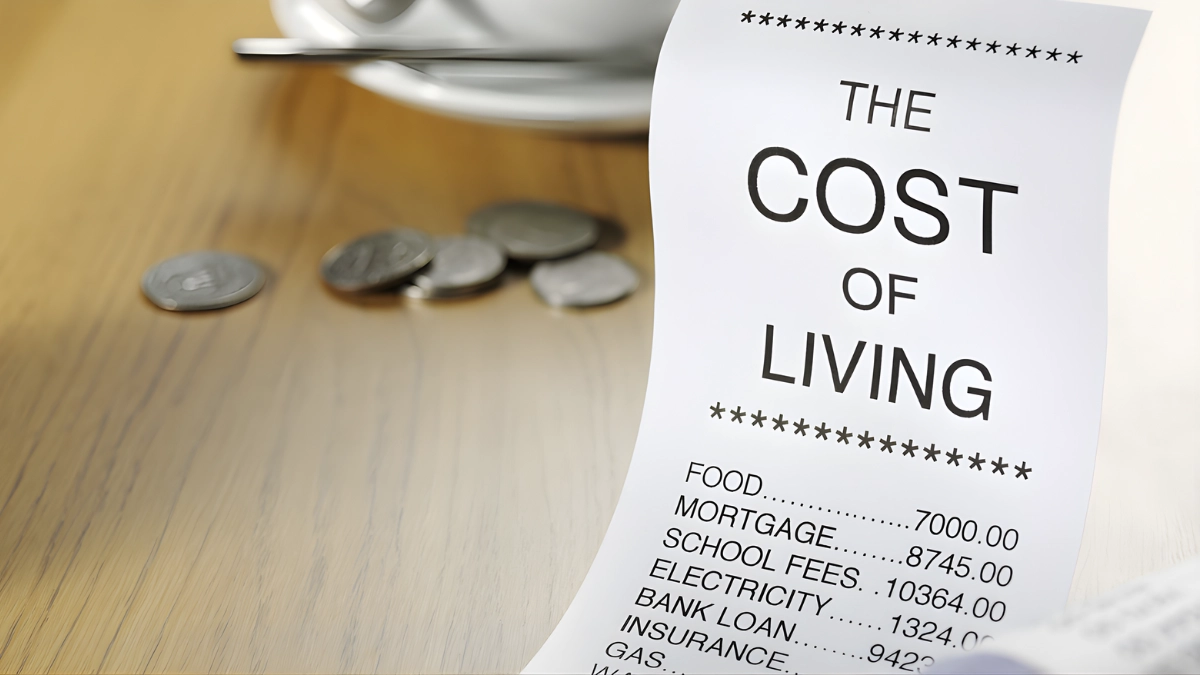
South African household reviewing electricity and fuel expenses as costs rise in April 2026

South African households are heading into April with fresh pressure on two of their most visible monthly costs: electricity and fuel. Eskom has confirmed that an average electricity price increase of 8.76% for customers supplied directly by the utility will take effect on 1 April 2026, while government and official fuel price data both indicate that motorists and transport-reliant households could also face a higher fuel bill in the new month.

The significance for households is broader than a single utility tariff decision. Electricity affects prepaid purchases, monthly account payments and small business operating costs, while fuel filters into commuting, food distribution, school transport and delivery prices. The next steps are already visible: Eskom’s increase is confirmed for direct customers from 1 April, and the Department of Mineral and Petroleum Resources has warned that higher pump prices are expected in April as crude oil pressure feeds through the pricing system.

What we know so far

The confirmed part of the story is on electricity.

Eskom said on 16 March that it is implementing tariff adjustments for the 2026/27 financial year following NERSA’s decision of 5 March 2026. The utility said the regulator approved an average electricity price increase of 8.76% for customers supplied directly by Eskom, with the new tariffs applying from 1 April 2026.

That change is immediate for Eskom direct customers, but not yet for most municipal users. Eskom said municipal bulk purchasers will implement tariff increases averaging 9.01% only from 1 July 2026, in line with the Municipal Finance Management Act timetable. That means the direct April electricity impact is concentrated on households and businesses that buy power straight from Eskom rather than through a municipality.

The fuel side is more fluid, but the warning signs are official and already strong.

On 10 March, the Department of Mineral and Petroleum Resources said the continued rise in international crude oil prices is expected to result in higher fuel prices at the pump from April 2026. The department added that under-recoveries had been fluctuating since the onset of the latest international conflict and that further updates would be provided ahead of the official April adjustment.

The Central Energy Fund’s daily basic fuel price data shows why that warning matters. Its 17 March 2026 snapshot recorded average under-recoveries for the month to date of 474.360 cents per litre for petrol 95, 427.432 cents per litre for petrol 93, 772.884 cents per litre for diesel 0.05% sulphur and 783.324 cents per litre for diesel 0.005% sulphur.

These are not final April pump-price changes, because the recoveries move through the month and the official adjustment is based on the full review period. But they are an important signal that another fuel increase is building, and that the potential move could be unusually large if conditions do not improve before the month closes.

Why it matters

The story matters because the two pressures do not hit households in isolation.

For homes supplied directly by Eskom, the electricity increase is straightforward. Whether the customer is on a prepaid or billed tariff, a higher average tariff from 1 April means the same amount of money will generally buy less electricity, although the exact effect depends on the tariff structure and usage pattern.

Fuel works differently, but the economic effect can be wider. A rise at the pump affects private motorists directly, but it also pushes into the cost of taxis, buses, freight, food transport and deliveries. Diesel, in particular, has knock-on effects well beyond household vehicles because it is a major operating cost across logistics, agriculture and commercial transport.

That broader pressure comes at a time when households had recently been getting some relief from fuel. Statistics South Africa said on 19 March that fuel prices fell 3.1% month on month in February 2026 and contributed to an annual decline of 10.1% in the fuel index, helping to keep headline CPI at 3.0%. If April brings another fuel increase, part of that earlier relief could unwind.

National Treasury has already warned that inflation risks remain elevated from geopolitical tensions, exchange-rate volatility and administered prices. Electricity tariffs and fuel prices are both classic household budget drivers, which is why a rise in both categories within the same period becomes a material consumer story rather than a routine technical adjustment.

There is also a timing issue. The electricity increase is locked in for a segment of consumers from 1 April. Fuel prices are not yet final for April, but the department has already warned that they are expected to move higher. That leaves households facing at least one confirmed cost increase and a second likely one in the same window.

Key details and figures

Some of the most important verified numbers in the story are these:

  • Eskom direct customers face an average electricity price increase of 8.76% from 1 April 2026.
  • Municipal bulk purchasers will face average increases of 9.01% from 1 July 2026, not from April.
  • The Department of Mineral and Petroleum Resources says higher fuel prices at the pump are expected from April 2026.
  • As of 17 March, CEF data showed average fuel under-recoveries of 474.360 c/l for petrol 95 and 427.432 c/l for petrol 93.
  • The same CEF data showed average under-recoveries of 772.884 c/l and 783.324 c/l for the two main diesel grades.
  • March’s official fuel adjustment, which took effect on 4 March, had already increased petrol by 20 c/l and diesel by 62 c/l to 65 c/l depending on grade.

A simple calculation based on Eskom’s average increase shows the household effect in plain terms. A direct Eskom electricity bill of R1,000 before the new tariff would become about R1,087.60 after an 8.76% increase, before taking account of any separate service charges, fixed charges or usage differences.

The fuel calculations are more uncertain because the month is not finished and recoveries can still move. But based on the 17 March average under-recovery data alone, the built-in pressure was already roughly R4.74 per litre for petrol 95, R4.27 for petrol 93 and around R7.73 to R7.83 per litre for diesel, if those averages had held to month-end. Those figures should be treated as an indicator from the official daily pricing model, not as the final April pump-price decision.

What happens next

The next milestone on electricity is fixed.

Eskom’s new tariffs for direct customers start on 1 April, and customers supplied by the utility can already expect the higher rate to apply in the new financial year. Municipal customers, by contrast, will need to watch for local tariff decisions and municipal implementation from 1 July.

The next milestone on fuel is still pending.

The Department of Mineral and Petroleum Resources said further updates would be issued ahead of the official April fuel price adjustment. That means households are still waiting for the final monthly determination, even though the current official indicators point upward.

For households, the practical significance is that April budgeting is becoming more difficult. Eskom-supplied homes have a confirmed electricity increase to factor in, while drivers and transport-dependent consumers may also need to prepare for a higher fuel bill and the secondary price effects that often follow.

The bigger picture is that household costs in South Africa remain highly exposed to administered prices and global energy shocks. Even with inflation still relatively contained by recent standards, electricity and fuel remain powerful pressure points because they affect both direct monthly spending and the broader cost of living across the economy.

Get South Africa’s Biggest Stories

Join the Southafriworld newsletter for top stories and weekly news highlights, sent straight to your inbox.

We don’t spam! Read our privacy policy for more info.

Thanks for subscribing. Please check your inbox to confirm your email address.

Source: Eskom
Tags: CEFcost of livingfuel pricesNersaNews
Previous Post

Pension fund payment rules tighten in South Africa

Next Post

Mkhwanazi, Matlala trade claims at inquiry

Ezra Labuschagne

Ezra Labuschagne

Ezra Labuschagne is the founder, editor, and publisher of Southafriworld, an independent South African digital news publication. Based in Pretoria, South Africa, he leads the publication’s editorial direction, publishing standards, content review, and audience strategy. His work focuses on current affairs, public interest reporting, business, the economy, public policy, and major developments that affect daily life in South Africa. As founder and editor, he is responsible for final editorial oversight, including source review, accuracy, updates, corrections, and publishing standards across Southafriworld.

Related Posts

Toyota Corolla Cross hijacking: new insurer rule | Southafriworld
Crime

Corolla Cross owners face new tracker rule from Discovery

07/29/2026
Weather warning South Africa: Level 6 flood alert | Southafriworld
News

Level 6 weather warning as flooding hits SA east coast

07/28/2026
Mrs Ball's Chutney returns to Paarl production | Southafriworld
News

Mrs Ball’s comes home to Paarl after 13 years

07/28/2026
FATF greylist South Africa: fresh risk in 2027 | Southafriworld
Economy

SA faces fresh greylist risk under tougher FATF test

07/28/2026
South Africa AI economy: R1.4trn upside | Southafriworld
News

Huawei sees R1.4 trillion AI boost, but SA short on skills

07/28/2026
South Africa migrant exodus hits farms and factories | Southafriworld
News

Migrant exodus leaves SA farms short at harvest time

07/27/2026
Next Post
Nhlanhla Mkhwanazi appearing before Parliament as competing allegations involving Vusimuzi Cat Matlala come under scrutiny

Mkhwanazi, Matlala trade claims at inquiry

  • Trending
  • Latest
US Issues Sanctions Warning to South Africa | Southafriworld

United States Issues Formal Sanctions Warning to South Africa Over Foreign Policy Positions

01/28/2026
Big Smoking Law Changes Coming To South Africa | Southafriworld

Big Change Coming For Smoking Laws In South Africa As New Controls Take Shape

01/12/2026
FlySafair sold to black empowerment investors | Southafriworld

FlySafair sold to black empowerment investor group

02/11/2026
New work hours laws proposed | Southafriworld

New work hours laws proposed for South Africa

02/28/2026
Toyota Corolla Cross hijacking: new insurer rule | Southafriworld

Corolla Cross owners face new tracker rule from Discovery

07/29/2026
Weather warning South Africa: Level 6 flood alert | Southafriworld

Level 6 weather warning as flooding hits SA east coast

07/28/2026
Mrs Ball's Chutney returns to Paarl production | Southafriworld

Mrs Ball’s comes home to Paarl after 13 years

07/28/2026
FATF greylist South Africa: fresh risk in 2027 | Southafriworld

SA faces fresh greylist risk under tougher FATF test

07/28/2026

Recent News

Toyota Corolla Cross hijacking: new insurer rule | Southafriworld

Corolla Cross owners face new tracker rule from Discovery

07/29/2026
Weather warning South Africa: Level 6 flood alert | Southafriworld

Level 6 weather warning as flooding hits SA east coast

07/28/2026
Mrs Ball's Chutney returns to Paarl production | Southafriworld

Mrs Ball’s comes home to Paarl after 13 years

07/28/2026
FATF greylist South Africa: fresh risk in 2027 | Southafriworld

SA faces fresh greylist risk under tougher FATF test

07/28/2026
Southafriworld

Southafriworld is an independent South African digital news platform delivering timely, credible reporting on national news, business, politics, technology, lifestyle, and major stories shaping South Africa and the world.

Follow Us

Browse by Category

  • Business
  • Crime
  • Economy
  • News
  • Tech
  • Tourism

Recent News

Toyota Corolla Cross hijacking: new insurer rule | Southafriworld

Corolla Cross owners face new tracker rule from Discovery

07/29/2026
Weather warning South Africa: Level 6 flood alert | Southafriworld

Level 6 weather warning as flooding hits SA east coast

07/28/2026
  • About us
  • Advertise
  • Terms and Conditions
  • Editorial Policy
  • Privacy Policy
  • Contact

© 2026 | Designed by Ezra Labuschagne.

No Result
View All Result
  • Home
  • News
    • Economy
    • Business
    • Tech
    • Crime
    • Tourism
  • About us
    • Terms and Conditions
    • Privacy Policy
    • Editorial Policy
    • Corrections Policy
    • Masthead
  • Advertise
  • Contact Us

© 2026 | Designed by Ezra Labuschagne.

This website uses cookies to personalize content and ads, analyze traffic, and improve your experience. By continuing to use this site, you consent to the use of cookies. View our Privacy & Cookie Policy.