





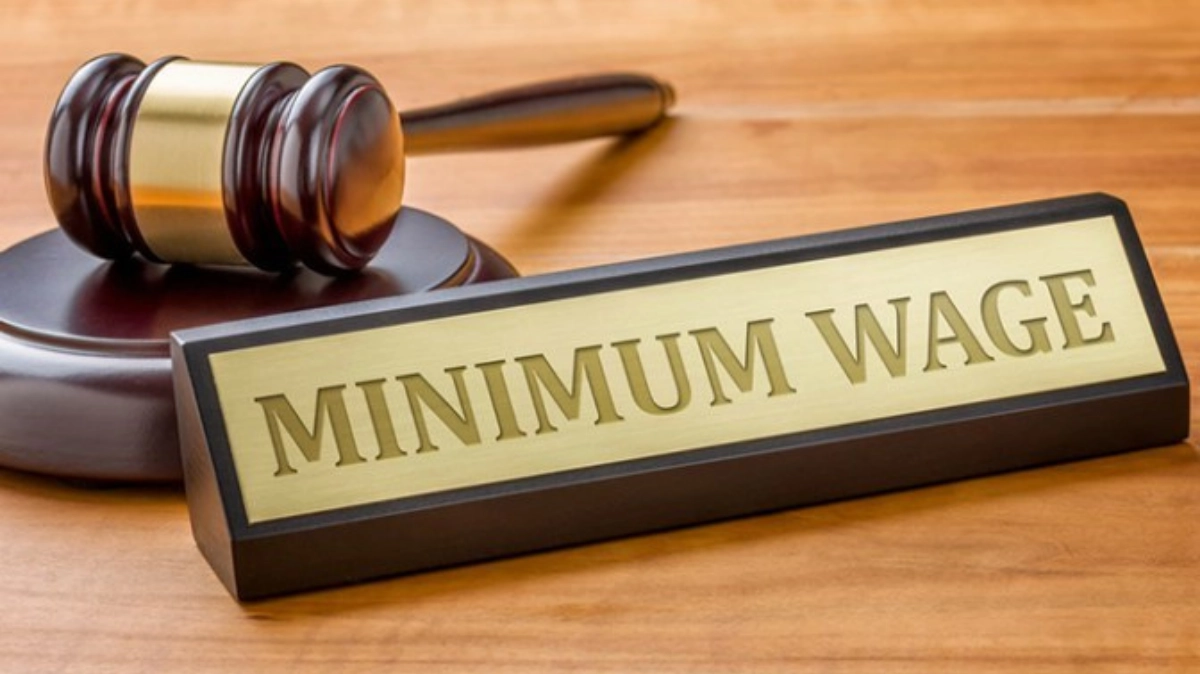
The national minimum wage in South Africa is R30.23 for each ordinary hour worked, effective from 1 March 2026. Farm workers and domestic workers are entitled to the full R30.23, with no lower rate for either category. For a standard 45-hour week that works out to about R1,360 a week or roughly R5,894 a month. Workers on the Expanded Public Works Programme are the main exception, at R16.62 per hour. The rate is binding on all employers, and paying below it is unlawful unless the employer holds a formal exemption.
The 2026 minimum wage rates
The rates were gazetted by the Minister of Employment and Labour in Government Gazette 54075 on 3 February 2026, under the National Minimum Wage Act, and became binding on 1 March 2026.
| Worker category | Minimum rate from 1 March 2026 |
|---|---|
| General workers, all sectors | R30.23 per hour |
| Domestic workers | R30.23 per hour |
| Farm workers | R30.23 per hour |
| Expanded Public Works Programme workers | R16.62 per hour |
| Learners on registered learnership agreements | Weekly allowances by NQF level, per Schedule 2 of the gazette |
The increase took the rate from R28.79 to R30.23, a rise of five percent. Learnership allowances range from R455.00 to R2,654.04 per week depending on NQF level and credits earned. Some sectors with their own determinations, such as contract cleaning and wholesale and retail, have gazetted rates above the national floor that vary by area and job category, so workers in those sectors should check the sectoral tables rather than assume the national rate.
What that means per day, week and month
The minimum wage is set per hour, so your legal minimum depends on the hours you actually work. Based on the R30.23 rate, an eight-hour day comes to R241.84, a 45-hour week to R1,360.35, and a month of 45-hour weeks to approximately R5,894 using the standard conversion employers apply. A worker on 40-hour weeks would have a monthly minimum of roughly R5,240.
One protection matters for part-time and casual workers: under the National Minimum Wage Act, if you work for less than four hours on a day, you must still be paid for four hours. A domestic worker who comes in for a two-hour shift must therefore be paid at least R120.92 for that day.
What counts toward the minimum wage
The minimum wage is your cash wage for ordinary hours worked. Under the Act it excludes tips, bonuses, gifts, and allowances paid for transport, tools, food or accommodation. An employer cannot count your taxi money or a year-end bonus toward reaching R30.23 per hour. Deductions such as UIF come off after the wage is calculated, not before.
Can an employer legally pay less
Only with an exemption. Employers who genuinely cannot afford the rate can apply through the Department of Employment and Labour’s national minimum wage exemption system, and an exemption, where granted, is limited in size and duration. An employer who simply decides to pay less, or who cuts hours or changes conditions to dodge the increase, is acting unlawfully. Confirm the current exemption rules with the Department of Employment and Labour before relying on them, as the process and limits are set by regulation and change periodically.
What to do if you are paid below the minimum
Underpayment is enforceable, and the process is free. A worker who has not been paid at least the minimum wage can refer a claim for the unpaid amount to the CCMA, which handles these referrals through conciliation followed immediately by arbitration on the same day. You can also report an employer to a Department of Employment and Labour inspector. Employers found in breach can be ordered to repay the shortfall retrospectively, and dismissing or victimising a worker for asserting the right to the minimum wage is itself an unfair labour practice. Keep your payslips, hours records and any messages about pay, because they are the evidence the CCMA will work from.
FAQ
What is the minimum wage in South Africa per hour?
R30.23 per ordinary hour worked, effective from 1 March 2026.
What is the minimum wage for domestic workers in 2026?
R30.23 per hour, the same as the national rate. Domestic workers reached full parity in 2022 and no lower rate applies.
What is the minimum wage per month in South Africa?
There is no single monthly figure because the wage is hourly. A full 45-hour week translates to about R5,894 a month, and fewer weekly hours mean a proportionally lower monthly minimum.
Can my employer pay me less than the minimum wage?
Only if the Department of Employment and Labour has granted that employer a formal exemption. Without one, paying below R30.23 per hour is unlawful.
What can I do if I earn less than the minimum wage?
Refer a claim to the CCMA, which costs nothing, or report the employer to a labour inspector. You can claim the underpaid amount retrospectively.
Do tips and allowances count toward the minimum wage?
No. Tips, bonuses, gifts and allowances for transport, food, tools or accommodation are excluded, and the R30.23 must be met by the wage itself.
What to watch
The National Minimum Wage Commission reviews the rate every year and recommends an adjustment to the Minister, with the new rate taking effect each March. Its recommendation for 2027 is expected to be published for comment in the second half of 2026, and the next increase should be gazetted around February 2027, effective 1 March 2027.