




Labour inspection South Africa: the ground rules
The Department of Employment and Labour is running a blitz inspection campaign across all three of Mpumalanga’s district municipalities from 7 to 11 September 2026, covering Nkangala, Gert Sibande and Ehlanzeni. The department announced it on 9 September 2026.
Blitz campaigns like this one are provincial, but the legal powers behind them are national. Any employer anywhere in the country can be visited by the same two kinds of inspector, working from the same statutes.
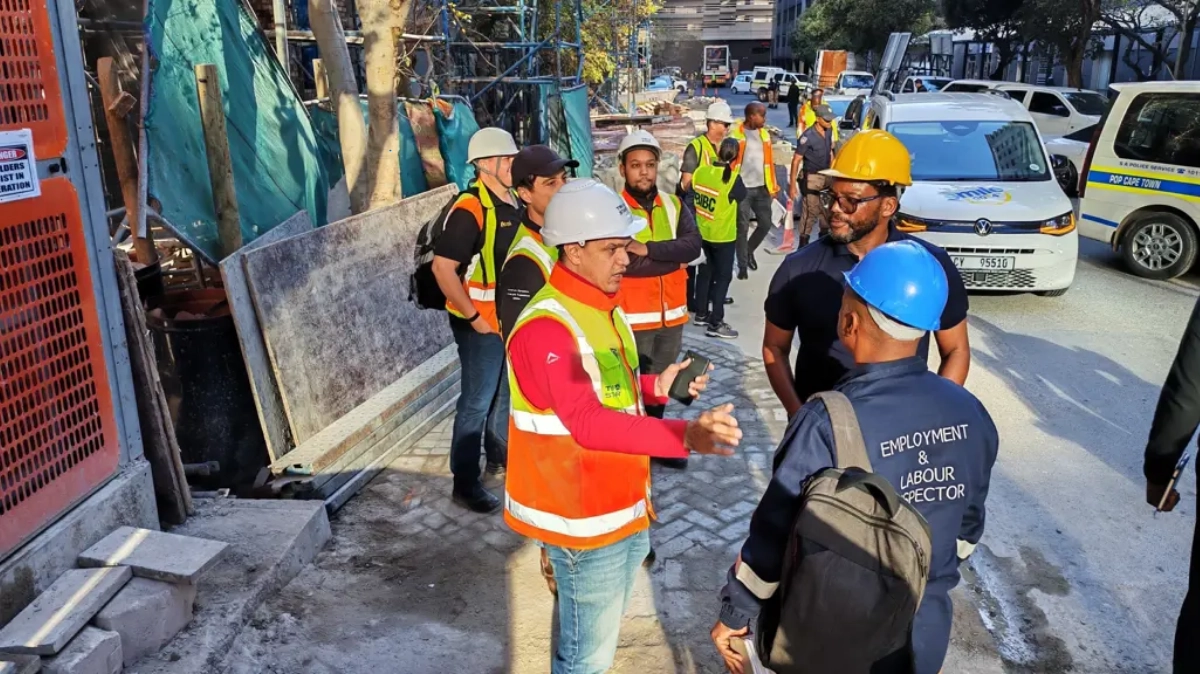
The teams are made up of Basic Conditions of Employment Act inspectors and Occupational Health and Safety Act inspectors. The department says they visit workplaces across various sectors to assess compliance with employment standards and health and safety requirements.
What a BCEA inspector looks at
The department lists the focus areas plainly. A BCEA inspection covers, among other things:
- Working hours
- Remuneration
- Leave provisions
- Employment contracts
- Other statutory requirements
Pay is where most employers come unstuck, because the national minimum wage moved on 1 March 2026 and payroll does not always move with it.
| Worker category | Minimum from 1 March 2026 |
|---|---|
| All workers, including farm and domestic workers | R30,23 per ordinary hour |
| Expanded Public Works Programme workers | R16,62 per hour |
The National Minimum Wage Act applies to all workers and their employers except members of the South African National Defence Force, the National Intelligence Agency and the South African Secret Service. It does not apply to volunteers. Allowances such as transport, tools, food or accommodation, payments in kind and tips do not count towards the minimum.
Learnership allowances and the sectoral rates for contract cleaning and for wholesale and retail are set separately, in schedules published with the same gazette.
What the health and safety side looks at
OHSA inspectors are looking for a different thing entirely, and they arrive with the same team. The department has asked employers to make sure that workplace records, policies and health and safety documentation are readily available for inspection.
In practice that means the paperwork must exist before the inspector arrives. There is no grace period to go and write a policy while somebody waits at reception.
Have these ready
Based on what the department says inspectors assess, the practical file is:
- Written particulars of employment for every employee
- Payroll records and payslips showing hours and rates
- Attendance and overtime records
- Leave records, including annual, sick and family responsibility leave
- UIF registration and contribution proof
- The workplace health and safety policy and appointment letters
- Incident and injury records
What happens if you are found non-compliant
The enforcement path under the BCEA runs in steps rather than straight to a penalty.
An inspector who believes an employer has not complied will first try to secure a written undertaking to comply. If that fails or the undertaking is broken, the inspector can issue a compliance order setting out the provision breached, any amount owed to an employee, the steps required and the maximum fine that applies.
If the employer still does not comply, the Director-General may apply to the CCMA to have the compliance order made an arbitration award, which is enforceable through the sheriff of the court. There is a limit worth knowing: amounts that have been owing for longer than 36 months before a complaint was made cannot be recovered through this route.
Workers who want to raise a complaint directly can also refer BCEA and minimum wage disputes to the CCMA. Our guide to the CCMA referral process sets out how that works.
The minimum wage fine is a multiple, not a fixed amount
This is the part employers underestimate. The fine is not a flat penalty. It scales with what you underpaid.
| Offence | Fine |
|---|---|
| First non-compliance | Twice the value of the underpayment, or twice the employee’s monthly wage, whichever is greater |
| Second or further non-compliance | Three times the value of the underpayment, or three times the employee’s monthly wage, whichever is greater |
The underpayment itself is still owed on top of the fine, with interest.
You can end up on a published list
The Department of Employment and Labour is required, under section 76(4) of the National Minimum Wage Act, to publish on its official website on a quarterly basis all employers issued with compliance orders for failing to comply with the minimum wage.
For a small business, that reputational exposure often costs more than the fine.
What workers should do
If your employer is paying below R30,23 an hour for ordinary hours, or is not giving you the leave or the written contract the law requires, you can complain to a labour inspector, a trade union representative or a trade union official. You do not need a lawyer to start.
It helps to know what you are owed before you complain. Read up on employment contract requirements, your leave entitlements and how overtime pay is calculated.
Where to check
The Department of Employment and Labour publishes the minimum wage rates, sectoral determinations and the quarterly compliance order list at www.labour.gov.za. Labour centres in every province take complaints in person. The CCMA handles referrals for BCEA and minimum wage disputes.