








South Africa’s police leadership crisis deepened on 25 March 2026 after the Presidency confirmed that the National Prosecuting Authority has brought charges against National Police Commissioner General Fannie Masemola. The case is linked to the controversial Medicare24 health-services contract, a police tender that has already led to the arrest of 12 SAPS members and a company director.
The new development matters because it pushes the scandal beyond lower-ranking officials and into the office of the country’s top police officer. It also comes while Parliament and a judicial inquiry are already examining allegations of corruption, criminal infiltration and procurement abuse inside law enforcement. Masemola is due in court on 21 April 2026, but the NPA has not yet publicly detailed the exact charges he will face.
What we know so far
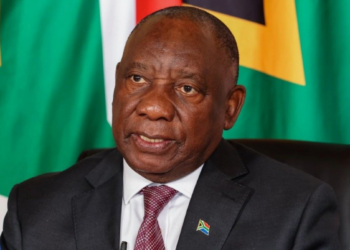
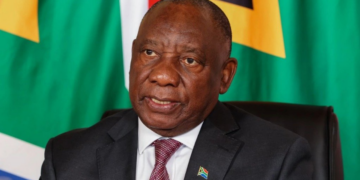
The clearest official confirmation came from the Presidency on Wednesday. President Cyril Ramaphosa said he had noted the NPA’s confirmation of charges against Masemola and his scheduled court appearance. The Presidency also said Ramaphosa would deal with the matter “in accordance with the law.”
AP reported that Masemola was served with a warrant on Wednesday in relation to the investigation into a contract for health and wellbeing services for police officers. Police spokesperson Brigadier Athlenda Mathe told reporters that Masemola had taken note of the charges and pledged full cooperation. SABC separately reported that the NPA declined to provide more detail, saying relevant information would be released when he appears in court on 21 April.
The Masemola development follows a major arrest operation a day earlier. Government said 12 SAPS members and a company director were arrested by the Investigating Directorate Against Corruption in connection with the irregular awarding of a tender to Medicare24. TimesLIVE, EWN and SABC all identified the contract as the R360 million Medicare24 Tshwane District deal linked to businessman Vusimuzi “Cat” Matlala.
The accused appeared in the Pretoria Magistrate’s Court on 25 March. SABC reported that 15 accused in the wider Medicare24 matter were granted bail of between R40,000 and R80,000, while Matlala was not granted bail because he is already in custody in another case. The court-facing charges in that group include corruption, fraud and contravention of the Public Finance Management Act, with SABC also reporting money laundering among the charges linked to the tender matter before court.
Why it matters
This is one of the most serious escalations yet in South Africa’s police corruption crisis. A serving national police commissioner being formally summoned in a corruption-linked procurement case is institutionally significant in any country, but especially in South Africa, where the SAPS has already faced years of reputational damage from state capture, tender abuse and allegations of criminal infiltration.
The case also lands in a broader political context. The current scandal grew out of explosive allegations made in 2025 by KwaZulu-Natal police commissioner Nhlanhla Mkhwanazi, who said criminal syndicates and politically connected figures had penetrated the police. Those claims triggered parliamentary hearings and a broader inquiry. AP reported that an interim report from that inquiry has already recommended more criminal investigations against several officials.
For government, the risk is not only legal but operational. Ramaphosa’s office said it remains committed to ensuring the police service stays stable and continues to fulfil its mandate. That wording reflects the sensitivity of the moment. A corruption case involving the SAPS national commissioner can unsettle command structures, complicate reform efforts and further erode public confidence in policing.
There is also a procurement angle that matters beyond policing. The Medicare24 contract was meant to provide health services to police personnel, but it has now become the centre of a widening fraud and corruption case. The size of the deal, reported at R360 million, makes it large enough to raise obvious questions about oversight, internal controls and how bid processes were handled inside the police service.
Key details and figures
The core verified facts in the case now include:
- Masemola has been charged, according to a Presidency statement confirming the NPA’s action.
- He is due to appear in court on 21 April 2026.
- Government says 12 SAPS members and a company director were arrested over the irregular awarding of the Medicare24 tender.
- The contract at the centre of the scandal has been widely reported as worth R360 million.
- The arrested group’s court matter includes allegations of corruption, fraud and PFMA contraventions, with SABC also reporting money laundering charges in the broader Medicare24 case before court.
- Fifteen accused in the wider matter were granted bail of between R40,000 and R80,000 on 25 March, while Matlala remained in custody.
These details are important because they show the scandal has moved well beyond inquiry-stage testimony. It is now a live criminal process involving arrests, bail proceedings, a scheduled court date for the commissioner, and formal acknowledgement from the Presidency.
What happens next
The next major date is 21 April, when Masemola is scheduled to appear in court. Until then, one of the biggest unresolved questions is whether the NPA will publicly set out the exact counts against him before the hearing or only at his appearance. At the moment, that detail has not been publicly released.
The wider tender case will also continue. The officers and other accused who appeared in Pretoria are now out on bail, which means the matter will move into the next procedural phase while investigators and prosecutors develop the case further. The Presidency’s wording suggests Ramaphosa is trying to avoid pre-judging the outcome while still signalling that the matter has become too serious to ignore.
For South Africa, the story is not only that a top official has been charged. It is that a major corruption probe inside the police has now reached the apex of the institution. That makes the next court steps, and the evidence eventually presented, important not just for Masemola’s future but for the credibility of the SAPS itself.