






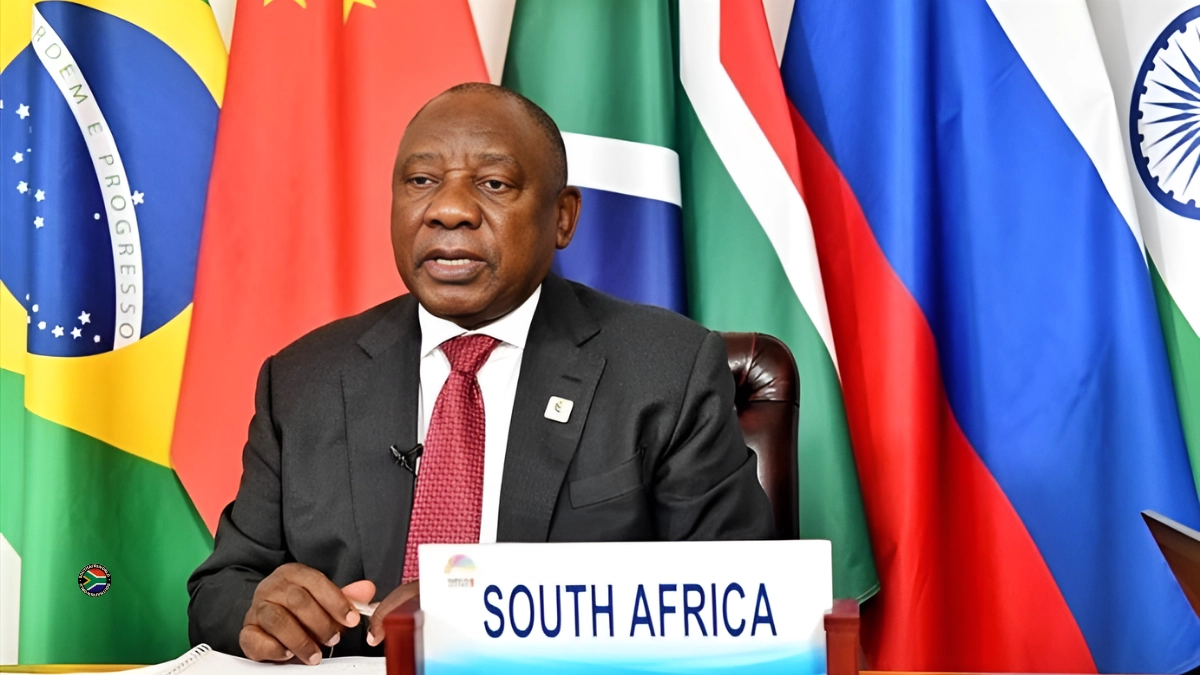
South Africa has been left off France’s current guest list for the June 2026 G7 summit in Évian-les-Bains, opening a fresh diplomatic dispute at a time when Pretoria’s relationship with Washington is already under strain. The controversy is not only about whether President Cyril Ramaphosa will attend. It is also about why South Africa is absent from the list and whether United States pressure shaped the outcome.
The verified picture is more complicated than the initial headlines suggested. Presidency spokesperson Vincent Magwenya told AFP and SABC that France had withdrawn South Africa’s invitation after sustained pressure from the US, including an alleged threat to boycott the summit if Pretoria attended. French officials then denied that explanation, saying Kenya was invited instead because of President Emmanuel Macron’s planned visit there later this year. Ramaphosa later added that South Africa should not view its absence as a snub and said there had been no pressure on France.
That matters because South Africa has regularly been invited to G7 outreach sessions as one of the leading voices from Africa and the Global South. It also matters because the next step is now clear: unless France changes its guest list before the summit on 15 to 17 June 2026, South Africa will miss a high-level platform it has used in recent years to push African development, multilateral reform and Global South priorities.
What we know so far
France’s 2026 G7 Presidency has officially confirmed the summit dates and has stated that the presidency decides which third countries are invited. The French foreign ministry’s G7 explainer also notes that South Africa was invited during France’s 2019 presidency and during Canada’s 2025 presidency, which underscores that Pretoria’s participation has become relatively normal in recent years even though it is not a G7 member.
Reuters reported on 26 March that France plans to host the leaders of India, South Korea, Brazil and Kenya at the June summit. In the same report, French officials denied excluding South Africa because of pressure from Washington and said France had simply decided to invite Kenya this time. That is the current official French position on record.
Pretoria’s version initially sounded sharper. According to SABC, Magwenya said the reason given to South Africa was “sustained pressure from the US”, including a threat to boycott the meeting, and said France could not risk the absence of a key G7 member. Reuters separately reported Magwenya saying South Africa had accepted the French decision and appreciated the pressure France had been subjected to.
Then came a second shift from the South African side. Ramaphosa said later on Thursday that South Africa’s absence should not be seen as a snub, stressed that France has discretion over who it invites, and said there had been no pressure on France. That means the public South African message is no longer fully aligned, with the presidency spokesperson and the president himself offering materially different interpretations of the same event.
Why it matters
The first reason this matters is diplomatic access. South Africa is not a G7 member, but guest invitations still matter because they provide direct access to some of the world’s biggest economies and most influential political leaders. In recent years South Africa has used such outreach invitations to position itself as an African and Global South interlocutor on trade, development finance, reform of multilateral institutions and conflict diplomacy.
The second reason is geopolitical signalling. Even if France insists that South Africa was not removed because of the US, the very existence of a public dispute over Washington’s role is significant. Reuters noted that Trump has criticised South Africa’s foreign policy and domestic race laws, boycotted the 2025 G20 summit in Johannesburg and excluded South Africa from 2026 G20 meetings. That broader context makes the G7 episode look less isolated and more like part of a wider deterioration in ties between Pretoria and Washington.
The third reason is reputational. South Africa has been a regular guest at past G7 gatherings, and its absence this year will be read internationally through the lens of current diplomatic tensions whether France wants that interpretation or not. That does not mean Pretoria has been formally punished by the G7 as a bloc. But it does mean that an established pattern of participation has been interrupted at a politically sensitive moment.
Key details and figures
Several facts define the current position:
- France’s 2026 G7 summit is scheduled for 15 to 17 June in Évian-les-Bains.
- France says the current guest countries are India, South Korea, Brazil and Kenya.
- Magwenya told AFP and SABC that South Africa’s invitation had been withdrawn after sustained US pressure, including an alleged boycott threat.
- French officials denied that explanation and said Kenya was invited instead ahead of Macron’s visit there.
- Ramaphosa later said South Africa should not treat its absence as a snub and said there had been no pressure on France.
- France’s foreign ministry says the summit presidency has sole discretion over inviting third countries.
- France invited South Africa during its 2019 presidency, and Canada also invited South Africa in 2025.
These details matter because they show that three propositions are simultaneously true. South Africa is not on the current guest list. Pretoria initially said the invitation had been withdrawn under US pressure. France rejects that explanation and Ramaphosa later softened South Africa’s own public line.
What happens next
The immediate next step is whether France leaves the guest list unchanged. If it does, Ramaphosa will not attend the summit in June unless a late political decision alters the invitation list. So far there is no indication from France that it plans to revise the announced set of guest countries.
The second question is how South Africa manages the diplomatic fallout. Magwenya told SABC that Pretoria remains committed to constructive engagement with the US and that the bilateral relationship with France remains strong. Ramaphosa’s later comments also suggest the Presidency wants to prevent the issue from hardening into a public rupture with Paris.
The third question is what this says about South Africa’s broader external environment in 2026. If the country is increasingly sidelined from Western-led forums because of tensions with Washington, that could affect not only symbolism but also access, influence and the informal diplomacy that happens around major summits. For now, though, the most accurate formulation is narrower: South Africa is off France’s current G7 guest list, Pretoria first said an invitation had been withdrawn under US pressure, France denied that account, and Ramaphosa later said the decision should not be seen as a snub.