







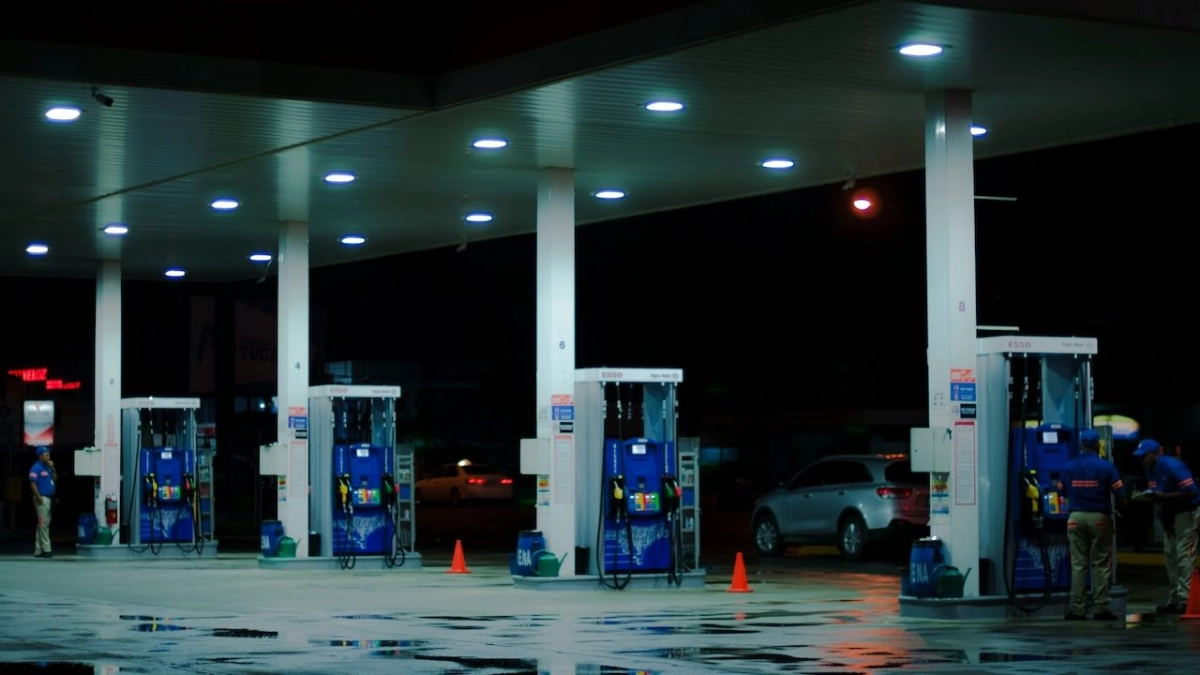
South Africa’s petrol stations are under growing financial pressure after another sharp fuel-price increase hit in May, even as many motorists assume higher pump prices mean forecourts are making more money. The latest official adjustment took effect on 6 May 2026, with both grades of petrol increasing by R3.27 a litre and diesel by R5.27 a litre.
The stronger and more accurate angle here is not that fuel retailers are cashing in on the crisis. The public record points in the opposite direction. South Africa’s fuel retail model is tightly controlled, and operators do not simply raise prices and pocket the difference when petrol and diesel surge. The Fuel Retailers Association says many stations already operate on very thin margins, while the Department of Mineral and Petroleum Resources shows that key retail components of the fuel-price formula are fixed or guideline-based rather than freely set by station owners.
That matters because the latest fuel shock is not only hitting motorists. It is also forcing service stations to carry more working-capital risk, manage falling volumes, and survive in a market where many sites were already struggling to remain viable before the newest round of increases.
What we know so far
The immediate trigger is the latest official fuel-price adjustment. Government said on 4 May that from 6 May 2026, petrol 93 and 95 would both rise by R3.27 a litre, while diesel 0.05% sulphur and 0.005% sulphur would rise by R5.27 a litre. The department linked the increases to higher crude oil prices, rising international petroleum product prices and a smaller relief cushion from government than in April.
The Department of Mineral and Petroleum Resources’ own fuel-price-structure material explains why this does not translate into easy profits for service stations. It says the retail profit margin on petrol is fixed by government and is based on actual service-station operating costs, while the wholesale margin is set through an industry-average formula rather than by daily retailer discretion. In short, the biggest visible number on the forecourt board is not the same thing as retailer freedom to make larger margins.
That aligns with what the Fuel Retailers Association told The Money Show in March. In comments reported by EWN, association CEO Reggie Sibiya said running a petrol station in South Africa is a tough, tightly regulated, high-volume business. He said fuel sales account for 80% to 90% of turnover, but that operators do not control the selling price and depend heavily on volume, cost control and side businesses to stay afloat.
Sibiya also gave the clearest warning sign about sector stress: “There are very few service stations that really make it.” According to him, a site generally needs to pump more than 300,000 litres a month to be truly viable, while the majority fall below that benchmark. He also said volumes are declining because of more fuel-efficient vehicles, more people working from home and illegal trading in the market.
Why it matters
This matters because rising fuel prices hit petrol stations on both sides of the business at once. On the one hand, operators need more capital to refill tanks when wholesale prices jump sharply. On the other, consumers often respond by buying smaller rand amounts instead of filling up fully, which weakens volume growth even when turnover numbers look bigger on paper. The result is a harsher cash-flow environment rather than a simple windfall. This is an inference supported by the combination of regulated margin structures and the Fuel Retailers Association’s viability warning.
The latest price increase also followed weeks of operational stress across the retail system. In March, government and the fuels industry jointly urged motorists not to panic-buy and said South Africa’s fuel supply remained stable in the immediate term, even though there were isolated logistical challenges at forecourt level. That warning was needed because demand spikes and delivery constraints were already putting pressure on some stations before the May price adjustment arrived.
The Fuel Retailers Association told CapeTalk in late March that some local site constraints were being driven by sudden demand spikes rather than a national shortage. That matters because it shows how fragile the retail layer can become when consumers rush to buy ahead of large increases. A station can face disruption without the country actually running out of fuel.
There is also a structural problem beyond the immediate shock. Sibiya said the market is already saturated and that few new stations are being built, which suggests the sector is not expanding into easy new growth. Instead, many forecourts are leaning more heavily on convenience stores, food outlets and other alternative profit opportunities because fuel alone is not enough to guarantee sustainability.
Key details and figures
The official May increase was severe. Petrol rose by R3.27 a litre and diesel by R5.27 a litre from 6 May. That followed an already painful April increase, when government had announced a R3.06 per litre petrol rise and even steeper diesel increases. The scale and frequency of these shocks matter because they rapidly raise the working capital needed to keep forecourt tanks full.
At the same time, the regulated structure of the market limits how retailers can respond. The department’s fuel-price-structure page says the retail margin on petrol is fixed by government, while the wholesale margin is determined through a formula aimed at a benchmark return on assets. That means operators cannot simply reprice pump fuel to reflect their own individual site pressures.
The retail viability benchmark described by the Fuel Retailers Association is another critical number. According to Sibiya, stations pumping above 300,000 litres a month are viable and can make money, but most fall below that line. That suggests a large share of the market may already be living with weak economics even before severe fuel shocks, wage pressure and electricity costs are layered on top.
The same EWN report says fuel accounts for 80% to 90% of total forecourt turnover, but that margins on the fuel itself remain tight. That is why retailers increasingly depend on convenience retail, fast food and other non-fuel income streams to improve profitability. The bad news for petrol stations, then, is not only the price increase itself. It is that the core product is becoming more expensive to carry without becoming much easier to profit from.
What happens next
The next phase of the pressure will depend on whether international oil markets settle and whether local demand normalises after the recent price shocks. If global conditions ease, the cash-flow strain on forecourts could soften. If they do not, stations may face a more prolonged period of higher stock costs, weaker fuel volumes and greater reliance on non-fuel businesses to stay viable. This is an inference based on the official pricing mechanism and the Fuel Retailers Association’s description of the sector’s economics.
For policymakers, the longer-term issue is whether the current fuel-retail framework still reflects operating reality on the ground. Government’s own fuel-price documents show a market shaped by fixed margins and formula-based returns, while retailers are saying viability is already weak at many sites. That gap is likely to remain under scrutiny if large monthly price shocks continue.
For readers, the safest conclusion is narrow and factual. The bad news for petrol stations in South Africa is not that fuel has become unsellable. It is that the latest price surge is hitting a sector that already works on tight, regulated margins, depends heavily on volume, and has been warning that many service stations are only barely viable.