





Eskom has reached one of its clearest operational milestones in years, extending South Africa’s run without load shedding beyond 300 consecutive days. The utility said the 300-day mark was reached at midnight on 12 March 2026, and its latest system update says the uninterrupted stretch had risen to 308 consecutive days by 20 March.
The milestone matters because it marks a sharp improvement from the years when rolling blackouts disrupted homes, factories, schools and public services across the country. It also signals better plant reliability, lower emergency diesel use and a healthier reserve margin than South Africa had become used to. What happens next is now the key question. Eskom says its Summer Outlook still points to no load shedding through 31 March 2026, but the utility must now show that this stability can last beyond a single season and translate into durable long-term energy security.
What we know so far
The central development is now firmly on the record.
Eskom announced on 13 March that South Africa had reached 300 consecutive days without load shedding, describing the milestone as evidence of the continued recovery of its generation fleet under the Generation Recovery Plan. In its latest weekly system statement, issued on 20 March, the utility said that uninterrupted run had extended to 308 consecutive days, with only 26 hours of load shedding recorded in April and May 2025 during the current financial year.
The company says the improvement is being driven by better generation performance. For the financial year to date, from 1 April 2025 to 19 March 2026, Eskom said its Energy Availability Factor stood at 65.38%. It also said the fleet had reached or exceeded the 70% EAF mark on 83 occasions during that period.
That is a notable shift for a system that had become defined by breakdowns and low reliability. Eskom also said average unplanned outages between 13 and 19 March 2026 were down 17% from the same week a year earlier, while the average from 6 to 12 March was down 53% year on year.
The utility is also pointing to large diesel savings. For the financial year to 19 March 2026, it said diesel expenditure was R9.25 billion lower than the same period a year earlier, equal to a 59.11% reduction. In practical terms, that suggests Eskom is relying less on expensive emergency open-cycle gas turbine generation to keep the grid stable.
There is also another supportive milestone in the background. Eskom said on 10 March that Koeberg Unit 2 had completed 365 consecutive days of operation at an average 99.4% Energy Availability Factor since its major upgrades were completed. That unit contributes about 946MW to the national grid, making its reliability meaningful for the broader system.
Why it matters
The immediate importance of the milestone is economic.
Load shedding has been one of the biggest drags on South Africa’s economy for more than a decade. It has raised operating costs for businesses, disrupted production, reduced investor confidence and forced households to spend heavily on backup power. A 300-day-plus run without scheduled cuts therefore matters not only as an Eskom achievement, but as a wider economic and social development.
It also matters because of what sits underneath the headline. This is not just a public relations win built around a streak. Eskom is pairing the no-load-shedding run with lower unplanned outages, better EAF performance and significantly reduced diesel spend. Those indicators suggest the system is not only surviving through luck or low demand, but is operating with more structural resilience than before.
The improvement is particularly relevant after a period when the utility appeared trapped in a cycle of breakdowns, emergency generation and public distrust. Reuters reported in September 2025 that Eskom posted its first full-year profit in eight years for the year ended March 2025, helped by improved operational performance and a steep reduction in power cuts. That means the current operational milestone also connects to a broader turnaround story inside the utility.
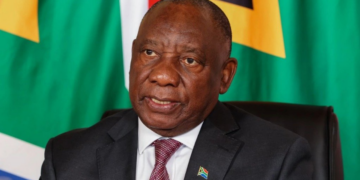
There is a national planning angle as well. President Cyril Ramaphosa said in February that government would continue with Eskom’s restructuring and push ahead with creating a fully independent state-owned transmission entity. That reform agenda becomes easier to advance in a system that is more stable than it was during the worst blackout years.
Still, the good news is not the same as final victory. Eskom’s own statements show that unplanned outages remain substantial in absolute terms, and the utility continues to rely on careful system management, planned maintenance and reserve planning. The recent milestone is therefore significant, but not a guarantee that South Africa’s electricity crisis has fully ended.
Key details and figures
The numbers behind the milestone help explain why it is being treated as important:
- Eskom said South Africa reached 300 consecutive days without load shedding at midnight on 12 March 2026.
- By 20 March 2026, the uninterrupted run had extended to 308 consecutive days.
- Only 26 hours of load shedding were recorded in April and May 2025 during the current financial year.
- The Energy Availability Factor for the financial year to 19 March 2026 stood at 65.38%.
- Eskom said the generation fleet had reached or exceeded 70% EAF on 83 occasions during that period.
- Average unplanned outages between 13 and 19 March 2026 were 10,739MW, down from 12,968MW in the same week a year earlier.
- Between 6 and 12 March 2026, average unplanned outages were 7,224MW, down from 15,382MW a year earlier.
- Eskom said diesel expenditure for the financial year to 19 March 2026 was R9.25 billion lower than the same period last year.
- Koeberg Unit 2 has delivered 365 consecutive days of operation at an average 99.4% EAF since its major upgrade work was completed.
- Eskom forecast evening peak demand for 23 March at 23,088MW, against available capacity of 28,592MW.
These figures matter because they show the milestone is being supported by other performance signals, especially reserve margins, improved plant availability and lower diesel dependence.
Timeline
September 2025
Eskom published its Summer Outlook, covering 1 September 2025 to 31 March 2026, and projected that no load shedding would be needed if plant performance remained on its improved path.
September 2025
Reuters reported that Eskom had posted its first full-year profit in eight years after a sharp reduction in power cuts and improved station performance.
10 March 2026
Eskom announced that Koeberg Unit 2 had reached 365 consecutive days of operation since major upgrades were completed.
13 March 2026
Eskom said South Africa had officially reached 300 consecutive days without load shedding.
20 March 2026
The utility’s next weekly system update extended that run to 308 consecutive days.
What happens next
The next test is whether Eskom can carry this performance through the end of the current summer outlook period and then into winter, when demand patterns and plant pressures can change.
For now, the utility says no load shedding is expected through 31 March 2026 under its current outlook. It also says it plans to bring 2,985MW of generation capacity online ahead of the evening peak on 23 March, with available capacity expected to remain comfortably above forecast demand.
That said, Eskom still faces deeper structural challenges. Its infrastructure remains old in many areas, transmission reform is still under way, and the company continues to deal with illegal connections, load reduction in high-risk areas and the need for sustained maintenance.
The most realistic reading of the current moment is that Eskom has achieved a genuine and important milestone, but one that still needs to be defended over time. South Africa is in a more stable electricity position than it was a year or two ago, and the utility now has harder operational evidence to support that claim. The next phase is proving that this improved supply period is not a temporary streak, but the foundation of a more dependable power system.
Reporting basis: This article is based on Eskom’s 13 March 2026 statement marking 300 consecutive days without load shedding, its 20 March 2026 system update extending the run to 308 days, its 10 March 2026 Koeberg Unit 2 performance update, Reuters reporting on Eskom’s first full-year profit in eight years, and Reuters reporting on the government’s transmission reform agenda.