


What we know so far
The Competition Commission has recommended that the Competition Tribunal approve the $2.6 billion, roughly R42 billion, sale of Coca-Cola Beverages Africa to Swiss-based Coca-Cola HBC, moving one of the largest deals in South Africa’s consumer sector closer to completion.
The Commission announced its decision in a statement on Monday, 13 July, saying the proposed transaction is unlikely to substantially lessen or prevent competition in any market.
The endorsement comes with conditions. These include a moratorium on merger-related retrenchments in South Africa, Coca-Cola HBC’s commitment to a secondary listing on the Johannesburg Stock Exchange, and investment in the downstream distribution and retail side of its South African business.
The deal, announced in October 2025, will see Coca-Cola HBC acquire a 75% controlling interest in Coca-Cola Beverages Africa from The Coca-Cola Company and Gutsche Family Investments. The transaction values the whole of CCBA at an equity value of $3.4 billion.
Coca-Cola HBC told Business Day the Commission’s recommendation keeps it on course. “We remain on track to complete the acquisition by the end of 2026 and are continuing to work through the customary regulatory approvals,” the company said, adding that preparations for the JSE secondary listing also remain on track.
Why it matters
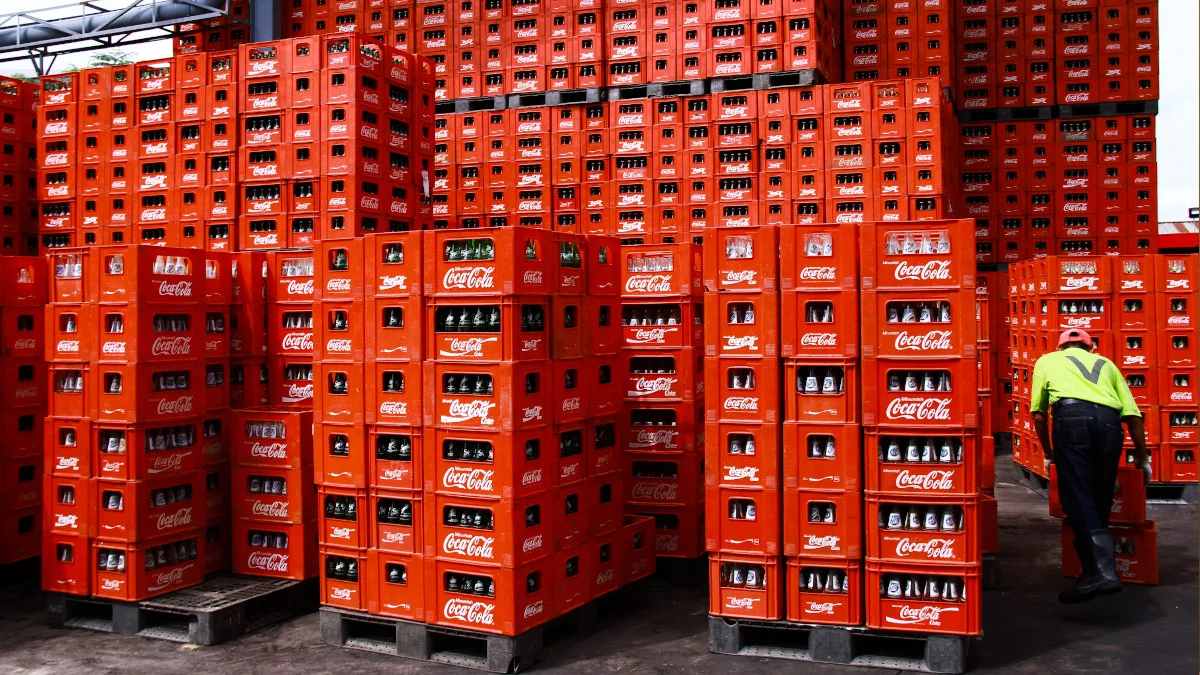
For South African consumers, nothing changes on the shelf. Coca-Cola products will continue to be bottled and sold as before. What changes is who controls the company that makes them.
CCBA is Africa’s largest Coca-Cola bottler, operating in 14 countries and accounting for about 40% of all Coca-Cola product volume sold on the continent. Its South African subsidiary, Coca-Cola Beverages South Africa, employs more than 5,500 people across 11 manufacturing plants in six provinces, according to the group’s own figures.
The employment condition is significant against that backdrop. Coca-Cola Beverages South Africa announced plans in September 2025 to cut more than 600 jobs, and the Commission’s moratorium on merger-related retrenchments offers workers protection as ownership changes hands.
The JSE listing condition also carries weight for the local market. Coca-Cola HBC, which has a market capitalisation of about £18 billion, roughly R395 billion, in London, committed to a secondary Johannesburg listing when the deal was announced. The Commission has now built that commitment into its conditions, securing a major new listing for an exchange that has battled delistings for years.
For the Gutsche family, the sale ends more than eight decades of direct ownership in the Coca-Cola bottling business in Africa. “Coca-Cola HBC is the ideal partner to carry the CCBA business forward,” GFI chairman Philipp Hugo Gutsche said when the deal was announced.
Key details and figures
Under the transaction structure, The Coca-Cola Company is selling 41.52% of its 66.52% stake in CCBA, while Gutsche Family Investments is selling its entire 33.48% holding. A separate option agreement allows Coca-Cola HBC to acquire the remaining 25% still owned by Coca-Cola within six years of closing, creating a path to full ownership.
The combination will make Coca-Cola HBC the world’s second-largest Coca-Cola bottling partner by volume and the biggest by geographic footprint, expanding its operations from 29 to 43 countries. After closing, the group will represent two-thirds of Africa’s total Coca-Cola system volume and cover more than half of the continent’s population.
The deal also reshapes Coca-Cola HBC’s revenue map. Ratings agency S&P estimates that South Africa will overtake Russia as the group’s largest market after the transaction, contributing about 15% of total revenue, with Nigeria and Russia at about 10% each. Russia was the group’s top-selling market in 2024 at 13% of revenue, and S&P views the CCBA deal as a way to reduce exposure to risks from ongoing sanctions.
CCBA, led by chief executive Sunil Gupta, has continued investing through the process. Its latest outlay is R365 million on a new bottling line at its Midrand plant in Johannesburg, capable of producing 72,000 bottles per hour, as reported by Business Day.
Coca-Cola HBC CEO Zoran Bogdanovic said the group sees major growth potential on the continent. “We are very excited to announce the acquisition of a majority stake in CCBA, with a path to full ownership,” he said at the announcement, citing Africa’s sizable and growing consumer base and significant potential to increase per capita consumption.
What happens next
The Commission’s recommendation is not the final word. The Competition Tribunal must still consider the merger and the proposed conditions before the deal can be implemented in South Africa, and no hearing date has been announced.
Coca-Cola HBC must also complete regulatory and antitrust approvals in other jurisdictions where CCBA operates. Botswana’s Competition and Consumer Authority has already issued a decision on the merger in that market.
If approvals proceed as planned, the acquisition is targeted to close by the end of 2026, with Coca-Cola HBC’s secondary listing on the JSE expected in the same window. The company has confirmed to Business Day that both timelines remain on track.
For the roughly 5,500 workers at Coca-Cola Beverages South Africa, the practical effect of the employment moratorium, including its duration and scope, will be spelled out in the final conditions confirmed by the Tribunal. The Coca-Cola Company, for its part, expects bottling investments to fall to about 5% of its consolidated net revenue once the transaction closes, down from 52% in 2015, completing a decade-long global refranchising drive.