






What we know so far
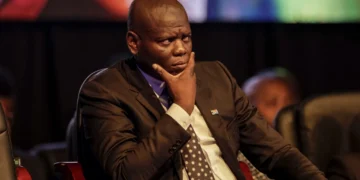
Kuben Naidoo, a member of President Cyril Ramaphosa’s presidential economic advisory council, has proposed a voluntary tax surcharge that companies could pay in exchange for a black economic empowerment compliance certificate, according to advisory notes reported by Business Day on 18 July.
Under the proposal, a company could voluntarily pay a 5% surcharge on its corporate income tax bill. The surcharge would not be tax deductible. “If a company is assessed as having to pay R100 in corporate income tax, it would voluntarily pay R105,” Naidoo wrote in the notes.
Companies that pay the surcharge regularly would face no other BEE obligations or reporting requirements, according to the proposal.
The notes were written in January and formed part of the presidential economic advisory council pack ahead of this year’s state of the nation address. They had not been made public until Business Day’s report.
Naidoo, formerly with the South African Reserve Bank and now with Investec, was appointed to the advisory council by Ramaphosa in 2024.
Why it matters
BEE remains one of the most contested economic policy debates in South Africa, and any proposal to change how it is administered carries significant weight, particularly one coming from a member of the president’s own economic advisory body.
Naidoo’s proposal is not government policy. It is a recommendation contained in advisory notes to the presidential economic advisory council, and no minister or department has adopted it. The article treats it as a proposal under debate, not an enacted or pending tax.
Naidoo said the surcharge model draws on a proposal originally made by technology entrepreneur Alan Knott-Craig Jnr, who called for companies to pay 3% of gross revenue in exchange for automatic level 3 broad-based BEE status, an alternative to the current scorecard system.
Based on his estimate, the surcharge would raise about R5 billion a year, calculated on corporate tax collections of roughly R320 billion in 2024/25 and assuming about a third of firms opt to pay voluntarily.
Naidoo proposed splitting the money in two. Half would go to state-owned development finance institutions to lend to black and women entrepreneurs, or those investing in townships or former homelands. The other half would go to banks that pledge to use and report on the funds for lending to black-owned businesses or businesses investing directly in townships and former homeland areas.
Key details and figures
Naidoo’s notes include a pointed critique of BEE in its current form. “BEE has created a class of rent-seekers, not a class of entrepreneurs. BEE has facilitated a corrupt relationship between the state and sections of the black elite. BEE has scared away foreign investments and undermined domestic investments because it is difficult and costly to implement, monitor and sustain,” he wrote.
He argued that even the perception of high compliance costs limits investment and undermines growth and employment.
At the same time, Naidoo cautioned against scrapping BEE altogether. “If BEE were to be scrapped, the consequence is not likely to be the growth boom we all yearn for. It is more likely to result in a rise in populism, rising social fragmentation and strife, and people beginning to question South Africa as a viable free market economy,” he wrote.
He also framed continued transformation as necessary for the survival of a free market system in South Africa. “If all the capitalists are white and all the poor are black, surely capitalism cannot survive in a country where 91% of the population is black? Surely, if one believes in free markets, then there must be the nurturing of a growing black capitalist class,” he wrote.
Independent economist Duma Gqubule rejected Naidoo’s characterisation of BEE’s economic costs. “It is difficult to understand how providing shares to workers and communities, employing more black people in management, investing in employees through skills development, diversifying supply chains, investing in black companies through enterprise and supplier development, and empowering communities through the socioeconomic development initiatives that precede BEE can be bad for the economy,” Gqubule said. He argued that many costs attributed to BEE would have been incurred regardless, as part of ordinary corporate citizenship and the global diversity and inclusion movement.
Naidoo’s position echoes earlier remarks by Joel Netshitenzhe, a former senior government communication and policy official under presidents Nelson Mandela and Thabo Mbeki, who has defended BEE while urging critics to reckon with the need for a black capitalist class. “This then brings to the fore a frank discussion that some find uncomfortable. And this is that postcolonial class formation has to include, as a core element, the emergence, or creation, of a cohort of black capitalists,” Netshitenzhe said at a B-BBEE Commission strategy session.
What happens next
Naidoo’s proposal would need to be considered and adopted through government policy channels before it could take effect, and no such process has been announced. It has surfaced publicly only through Business Day’s reporting on the previously undisclosed advisory notes, not through a formal government announcement.
The proposal intersects with the department of trade, industry and competition’s planned transformation fund, an initiative that has itself drawn opposition from critics who view it as a vehicle for rent-seeking. How Naidoo’s surcharge idea might relate to or compete with that fund has not been addressed publicly by government.
Given the sharp divide already evident between Naidoo and critics such as Gqubule, the proposal is likely to feed into the broader, ongoing debate over BEE’s future rather than move quickly toward implementation. Southafriworld will report further if government responds formally or if the proposal is taken up in policy discussions.