








What we know so far
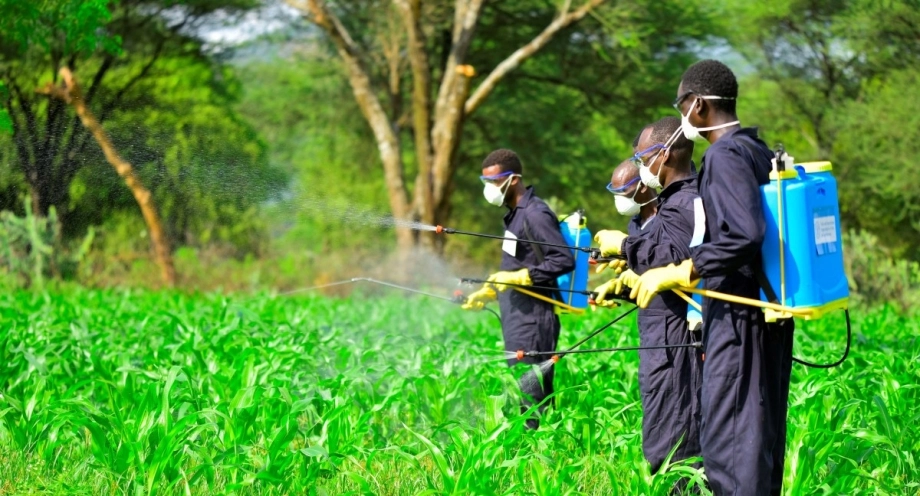
Illegal pesticides in South Africa are still reaching street vendors and township food stalls more than two months after the government banned terbufos, the poison linked to the deaths of at least 23 children in 2024, a leading toxicologist has warned.
Dr Gerhard Verdoorn, director of the Griffon Poison Information Centre, said this week that unregistered pesticides are “brought into the country as contraband from places like Zimbabwe and Mozambique” and sold in bulk by syndicates to street vendors.
Verdoorn said the chemicals contaminate food where blending and informal manufacturing happen in unsafe spaces, and that terbufos and, in some cases, aldicarb were behind the poisoning of the 23 children.
His warning landed a day after Public Protector Advocate Kholeka Gcaleka released preliminary findings showing that about 72% of inspected spaza shops in Gauteng do not comply with food safety and hygiene regulations.
Why illegal pesticides in South Africa still reach your food
The findings mean the two systems meant to protect households are failing at the same time. Border controls are not stopping contraband poisons, and municipal inspectors are not checking the shops where families buy food.
Agriculture Minister John Steenhuisen banned the acquisition, disposal, sale and use of agricultural remedies containing terbufos through a Government Gazette notice published on 8 May 2026 under the Fertilisers, Farm Feeds, Agricultural Remedies and Stock Remedies Act of 1947
Yet the poison remains in circulation. Reporting in January found terbufos still being sold by some vendors for as little as R10 (about $0.55, approximate), despite a provincial crackdown announced by Gauteng Premier Panyaza Lesufi in November 2024.
Verdoorn’s account of cross-border smuggling helps explain why. Terbufos is already banned in Zimbabwe and Mozambique themselves, along with 11 other African countries, which points to illicit stockpiles and syndicate distribution rather than legal trade.
The danger is not confined to farms. Terbufos is routinely decanted and sold in informal markets as a street pesticide, without correct labels or warnings, mostly to control rats in townships and informal settlements.
Key details and figures
The scale of the problem is documented in official records.
The Ministerial Advisory Committee on Foodborne Illnesses, which reviewed the risks of terbufos, confirmed that mortuary data recorded at least 350 terbufos-related deaths in 2023 and 2024, with children accounting for 35% of those fatalities.
The committee estimated the pesticide causes at least 175 deaths a year in South Africa, and noted that child deaths linked to terbufos have been reported for at least 15 years. The World Health Organisation classifies terbufos as a Class 1a pesticide, the most toxic category globally, and it is banned in the European Union.
The Public Protector’s preliminary findings, released on Friday 17 July, detail the enforcement gap on the ground:
- Johannesburg has one environmental health practitioner for every 20,000 residents, against the WHO norm of one per 10,000. Ekurhuleni and Tshwane each have a single practitioner serving about 43,000 and 47,000 people respectively.
- Spaza shop compliance rates stood at 5% in Ekurhuleni, 14% in Johannesburg and 30% in Tshwane, and for each licensed spaza shop almost three unlicensed shops are operational.
- Inspectors found repeated breaches of Labelling Regulations R146, persistent non-compliance with Regulation R638, rodent infestations, and the presence of aldicarb, a highly toxic poison, on food premises.
Gcaleka also found the City of Johannesburg collected samples from the Naledi spaza shop only a day after six children died there in October 2024, by which time the scene had been contaminated, meaning the city’s negative poison test results could not be trusted.
Speaking after the release, Gcaleka said of the child fatalities: “These deaths could have been prevented.”
What happens next
The Public Protector has issued a Section 7(9) notice to the affected municipalities, government departments and public entities, giving them an opportunity to respond before a final report is issued and any finding of maladministration is made.
The Gauteng government and its municipalities will now be given the chance to answer the findings. No response deadline has been publicly confirmed.
On the smuggling front, Verdoorn has called for stronger controls to stop contraband pesticides reaching communities. No new border enforcement measures have been announced by the Border Management Authority or SAPS in response to his latest warning as of publication.
The terbufos prohibition itself remains in force nationally. Enforcement against street-level sellers, and the disposal of existing illegal stock, are the unresolved questions that will determine whether the ban saves lives in practice.