




What we know so far
Seeds from South Africa’s rooibos plant are headed to the International Space Station to study how they respond to space conditions, in the first such experiment for the African continent, organisers announced on Thursday, 16 July.
The Rooibos in Space programme was officially launched at Parklands College’s Innovation Centre in Cape Town, bringing together representatives from government, education, agriculture, academia and South Africa’s space sector.
The initiative was conceived by the South African Rooibos Council and is being delivered in partnership with MaxIQ Space, with support from the South African National Space Agency.
“The seeds will be the first indigenous South African species, and the first seeds on the African continent, to go to space,” SARC director Dawie de Villiers told AFP.
The mission is scheduled for October, with the seeds expected back on Earth by December or January, SARC said.
Why it matters
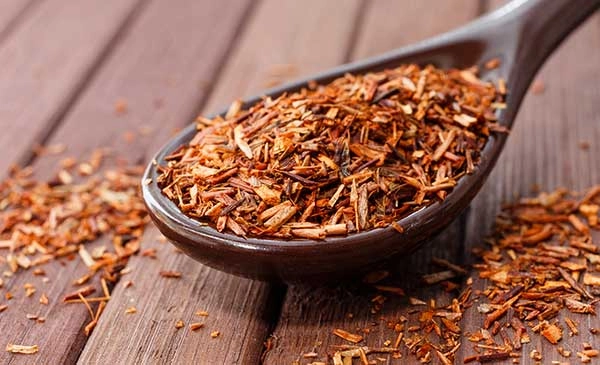
Rooibos is uniquely South African. The plant, whose name means “red bush” in Afrikaans, grows only in the Cederberg region and is used to make a sweetish, caffeine-free infusion high in antioxidants that is sold in more than 50 countries. It was added to a European Union list of protected products in 2021, meaning only leaves grown in the Cederberg can be sold as “rooibos” in EU countries.
Sending its seeds into orbit places a distinctly South African crop within a global scientific effort to understand how plants might be grown during long-duration space missions and, potentially, on future settlements beyond Earth.
“The purpose is to expose the seeds to microgravity and space radiation to find out how these seeds adapt to space conditions and if there is a future for sustainable food production beyond Earth,” de Villiers said.
De Villiers said the project also demonstrates how one of the country’s most iconic indigenous plants can contribute to international scientific research. “This project places it within a broader scientific context, where plant biology, space research and education intersect,” he said.
The initiative also has a direct economic backdrop. SARC says South Africa produces an average of 22,000 tonnes of rooibos a year, depending on rainfall and temperature, with about half consumed domestically and the rest exported mainly to Japan, France, Germany, the Netherlands and Britain.
Key details and figures
Under the mission plan, the rooibos seeds will be kept in a nanolab for at least six weeks alongside more than a dozen student experiments, as part of a broader MaxIQ Space programme aimed at encouraging STEM subject learning.
Once the seeds return to Earth, scientists and school learners will plant them alongside seeds that remained on the ground, comparing germination rates, growth, resilience and yield to determine how space exposure affected the plant.
The scientific investigation on the ground will be led by learners from seven schools in the Cederberg, the birthplace of rooibos, working alongside local rooibos farms to collect data and monitor plant development. A parallel experiment at Parklands College will provide additional comparative data.
Judi Sandrock of MaxIQ Space said the educational value of the project is central to its design. “The value of this project lies in giving learners exposure to real research processes linked to space science. It provides a structured opportunity to develop scientific thinking, data analysis skills and an understanding of how experimentation works in practice,” she said.
SANSA’s Science Engagement Unit head, Thandile Vuntu, said the initiative helps build the scientific skills needed for future careers while strengthening collaboration between government, industry, education and research institutions.
Learners from across South Africa will also have the opportunity to design the official Rooibos in Space mission patch during July and August.
What happens next
The rooibos seeds are due to launch to the International Space Station in October, where they will spend several weeks exposed to microgravity and space radiation before returning to Earth, expected by December or January.
Once back on the ground, the comparative planting and data collection process will begin, led by learners at the seven participating Cederberg schools and at Parklands College. Results from that research, covering germination, growth and yield differences between space-exposed and control seeds, are expected to feed into the mission’s broader scientific findings.
Organisers said the public will be able to follow the mission through regular updates as the countdown to the October launch continues.