



What we know so far
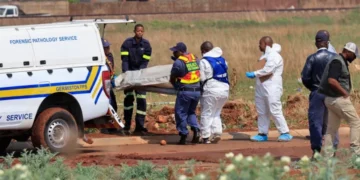
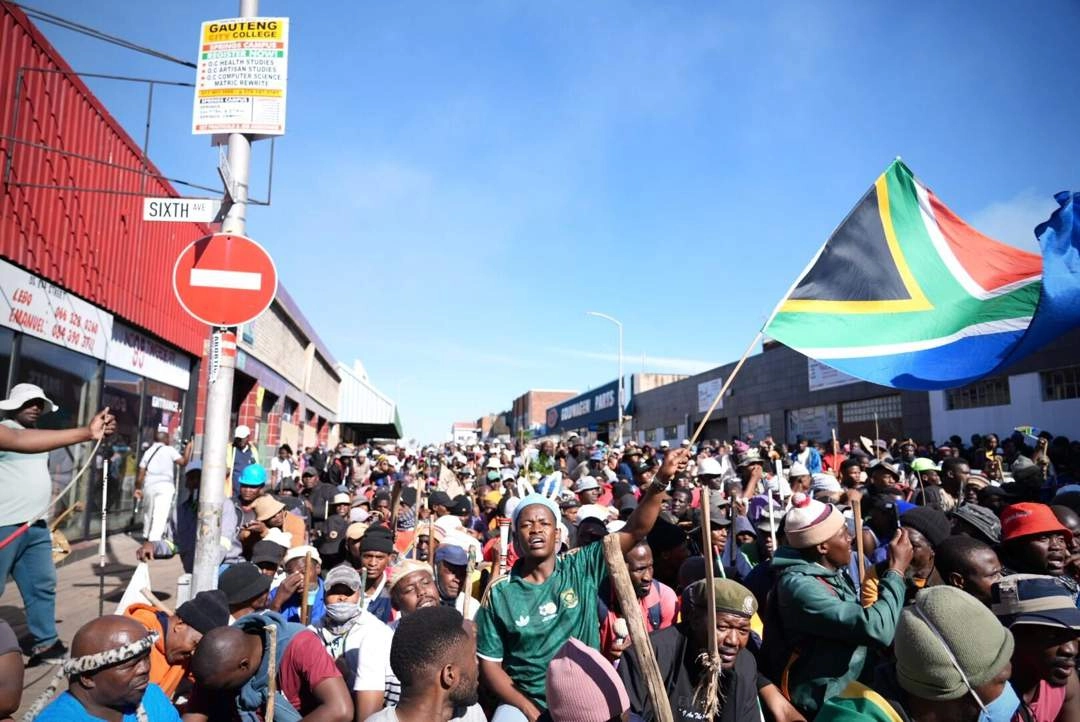
An anti-illegal immigration march that began in KwaThema, on Johannesburg’s East Rand, swelled to an estimated 5,000 people on Monday and brought the Springs central business district to a standstill, forcing businesses to close and shutting down streets hours after the demonstrators moved into the town.
Shops locked their doors and office buildings closed their gates as the march proceeded through the Springs CBD. Police officers and private security personnel monitored the demonstration throughout. The situation remained largely peaceful, though there were isolated confrontations between some protesters and individuals they suspected of being undocumented. The crowd had more than tripled in size since the march departed from KwaThema earlier in the day, according to EWN reporters on the ground.
A memorandum of demands was formally handed to the Springs police station commander before the march dispersed. The content of the memorandum had not been published in full at the time of reporting.
March leader Nkosikhona “Phakel’umthakati” Ndabandaba addressed demonstrators and claimed the movement possessed the professional skills to secure South Africa’s borders without relying on the government. “We have architects here, we have quantity surveyors, we have building inspectors here,” he said, asserting that communities could independently construct border infrastructure.
Why it matters
Monday’s march is the latest and largest single-day demonstration in a sustained wave of anti-illegal immigration protests that has been building across South Africa since April 2026. The movement, driven primarily by the civic organisation March and March and the Amabhinca Nation group led by former Ukhozi FM presenter Ngizwe Mchunu, has already staged marches in Durban, Pretoria, and Johannesburg before arriving on the East Rand.
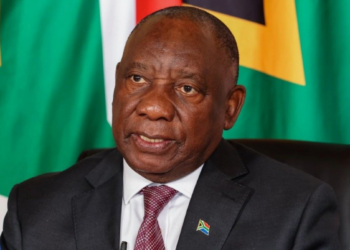
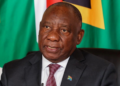
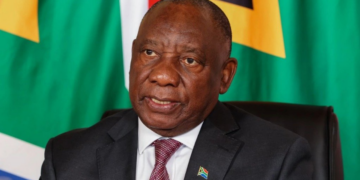
The march took place one day after President Cyril Ramaphosa addressed the nation in an evening address at the Union Buildings on Sunday, 7 June 2026, where he acknowledged that public concerns about illegal immigration are “real” and “deserve to be addressed,” while firmly placing enforcement as a function of the state alone.
The demonstrations have coincided with a significant acceleration in voluntary departures and repatriation operations. The Border Management Authority confirmed that 663 Ghanaian nationals left South Africa over the weekend, with a further 168 Mozambican nationals departing on Sunday alone. A separate BMA statement confirmed that 933 Mozambican nationals had exited through the Lebombo Port of Entry in one of the largest coordinated repatriation operations in recent months, with 349 departing from the Lindela Holding Facility and 584 facilitated by the Mozambican High Commission from Mossel Bay.
Regional governments, including those of Kenya, Malawi, Lesotho, Zimbabwe and Namibia, have issued formal advisories urging their nationals in South Africa to exercise caution. The escalation comes as local government elections scheduled for later in 2026 intensify the political stakes around immigration policy.
Key details and figures
Ndabandaba told EWN on Monday that the June 30 deadline issued by the movement is not a mass action date but a cut-off by which undocumented migrants are expected to have voluntarily left South Africa, regularised their papers, or made arrangements to return home. “The 30th of June is just a deadline. It’s not an event,” he said, describing the period between now and then as a sensitisation campaign for nationals of neighbouring African countries. He stated that he expects to lead a march of up to two million people if the deadline passes without the government taking sufficient action.
In his address, Ramaphosa confirmed that the Department of Home Affairs, the BMA, and the SAPS will intensify efforts to identify and deport undocumented foreign nationals. He said that in the past year, the BMA intercepted and stopped more than 450,000 people attempting to enter South Africa illegally. Dedicated immigration courts will be established to speed up deportation proceedings. The Department of Employment and Labour is beginning a phased recruitment of 10,000 labour inspectors for the current financial year, with inspections targeting companies employing undocumented workers to be significantly increased.
Ramaphosa also announced a phased relocation of refugee reception centres to border posts, beginning with the Tshwane centre in the current year. Higher penalties, including imprisonment, will be introduced for employers who knowingly hire undocumented workers.
The president was explicit that immigration enforcement is the sole function of the state. “No other person is allowed, for example, to confront someone in the street to demand proof of nationality,” he said. He warned that government would act against individuals or groups “exploiting the concerns of our people about illegal immigration to further their own political, personal or criminal agendas.”
Political responses to both Ramaphosa’s address and Monday’s march were divided. The Democratic Alliance welcomed the president’s message, with leader Geordin Hill-Lewis saying South Africans should reject those who “stoke hatred and division, or who tacitly encourage vigilantism.” ActionSA president Herman Mashaba was more critical, arguing that Ramaphosa had “merely repackaged the same failed and tired talking points” and that the Border Management Authority remains too under-resourced to deliver on the government’s commitments.
Rise Mzansi warned demonstrators not to take the law into their own hands, with party leader Songezo Zibi attributing the crisis to years of poor implementation of existing immigration law.
What happens next
The June 30 deadline is now functioning as a public test against which both the protest movement and the government will be measured. Ndabandaba has warned that failure by the government to take sufficient visible action before that date will result in a far larger national mobilisation.
The government’s key measures, including the establishment of dedicated immigration courts and the expansion of labour inspectors, are phased and medium-term commitments. Their effect on the protests will depend heavily on whether enforcement is visibly accelerated in the weeks ahead.
The Gauteng High Court previously ruled in a separate case that the SAPS and the departments of Home Affairs and Justice and Correctional Services had failed in their obligations to protect migrants from vigilantism, and that only immigration or police officers may demand proof of nationality in public. That ruling establishes a clear legal constraint on private enforcement action, even as community pressure on government intensifies.
International Relations Minister Ronald Lamola confirmed that government is working with African countries to co-fund deportations and facilitate the voluntary return of their citizens, a diplomatic process that will run alongside the BMA’s enforcement operations.
The next march on the East Rand calendar has not been formally announced, but the organisers have signalled that demonstrations will continue to build in size and frequency across all provinces until the June 30 date arrives.