




What we know so far
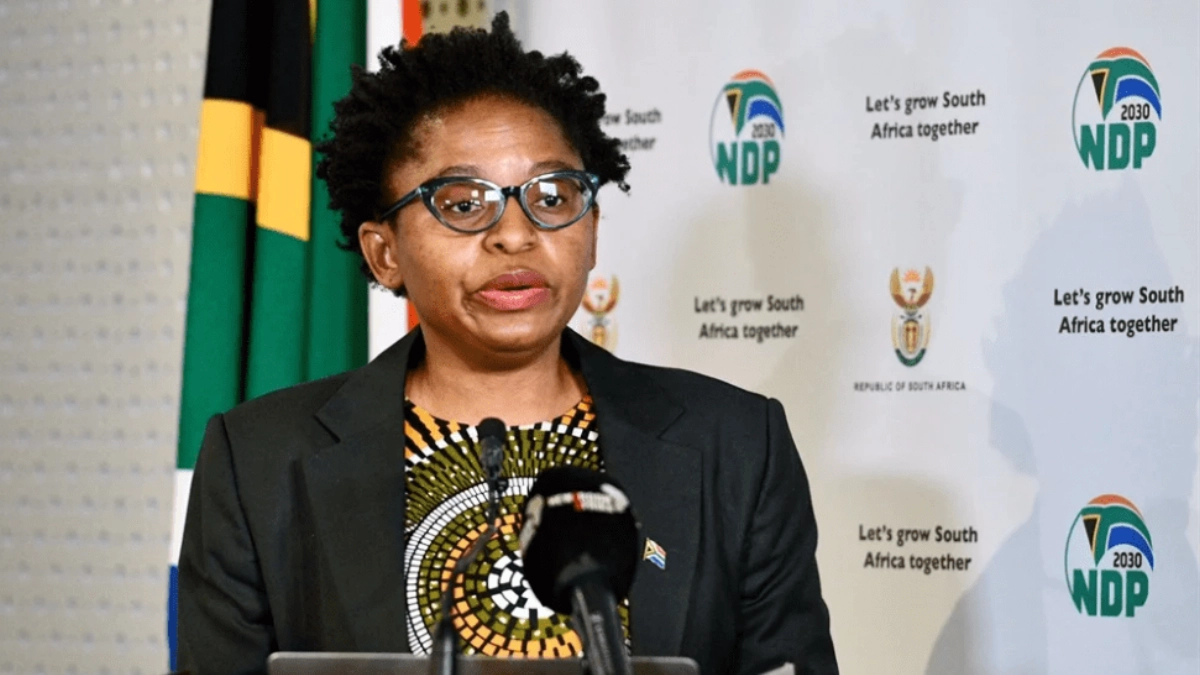
Minister in the Presidency Khumbudzo Ntshavheni told Parliament on Tuesday that government is implementing a coordinated set of measures to tackle illegal migration, including new legislation targeting employers, a generational immigration policy overhaul, and a steady increase in deportations stretching back to 2022.
Ntshavheni made the remarks while tabling The Presidency’s Budget Vote for the 2026/27 financial year in the National Assembly, the formal parliamentary occasion that triggered this disclosure of the government’s migration enforcement posture.
“We cannot allow the problem of illegal migration to threaten national security and social cohesion,” Ntshavheni said, adding that President Cyril Ramaphosa has directed government to act decisively on the issue. She simultaneously warned citizens not to take law enforcement into their own hands, stating that authorities would deal firmly with anyone acting outside the law and the Constitution.
Why it matters
Illegal migration has become one of the most politically charged issues in South Africa, driving electoral outcomes and community-level tensions in multiple provinces. The government’s decision to consolidate its migration response under a single parliamentary presentation signals an attempt to demonstrate concrete action rather than policy intent alone.
The package of measures spans at least four government departments, from Home Affairs and Employment and Labour to Small Business Development and Correctional Services, and represents a shift toward enforcement and legislative change rather than administrative adjustments. With South Africa’s official unemployment rate sitting at 32.7% in the first quarter of 2026, according to Statistics South Africa’s Quarterly Labour Force Survey, public pressure on government to protect local employment has intensified significantly.
Ntshavheni’s warning against vigilante action carries particular weight given a series of community-level incidents in recent months directed at foreign nationals. The framing of law enforcement as the exclusive authority on migration violations is both a legal reminder and a political signal.
Key details and figures
The Employment Services Amendment Bill (B16-2026) was tabled in the National Assembly on 29 May 2026, days before Tuesday’s Budget Vote. Cabinet had approved the bill for submission to Parliament, and it empowers the Minister of Employment and Labour to set maximum employment quotas for foreign nationals in any economic sector, occupational category, or geographical area. The bill also provides for the criminal prosecution of employers who hire undocumented foreign nationals, moving beyond the fine-only framework that currently applies.
The Department of Employment and Labour has separately finalised the National Labour Migration Policy, which establishes the quota framework the bill would give legislative force. Under the policy, sectors such as agriculture, hospitality, construction, and the gig economy are in focus for quota determinations, with the minister required to consult the Employment Services Board and consider public comment before setting specific limits.
Cabinet approved the revised White Paper on Citizenship, Immigration and Refugee Protection in April 2026, following a national consultation process covering all nine provinces that drew thousands of submissions. The Department of Home Affairs published the document on 26 March 2026. Government describes it as the most fundamental reform of South Africa’s citizenship, immigration, and refugee protection frameworks since the democratic transition. The White Paper introduces a points-based system for economic migration pathways, objective criteria for naturalisation, new visa categories for skilled workers and remote workers, and what it terms the “First Safe Country Principle,” which disqualifies asylum seekers who have already been granted protection in another country from claiming asylum in South Africa. Legislative amendments to implement the White Paper are expected during the 2026/27 parliamentary cycle.
The Department of Home Affairs has also documented a sustained increase in deportations. According to a Department of Home Affairs statement published on gov.za in April 2026, deportations over the two financial years ending 31 March 2026 reached a cumulative total of 109,344, an increase of 46% from the 39,672 recorded in 2023/24. In 2025/26 alone, 57,784 people were deported. The figures represent a significant acceleration from the 22,560 deportations recorded in 2022/23.
Ntshavheni noted that 26,364 foreign nationals who are criminal offenders are currently held in Correctional Services facilities, citing the figure to counter the claim that authorities cannot arrest foreign nationals who commit crimes on South African soil.
The Border Management Authority, established in 2023, handles border law enforcement functions at land, air, and maritime ports of entry and operates in border law enforcement areas. The South African National Defence Force separately maintains 2,810 soldiers across South Africa’s land borders, with 61% of those borders under continuous coverage, according to parliamentary responses from the Minister of Defence and Military Veterans.
On small business and informal trade, the Department of Small Business Development is implementing the National Micro, Small and Medium Enterprises and Informal Business Licensing Framework, which restricts business licensing to South Africans and individuals with a valid immigration status.
What happens next
The Employment Services Amendment Bill (B16-2026) will now proceed through National Assembly committee hearings and a public comment process before being debated and voted on. The sectors most likely to face quota determinations first are agriculture, construction, hospitality, restaurants, and app-based delivery platforms, based on the bill’s framing and the National Labour Migration Policy.
The Department of Home Affairs is expected to begin drafting legislative amendments to give effect to the White Paper on Citizenship, Immigration and Refugee Protection during the current parliamentary cycle. Separate Home Affairs directives are already providing transitional arrangements for certain categories of visa applicants while the legislation is prepared.
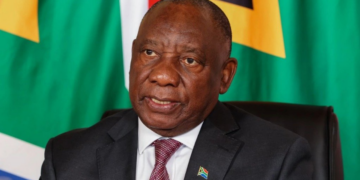
Parliament heard Tuesday’s Budget Vote tabling from Ntshavheni, with President Ramaphosa expected to respond later this week in defence of The Presidency’s budget. His response to questions on migration enforcement is expected to clarify the timeline for legislation and any additional executive interventions.
The Helen Suzman Foundation has raised legal challenges to the quota system proposed in the Employment Services Amendment Bill, arguing in a published submission that the ministerial quota mechanism could conflict with constitutional protections and would affect lawfully resident foreign nationals who hold valid work permits. Those constitutional questions are likely to form part of committee hearings as the bill advances. How Parliament resolves those objections will determine the final shape of the law.