


What we know so far
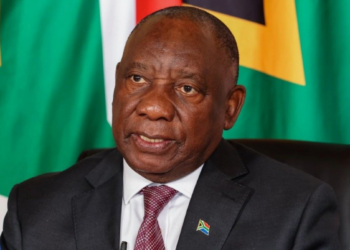
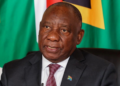
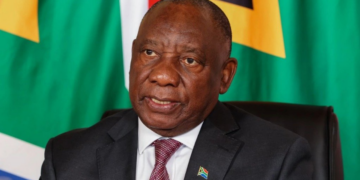
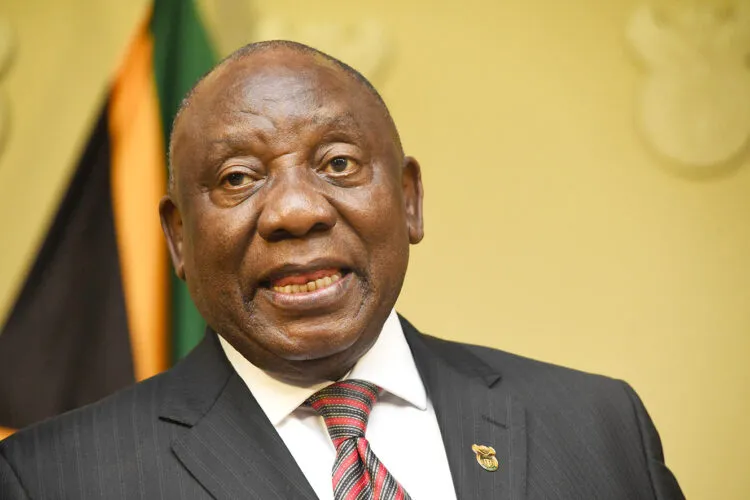
President Cyril Ramaphosa told the nation on Monday evening, 11 May 2026, that he will not step down following a Constitutional Court ruling that revived impeachment proceedings against him over the Phala Phala scandal. He confirmed he will instead take the 2022 Section 89 independent panel report on judicial review on what he described as an expeditious basis.
In a televised address from the Union Buildings in Tshwane, Ramaphosa said: “I therefore respectfully want to make it clear that I will not resign.” He stated that nothing in the Constitutional Court judgment compelled him to resign and that the court had made no finding on his alleged conduct.
The address followed a ruling handed down on Friday, 8 May 2026, by Chief Justice Mandisa Maya. The Constitutional Court declared the National Assembly’s 13 December 2022 vote not to refer the Section 89 panel report to an impeachment committee “inconsistent with the Constitution, invalid” and set it aside.
The apex court also declared Rule 129I of the National Assembly Rules unconstitutional and invalid, and ordered an interim reading-in of the rule pending formal amendments by Parliament. The case was brought by the Economic Freedom Fighters and the African Transformation Movement.
Why it matters
The judgment is the most significant constitutional challenge to Ramaphosa’s presidency since he took office in 2018. It places the head of state on the path to a formal impeachment inquiry by Parliament, almost four years after the African National Congress used its 2022 majority to block the process.
The matter unfolds within the Government of National Unity formed after the May 2024 elections, in which the ANC no longer commands a parliamentary majority. The political composition of the new impeachment committee will therefore differ significantly from the one that would have considered the report in 2022.
Ramaphosa came to office promising to clean up government after the State Capture era. The revival of the Phala Phala matter directly tests that record by reopening allegations that he concealed the theft of foreign currency stashed at his private game farm.
Key details and figures
The Section 89 independent panel, chaired by retired Chief Justice Sandile Ngcobo, was appointed by the National Assembly in September 2022. In December 2022, it concluded that information before it disclosed, prima facie, that Ramaphosa “may have committed serious misconduct” and a serious violation of the Constitution.
The panel examined allegations arising from a February 2020 break-in at Ramaphosa’s Phala Phala game farm in Limpopo, where foreign currency was reportedly stolen. Ramaphosa has acknowledged the theft of about US$580,000 and has consistently maintained that the cash came from the legitimate sale of buffalo. Opposition parties have alleged the amount was significantly higher.
On 13 December 2022, the National Assembly voted 214 to 148 against referring the panel’s report to an impeachment committee. The vote fell well short of the two-thirds majority required under Section 89 of the Constitution to remove a president from office.
The Constitutional Court’s 8 May 2026 judgment was decided by a majority of seven justices to four on the validity of the 2022 vote, with three separate judgments delivered. The court found that the National Assembly had a constitutional obligation to determine whether the President’s alleged conduct fell within the grounds set out in section 89(1), and that this determination had to be rational and evidence-based.
In his Monday address, Ramaphosa said the panel’s findings were based on “hearsay allegations” and that no sufficient evidence had been presented to prove a serious violation. He stated that he had reserved his right to seek review of the report in 2022, and that the Constitutional Court ruling had now made such a review legally consequential.
Ramaphosa told viewers he had “not stolen public money, committed any crime nor violated my oath of office,” and said he had cooperated with all institutions that had investigated the matter. The South African Reserve Bank cleared him of contravening exchange control regulations in 2023, and the Public Protector’s Office found no ethical violations the same year.
What happens next
National Assembly Speaker Thoko Didiza on Monday outlined the steps Parliament will take to implement the Constitutional Court order. According to a statement from her office, the Speaker will formally refer the independent panel report to an impeachment committee and refer the judgment to the National Assembly sub-committee on the review of rules.
The sub-committee is expected to process the amendments required to the rules of the National Assembly in line with the court’s findings and directions. It will report its work to the rules committee, which will submit recommendations to the National Assembly for consideration.
On Tuesday, 12 May, the Presidency confirmed through spokesperson Vincent Magwenya that Ramaphosa is “not seeking to interrupt or disrupt Parliament’s process” and is exercising his right to due process. On 23 May, Didiza said Ramaphosa had not asked Parliament to halt the impeachment proceedings, and that the legislature would await his court papers, obtain legal advice and continue implementing the Constitutional Court ruling.
The EFF has indicated it will oppose Ramaphosa’s review application and has called for the impeachment committee to be constituted “without delay.” The ANC said it is committed to the rule of law. The Democratic Alliance, which supported the original 2022 impeachment motion, is now part of the Government of National Unity.
The Constitutional Court ruling specifically stated that the recommendation of the Section 89 panel to proceed with an impeachment inquiry must be implemented “unless and until the Report is set aside on review.” A judicial review of the report could run for up to a year and may proceed in parallel with the work of the impeachment committee.
For a president to be removed under section 89 of the Constitution, the National Assembly must adopt a resolution supported by at least two-thirds of its members. The composition of the current National Assembly, and the position individual parties will take if a vote is reached, remains to be tested.