




Who needs a PrDP
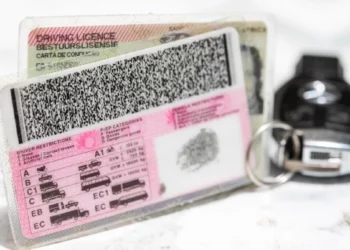
A professional driving permit South Africa drivers hold, known as a PrDP, is required to drive on a public road while transporting goods, dangerous goods or passengers for an income. It is issued in addition to your ordinary driving licence, not instead of it.
The vehicle categories that trigger the requirement are:
- A goods vehicle with a gross vehicle mass exceeding 3 500 kg
- A breakdown vehicle
- A bus
- Certain minibuses
- Light motor vehicles used in the economic sector for carrying passengers for reward, meaning taxi-cabs
- Any motor vehicle designed to carry 12 or more people
- Any vehicle for which an operating licence is issued
- Dangerous goods vehicles, such as fuel tankers
The Western Cape Government adds a warning worth repeating. To drive a minibus that seats 12 or more, you need a passenger-category PrDP even if the vehicle is not being used as a taxi, and even if there is nobody in it.
That catches out church groups, schools, tour operators and anyone who has borrowed a minibus for the weekend.
The three categories
| Category | Covers | Minimum age |
|---|---|---|
| G | Goods vehicles | 18 |
| P | Passengers: buses, minibuses, taxis | 21 |
| D | Dangerous goods | 25 |
The age thresholds are not the same across categories, which is a common reason applications get turned back. You must also already hold a valid driving licence for the class of vehicle the permit relates to.
What you have to satisfy
There are four tests.
A valid driving licence for the type of vehicle in question.
The age minimum for the category you are applying for.
Medical fitness, certified by a doctor. The medical certificate is only valid if it is not older than two months, so do not get it done months in advance.
Training certification, but only for category D dangerous goods vehicles, and it must come from an approved training body.
The criminal record test
This is where applications most often fail, and the rules are specific rather than general.
You must not have a criminal record in the past five years for driving under the influence of intoxicating liquor or a drug having a narcotic effect, or for driving while the concentration of alcohol in your blood or breath exceeded the statutory limit.
For category P and category D applications there is an additional bar: an offence of which violence was an element.
An admission of guilt fine counts as a conviction for these purposes. If you paid one to make a charge go away, it is on your record.
The forms
The application pack uses the PD1 application form and the MC medical certificate form. You also complete the NCP form for your particulars.
Take with you your ID or valid South African passport, your current driving licence card, photographs, proof of postal and residential address, the medical certificate, the training certificate if you are applying for category D, and any professional or public driving permit you already hold.
Applications are made at a driving licence testing centre. Gauteng residents can apply through the online NaTIS route named on the government’s own page.
How long it takes
The permit may be ready within a maximum of twelve weeks.
Plan around that. If your existing permit is close to expiry, start the renewal well before it runs out rather than after, because you cannot legally drive professionally in the gap.
Renewal needs a fresh medical certificate, subject to the same two-month rule, and a new record check.
What it costs
There is no single national PrDP fee. Costs are confirmed with your local licensing office, and amounts differ noticeably from one testing centre to another.
Phone the centre you intend to use and ask what it charges before you go, and ask whether there are separate charges for the record check or the photograph.
If you own the vehicle rather than drive it
The obligation runs both ways. As the operator or owner of a vehicle for which a PrDP is required, you may not let another person drive it on a public road unless they hold a valid PrDP for the appropriate category.
Checking a driver’s permit and its category before you hand over keys is your responsibility, not theirs.
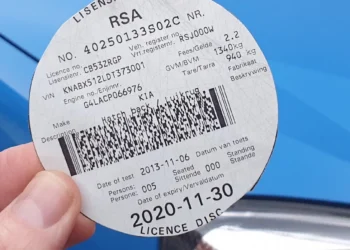
Owners should also keep the vehicle side in order: a valid roadworthy certificate where one is required, and a completed change of ownership if the vehicle has recently been bought or sold.
Where to check
Requirements, forms and fees are published by the Department of Transport and administered provincially, so the detail can differ depending on where you apply.
Confirm the current position on gov.za or with your provincial transport department, and take fee questions directly to the driving licence testing centre you will be using.