





What we know so far
The Department of Home Affairs confirmed on Thursday that it has processed 586 Nigerian nationals for repatriation after they were found to be residing in South Africa illegally, with the first repatriation flight departing on the morning of 11 June 2026 carrying 268 passengers.
The department said all individuals processed for repatriation were issued with Emergency Travel Documents by the Nigerian High Commission, enabling their exit from South Africa and return to Nigeria.
In accordance with the Immigration Act, all affected individuals have been declared undesirable persons and are prohibited from re-entering South Africa for a period of five years.
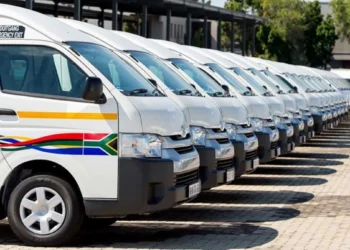
The flight departed from OR Tambo International Airport in Johannesburg. Buses ferried the group to the airport, where police and immigration officials checked the documentation of each passenger before they were cleared to board the chartered flight.
Nigeria’s foreign ministry reported that the first group, most of them women and children, landed at Murtala Mohammed International Airport in Lagos mid-morning on Thursday.
Why it matters
The departure marks the first repatriation flight to Nigeria under a voluntary programme arranged between the two governments, and forms part of a wider wave of coordinated returns involving several African states.
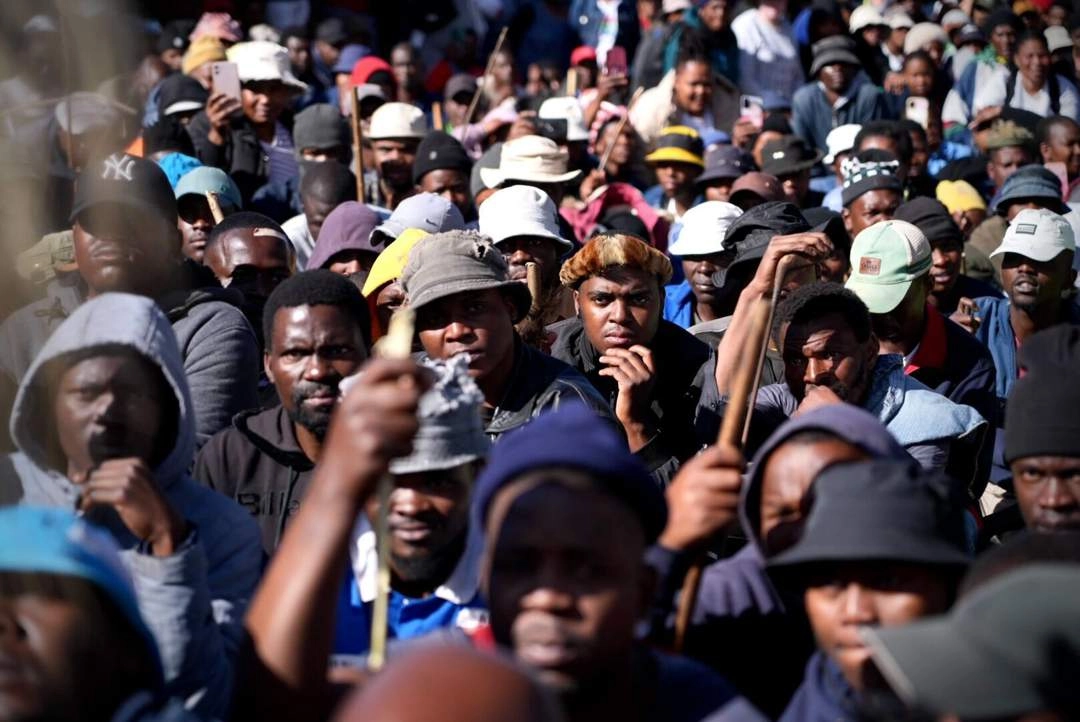
The repatriation follows a 30 June deadline set by South African anti-immigration groups demanding that all undocumented foreigners leave the country. For weeks, groups have marched through parts of South Africa demanding that foreigners without papers leave by that date.
The operation also lands in a tense diplomatic moment. Nigeria’s Minister of State for Foreign Affairs, Bianca Odumegwu-Ojukwu, said in Abuja on Monday that retaliation against South Africa over alleged attacks on Nigerian nationals was being considered, although no decision had been taken.
In response, Chrispin Phiri, spokesperson for International Relations and Cooperation Minister Ronald Lamola, said South Africa attaches great importance to relations with Nigeria and that the government had clarified to Abuja that there have been no extrajudicial killings of Nigerian nationals.
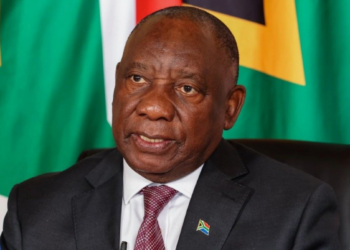
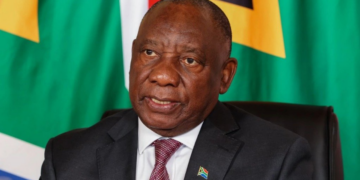
President Cyril Ramaphosa has said that only authorised government officials may act against violations of the law, including immigration laws, and that no other person is allowed to confront someone in the street to demand proof of nationality.
Key details and figures
A second flight, which will transport the remaining individuals from the group of 586 processed for repatriation, is scheduled to depart on Monday, 15 June 2026.
Demand for the programme exceeds the numbers cleared so far. The Nigerian Embassy has said about 1,000 people signed up for the voluntary repatriation programme. The Department of Home Affairs’ head of immigration enforcement, Stephen van Neels, said 66 of those cleared were found to have approved asylum status in South Africa and would need to cancel that status before departing on the next flight.
Nigerian foreign ministry spokesperson Kimiebi Ebienfa has said Nigeria plans to eventually repatriate between 2,000 and 4,000 of its citizens from South Africa.
The Nigerian operation follows similar returns to other countries this month. On 3 June, the Border Management Authority processed 933 Mozambican nationals for return through the Lebombo Port of Entry, with 926 ultimately departing, and a further 168 were processed on 7 June, of whom 141 were identified as undocumented and deported.
On 6 and 7 June, the BMA facilitated the return of 663 Ghanaian nationals through OR Tambo International Airport, with officials finding that 321 in the first group had overstayed their legal stay and were declared undesirable under the Immigration Act.
More than 3,000 Malawians, including hundreds of children, are staying in an open field in Durban after fleeing escalating anti-immigrant threats and attacks, with many saying repatriation is their only option.
Home Affairs Minister Dr Leon Schreiber framed the operation as part of a broader enforcement drive. He said the department is irrevocably committed to enforcing South Africa’s immigration laws and restoring the rule of law, and that orderly and lawful deportations and repatriations have increased by 46 percent over the past two years.
Schreiber also pointed to the scale-up of the Electronic Travel Authorisation to record biometrics for every foreigner entering the country, the replacement of the Green ID Book with Smart ID cards, and the introduction of a Digital Identity system as measures enhancing immigration enforcement capacity.
What happens next
The second repatriation flight to Nigeria is scheduled for Monday, 15 June 2026, carrying the remaining individuals from the group of 586. Nigeria’s foreign ministry has confirmed a second group is due to be flown out on 15 June.
Whether Nigeria proceeds with any retaliatory measures remains unresolved. Odumegwu-Ojukwu said any decision would have to be taken at the highest level of government, and it is not yet clear what form retaliation might take.
The 30 June deadline set by anti-immigration groups remains a flashpoint, and further repatriation operations involving Mozambique, Malawi and other states are expected in the coming weeks. The department has reminded all foreign nationals in South Africa that they must hold valid visas or other authorisations, and the public has been urged never to engage in violence or take the law into their own hands.