








What we know so far
The South African Reserve Bank has gazetted four new commemorative circulation coins, three denominated at R2 and one at R5, which become legal tender on 16 June 2026. The gazette, Government Gazette No. 54835, published on 12 June 2026 under General Notice 3976 of 2026 in terms of the South African Reserve Bank Act (90/1989), formally establishes the dimensions, designs, and specifications of the new coins under the overarching theme of Education.
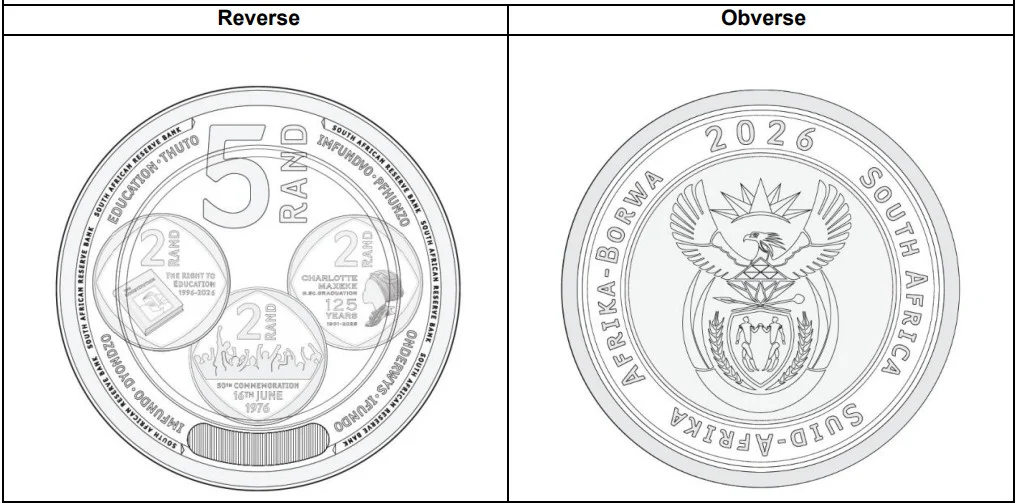
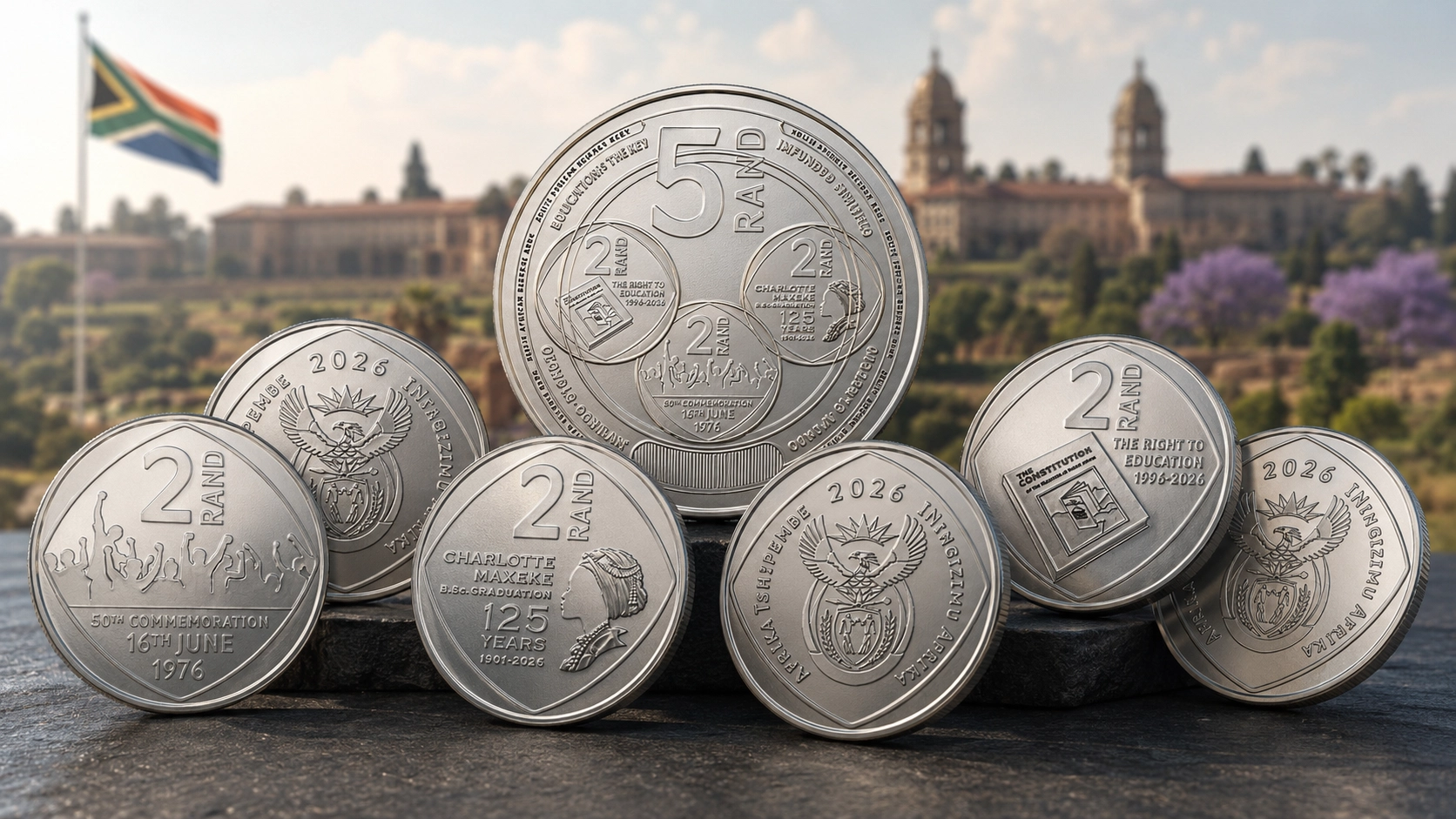
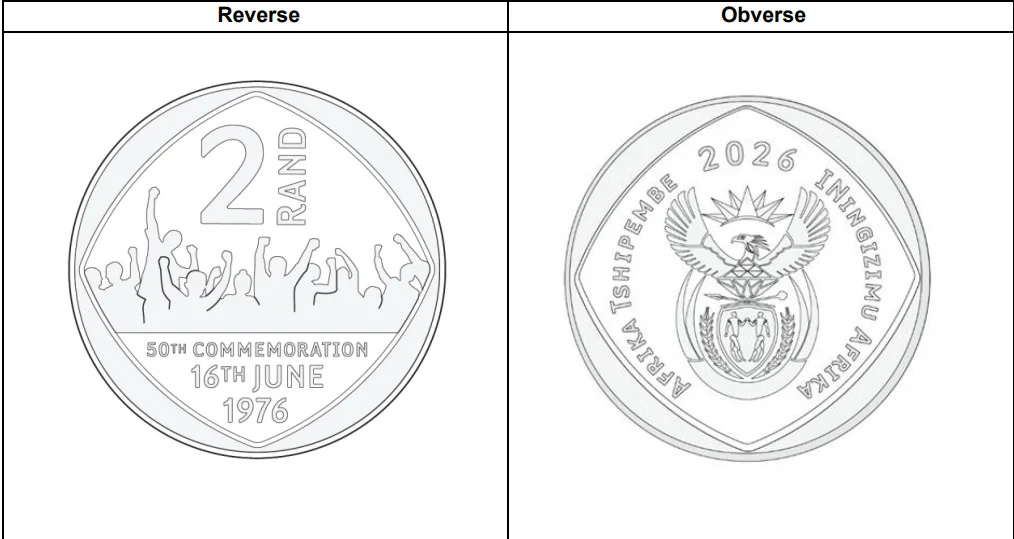
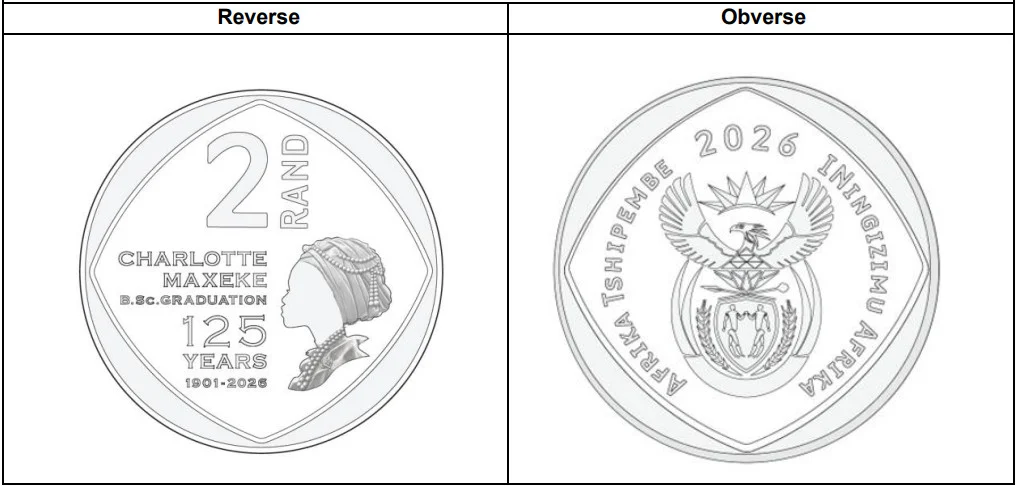
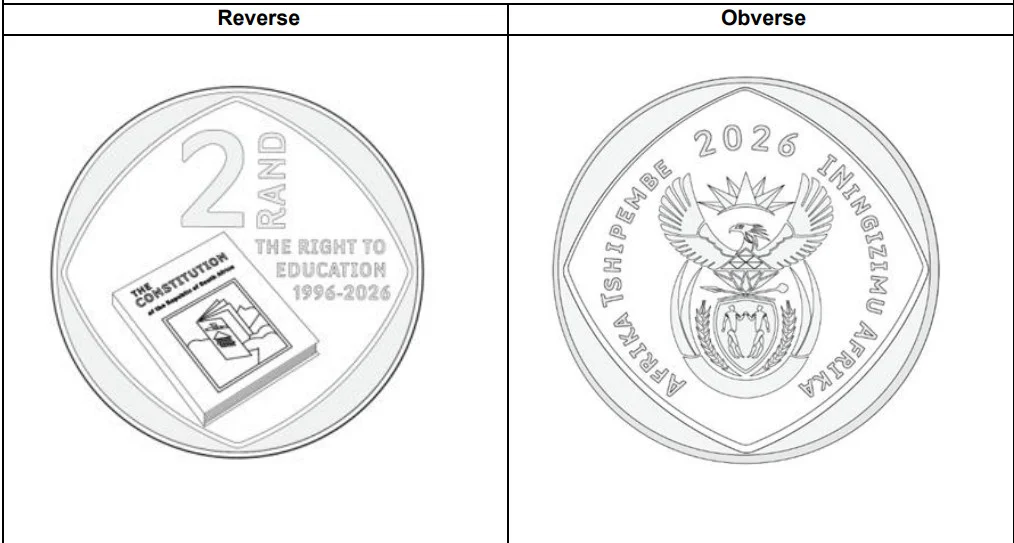
The three R2 coins each carry a distinct commemorative purpose. The first marks the 50th anniversary of the 1976 youth uprising. The second honours the 125th anniversary of the graduation of Charlotte Maxeke, who became the first black woman in South Africa to graduate with a university degree. The third commemorates the 30th anniversary of the Constitution of the Republic of South Africa. The R5 coin, designated an Education Tribute Coin, carries on its reverse the combined designs of the three R2 coins, serving as a visual summary of the education theme.
Finance Minister Enoch Godongwana confirmed the coins will become legal tender effective 16 June 2026 — Youth Day, the public holiday that marks the same 1976 Soweto uprising depicted on one of the R2 coins. The timing is deliberate: the launch date ties the coins directly to the 50th anniversary of one of the most consequential events in South Africa’s modern history.
Why it matters
The release of these coins carries weight beyond their face value. South Africa’s commemorative circulation coins are legal tender issued at face value, meaning every South African may encounter them as ordinary change. Unlike collector coins, which are produced in limited numbers and sold at a premium, these coins will circulate through the banking system and into everyday transactions across the country.
The choice of 16 June as the activation date amplifies the coins’ cultural significance. This year, the government has formally designated 2026 as a year of national action under the theme “RESET@50 — The Future Calls,” anchoring the Golden Jubilee of the 1976 uprising as a moment to reflect on progress and demand more. The Department of Women, Youth and Persons with Disabilities launched the commemoration programme in Soweto in May 2026.
The education theme that ties all four coins together is not incidental. The connection runs through each honouree: the 1976 students marched in protest against the apartheid government’s compulsory Afrikaans-language instruction policy. Charlotte Maxeke’s graduation in 1901 was a landmark in Black South African access to higher education at a time when it was actively suppressed. The Constitution of 1996 entrenched the right to education for every South African.
Each coin, then, is a statement about a thread that runs from the first democratic aspirations of the 19th century through the uprising of the 20th century and into the constitutional guarantees of the 21st. For South Africans who receive one in change, the coin carries a compressed history lesson.
Key details and figures
The gazette specifies that the coins are issued under the South African Reserve Bank Act (90/1989) and are classified as commemorative circulation coins, not collector coins. Like all circulation coins, they carry no higher value than their face value — R2 and R5 respectively — regardless of their commemorative status.
The three R2 coin designs are individually distinct. The coin honouring the 1976 youth uprising refers to the events of 16 June 1976, when thousands of students in Soweto marched peacefully against the apartheid government’s mandate to use Afrikaans as a compulsory medium of instruction. Police opened fire on the protesters, killing students and triggering months of nationwide unrest. The uprising became a turning point in the resistance to apartheid and is now memorialised as Youth Day.
The coin honouring Charlotte Maxeke marks 125 years since her graduation. Maxeke, born Charlotte Mmakgomo Mannya, earned her BSc from Wilberforce University in Ohio in 1901, becoming the first black woman in South Africa to attain a university degree. She subsequently returned to South Africa and became an activist, community leader, and founding figure of the African National Congress Women’s League. She is widely referred to as the “Mother of Black Freedom in South Africa,” and the Charlotte Maxeke Academic Hospital in Johannesburg bears her name.
The Constitution coin marks 30 years since the Constitution of the Republic of South Africa was signed into law in 1996. The Constitution is the supreme law of the country, containing the Bill of Rights that guarantees the right to education, among other fundamental rights. It was signed by former President Nelson Mandela in Sharpeville.
The R5 Education Tribute Coin consolidates the three R2 designs on its reverse side, creating a single coin that represents the full education-themed series.
South Africa has a well-established tradition of issuing commemorative circulation coins. Previous editions include the 1994 Presidential Inauguration R5 coin, the 2008 R5 honouring Nelson Mandela’s 90th birthday, and the 2021 R5 marking the SARB’s centenary. Like those predecessors, the 2026 series does not alter the denominations, weight, or physical specification categories of existing coins. The coins enter circulation alongside existing coins already in use.
What happens next
The four coins become legal tender on 16 June 2026 and will enter the banking system and retail circulation from that date. South Africans will receive them as change through normal banking and retail transactions.
The South African Mint, a wholly owned subsidiary of the SARB, is responsible for producing the coins. The Mint has not publicly confirmed how many coins will be struck, and the gazette does not specify production volumes. Collector editions of commemorative coin series are typically also made available through the Mint’s retail store in Centurion and through authorised dealers, though no separate collector edition for this series has yet been announced.
The gazette that activated these coins, No. 54835, was published on 12 June 2026 — four days before the coins’ legal tender date. That is consistent with past gazette-to-circulation timelines for commemorative circulation coins.
The broader government commemoration of the 50th anniversary of the 1976 uprising continues throughout June and beyond. Parliament has scheduled an Intergenerational Dialogue on the June 16 Uprising as part of its official programme. The RESET@50 government initiative will run across 2026, using the anniversary as a national mobilisation framework.
Whether additional coin series tied to the 50th anniversary commemorations will follow has not been confirmed by the SARB or the Mint.
R2 commemorating the 50th Anniversary of the 1976 Youth Uprising
R2 commemorating the 125th Graduation Anniversary of Charlotte Maxeke
R2 commemorating the 30th Anniversary of the Constitution of South Africa
R5 commemorating Education