



What we know so far
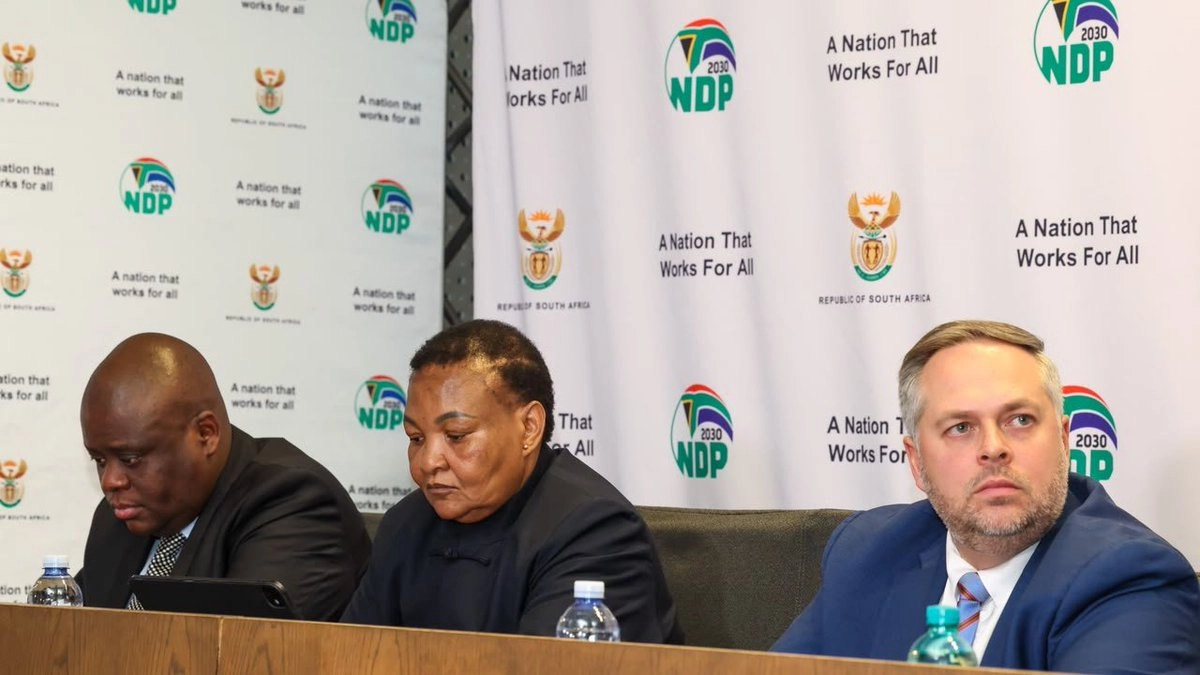
South Africa’s Inter-Ministerial Committee on Migration held a media briefing in Pretoria on Sunday, 14 June 2026, releasing a formal implementation plan to govern the country’s ongoing migration enforcement drive and disclosing that more than 40 000 people in the country without legal status have been arrested since January.
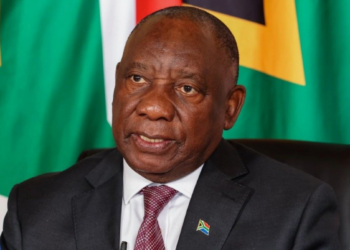
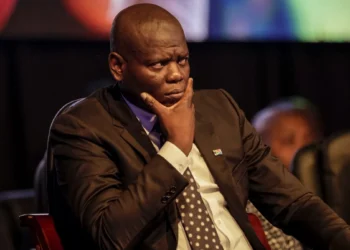
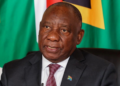
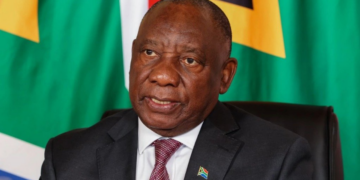
The IMC was constituted by President Cyril Ramaphosa, who outlined a five-point migration strategy in a nationwide address on 7 June 2026. Sunday’s briefing marked the committee’s first public account of progress against that framework, with IMC Chairperson and Minister of Justice and Constitutional Development Mmamoloko Kubayi presenting findings across law enforcement, border management, repatriation, and judicial reform.
The committee confirmed that more than 7 400 of the total arrests were made in the past month alone, as multidisciplinary enforcement operations intensified across Gauteng, KwaZulu-Natal, and the Western Cape.
Why it matters
The IMC’s formation and its public implementation plan represent a significant structural shift in how South Africa manages irregular migration. Rather than routing enforcement through individual departments, government has placed coordination under a single committee with direct reporting lines to the Presidency and a mandate to deliver weekly progress updates.
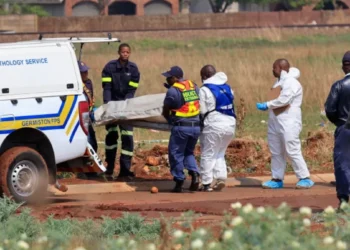
The briefing comes against the backdrop of sustained public protests over irregular migration in several provinces, concerns about pressure on public services, and reports of violence in certain communities. The committee directly addressed these tensions, warning against the spread of what it described as manipulated videos and false narratives on social media, which it said have contributed to unrest and risked fuelling violence against foreign nationals.
Kubayi confirmed that 143 people had been arrested for inciting violence, signalling that enforcement would apply to South Africans who break the law during protests as much as to those found without valid immigration status.
Key details and figures
The IMC’s implementation plan covers nine technical workstreams: law enforcement, border management, legal and regulatory matters, economic sectors, humanitarian welfare, social sectors, international relations, systems development and data integration, and communication and stakeholder management.
On border infrastructure, the Border Management Authority has deployed drones and body-worn cameras and established additional checkpoints at major corridors. The BMA and its partners held an anti-corruption campaign on 10 June 2026 at the Oshoek port of entry on the South Africa-eSwatini border. Separately, nine Bangladeshi nationals were intercepted at OR Tambo International Airport on fraudulent visas, and a consignment of ABBA, a Mandrax precursor with an estimated street value of just under R1 billion, was seized at Beitbridge.
Multidisciplinary operations at business premises have produced targeted arrests. On 3 June 2026 an inspection at a residential estate in Mossel Bay resulted in 15 arrests for immigration contraventions. A night operation on 4 June 2026 at two clothing manufacturing facilities in the Riverside Industrial Area in Newcastle, KwaZulu-Natal, resulted in the arrest of a business owner for illegally employing undocumented migrants. A similar operation in Tshwane yielded 35 arrests, including two employers.
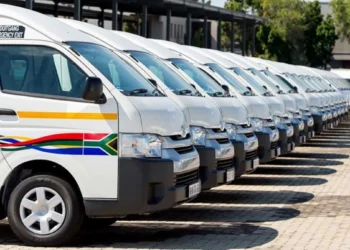
On repatriation, the Malawian government commissioned eight buses to transport its nationals home from the Sherwood Park gathering site in eThekwini, while the South African government added 10 additional buses for deportation support. As of 10 June 2026, 980 Malawian nationals had departed from the Lindela Repatriation Centre in Krugersdorp. The governments of Ghana and Nigeria are also formally cooperating with South Africa on facilitating the return of their citizens.
The Department of Home Affairs has additionally identified foreign nationals who overstayed their visas and has formally declared them undesirable persons under the Immigration Act, barring them from re-entering South Africa for five years.
President Ramaphosa’s weekly newsletter, published on 8 June 2026, provided additional enforcement context: over the past year, the Border Management Authority intercepted approximately 450 000 people who attempted to enter South Africa illegally, and in the previous financial year 76 588 people were arrested for immigration contraventions.
What happens next
The IMC confirmed that the Lindela Repatriation Centre will have a dedicated court re-established within it. Engagement between the Department of Home Affairs, the Department of Justice, and the Gauteng Judge President has already commenced, and the IMC said the process is at an advanced stage and expected to be completed within one month.
A priority immigration court is also being established, with the Airport Company of South Africa having already provided a physical space. President Ramaphosa confirmed in his 8 June newsletter that dedicated courts to handle immigration cases and expedite deportations are being set up.
The IMC will begin a formal stakeholder engagement process starting Monday, 15 June 2026, with virtual meetings involving Chapter 9 and Chapter 10 institutions. On Wednesday, 17 June 2026, the committee will engage traditional and Khoi-San leaders.
The Department of International Relations and Cooperation will continue coordinating with SADC member states and the foreign ministries of affected countries to align repatriation protocols and share operational intelligence. The committee said its work will be monitored through weekly meetings and, where warranted, oversight visits to verify reported progress. Three additional departments, Trade, Industry and Competition, Transport, and Social Development, have been requested to join the IMC, though that process was not finalised at the time of the briefing.