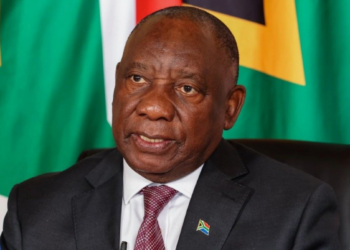

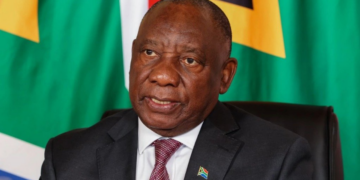





President Cyril Ramaphosa has confirmed that government is working toward introducing a new permanent social grant in South Africa, building on the existing Social Relief of Distress, or SRD, grant.
Speaking during the 2026 State of the Nation Address and subsequent debate replies, Ramaphosa said government is finalising proposals to transition the temporary SRD grant into a more sustainable form of income support for unemployed adults. The move signals a potential structural change in South Africa’s social protection system, which already supports millions through grants administered by the South African Social Security Agency.
From temporary relief to permanent support
The SRD grant was first introduced in 2020 as an emergency measure in response to the economic shock caused by the COVID-19 pandemic. Originally set at R350 per month, the grant has been extended several times and is currently valued at R370 per month.
Ramaphosa said government recognises that high unemployment and poverty levels require a longer-term intervention rather than repeated short-term extensions. He told Parliament that work is underway to design a permanent form of income support for unemployed adults who do not qualify for other social grants.
The President indicated that the new grant framework would be announced once technical and fiscal planning has been completed, with Treasury expected to outline funding details in upcoming budget processes.
Why a new grant is being considered
South Africa has one of the highest unemployment rates in the world. According to the latest Quarterly Labour Force Survey from Statistics South Africa, the official unemployment rate stood at 31.4% in the fourth quarter of 2025. Youth unemployment remains significantly higher.
Millions of working-age adults fall outside the scope of existing grants such as:
- The Old Age Grant
- The Child Support Grant
- The Disability Grant
The SRD grant currently fills part of that gap, but its temporary legal status has created uncertainty for recipients and policymakers alike.
Government has argued that a permanent grant could provide stability for vulnerable households, reduce extreme poverty, and support economic participation by offering basic income security.
What the new social grant could look like
While full details have not yet been published, several elements are expected to shape the design of the new grant:
- Target group
Likely focused on unemployed adults aged 18 to 59 who are not receiving other forms of state support. - Means testing
The grant is expected to include income thresholds similar to the current SRD system, which screens applicants against bank deposits and tax records. - Funding framework
Treasury will need to confirm how the grant will be financed, whether through reprioritised spending, additional revenue measures, or deficit adjustments. - Administration
Payments would likely continue to be managed by SASSA, which already administers more than 18 million permanent social grants nationally.
Ramaphosa said government is balancing social protection with fiscal sustainability, acknowledging concerns about the cost implications of adding a permanent grant to the state’s expenditure framework.
SRD grant payments continue in the interim
While plans for a new permanent grant are being developed, SRD payments continue under the current framework.
The Department of Social Development and SASSA have confirmed that February SRD payments will begin from 20 February 2026, with beneficiaries advised to check payment dates through official channels.
Recipients have also been reminded to ensure their banking and contact details are up to date to avoid delays.
Economic and fiscal implications
Introducing a permanent income support grant would represent one of the most significant changes to South Africa’s welfare system since the post-apartheid expansion of social grants.
Social grants already account for a substantial portion of government expenditure. Analysts estimate that making the SRD permanent could cost tens of billions of rand annually, depending on eligibility thresholds and benefit levels.
At the same time, economists argue that social grants play a critical role in sustaining consumption in low-income communities, supporting small businesses and informal traders who depend on household spending.
The debate is therefore not only about cost, but about the role of income support in a high-unemployment economy.
Political and policy context
The commitment to a new social grant forms part of broader government messaging around poverty reduction and social stability.
Ramaphosa has framed the new grant as a continuation of government’s social protection agenda, while also emphasising that economic growth and job creation remain the primary long-term solution to poverty.
The design phase is expected to involve consultation between the Presidency, National Treasury, the Department of Social Development, and Parliament.
What happens next
The next key milestone will be clarity from National Treasury in the upcoming budget cycle, where funding allocations and fiscal projections will determine whether and when the new grant can be implemented.
If finalised, legislation or regulatory amendments may be required to formally establish the new benefit category.
For now, government’s message is that the SRD grant will not disappear abruptly, and that a transition plan is being developed to provide certainty to millions of beneficiaries.