





What we know so far
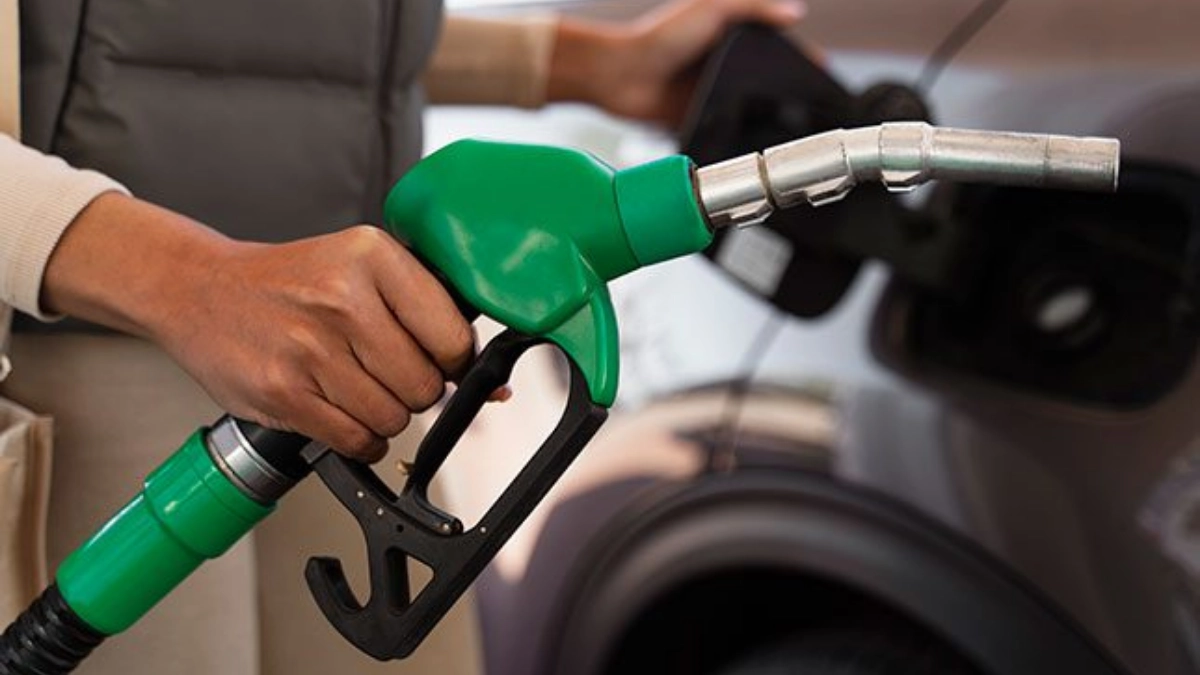
The Department of Mineral and Petroleum Resources has corrected its May 2026 fuel price announcement, reducing the diesel increase by 92 cents per litre after a calculation error left out the latest fuel levy relief. The wholesale diesel price will now rise by R5.27 per litre from Wednesday, 6 May 2026, instead of the R6.19 figure published in the department’s original media statement on Tuesday, 4 May.
The department said the error stemmed from the 93 cents per litre cut to the diesel general fuel levy, which the Minister of Finance and the Minister of Mineral and Petroleum Resources had announced as part of an extended relief package for May, but which was not properly applied in the original price structure. The Central Energy Fund subsequently reissued the May 2026 price adjustments to reflect the correct figure.
Petrol prices are unchanged because no additional levy relief was introduced for those grades, leaving the announced increase of R3.27 per litre for both 93 and 95 octane in place. The corrected adjustments take effect from midnight on Tuesday, 5 May 2026, and apply nationwide. Both grades of diesel, the lower-sulphur 0.005% and the 0.05% variant, increase by R5.27 per litre under the corrected structure.
Why it matters
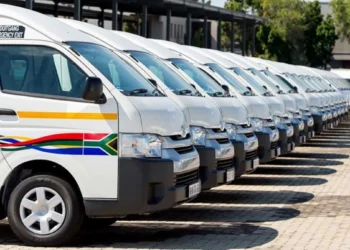
The error affects every business and household that depends on diesel, including freight operators, taxi associations, farmers, mining companies and small businesses running generators. Diesel prices feed directly into food costs, public transport fares, construction inputs and the cost of electricity backup, making any movement at the pump a national economic event in South Africa.
The 92 cent correction does not turn the May adjustment into a price cut. Diesel is still set for one of its sharpest monthly increases in recent memory, and consumers will absorb most of the global oil shock. The relief simply restores the levy concession that the government had already promised, after the originally published numbers had effectively withheld it.
For motorists who use petrol, the correction makes no difference. The May increase for 93 and 95 octane petrol remains at R3.27 per litre, with the R3 per litre general fuel levy reduction implemented in April having been extended for one more month.
For agricultural producers, freight companies and mining operators eligible to claim back a portion of the diesel fuel levy through the diesel rebate scheme administered by the South African Revenue Service, the correction shifts the wholesale benchmark from which their pump prices are calculated, with knock-on effects through input costs and product pricing in the rest of the supply chain.
Key details and figures
According to the corrected media statement issued by the Department of Mineral and Petroleum Resources, the May 2026 adjustments are: petrol 93 and 95 (ULP and LRP) up by R3.27 per litre; diesel (0.05% sulphur) up by R5.27 per litre; diesel (0.005% sulphur) up by R5.27 per litre; illuminating paraffin (wholesale) up by R4.22 per litre; and the maximum retail price of LPGas up by R5.07 per kilogram in Gauteng and R5.78 per kilogram in the Western Cape.
The price changes are driven mainly by global oil markets. The department reported that the average Brent crude price rose from $93.67 to $101 per barrel during the review period, citing the ongoing tensions between the United States and Iran, the closure of the Strait of Hormuz, and damage to crude oil infrastructure. International product prices for middle distillates such as diesel and paraffin rose more sharply than petrol because of higher demand and reduced supply from the Persian Gulf.
These factors contributed R2.04 per litre to the basic fuel price of petrol, R4.96 per litre to diesel, and R4.21 per litre to illuminating paraffin. The rand was effectively flat against the dollar, moving from R16.64 to R16.65 over the same period, contributing less than one cent per litre to the basic fuel prices of all three products.
The adjustment also includes a slate levy of 122.70 cents per litre, applied to both petrol and diesel under the Self-Adjusting Slate Levy Mechanism. This follows a cumulative negative slate balance of R14.173 billion for petrol and diesel at the end of March 2026, which under regulation must be clawed back from motorists at the pump.
The temporary fuel levy relief covers 6 May to 2 June 2026. Over that period, the general fuel levy is reduced by R3.00 per litre for petrol, taking it from R4.10 to R1.10 per litre, and by R3.93 per litre for diesel, taking it from R3.93 per litre to zero. The total fiscal cost of the relief measures from April through June has been estimated by Treasury at R17.2 billion in foregone tax revenue.
What happens next
The relief is temporary by design. The Department of Mineral and Petroleum Resources confirmed that from 1 July 2026, the general fuel levy will revert to R4.10 per litre for petrol and R3.93 per litre for diesel, ending the discount. Treasury has stated that the relief is fiscally neutral, meaning the foregone revenue must be recouped within the 2026 Budget framework, with motorists likely to feel that recoupment in price structures over the months following the reversion.
The department said it would publish the fuel price schedule for the different Magisterial District Zones on Tuesday, 5 May 2026, providing the regulated retail price by area. Diesel is not price-regulated at the pump, so wholesale increases generally feed through to retail prices set by individual fuel suppliers and forecourt operators.
Volatility in international oil markets remains the largest risk to the June outlook. Movements in Brent crude during May, the rand-dollar exchange rate, the slate levy balance, and further developments around the US-Iran conflict and shipping through the Strait of Hormuz will determine the next adjustment, which will be announced in the first week of June.
The department has not indicated whether further levy relief will be considered if global oil prices remain elevated. With the existing temporary cut already costing the fiscus several billion rand, an extension into July or beyond would require a fresh decision by the Minister of Finance and a corresponding adjustment to the Budget framework.