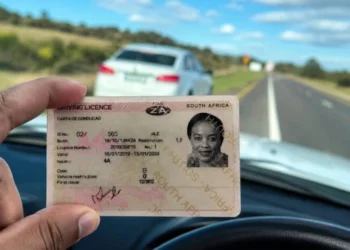








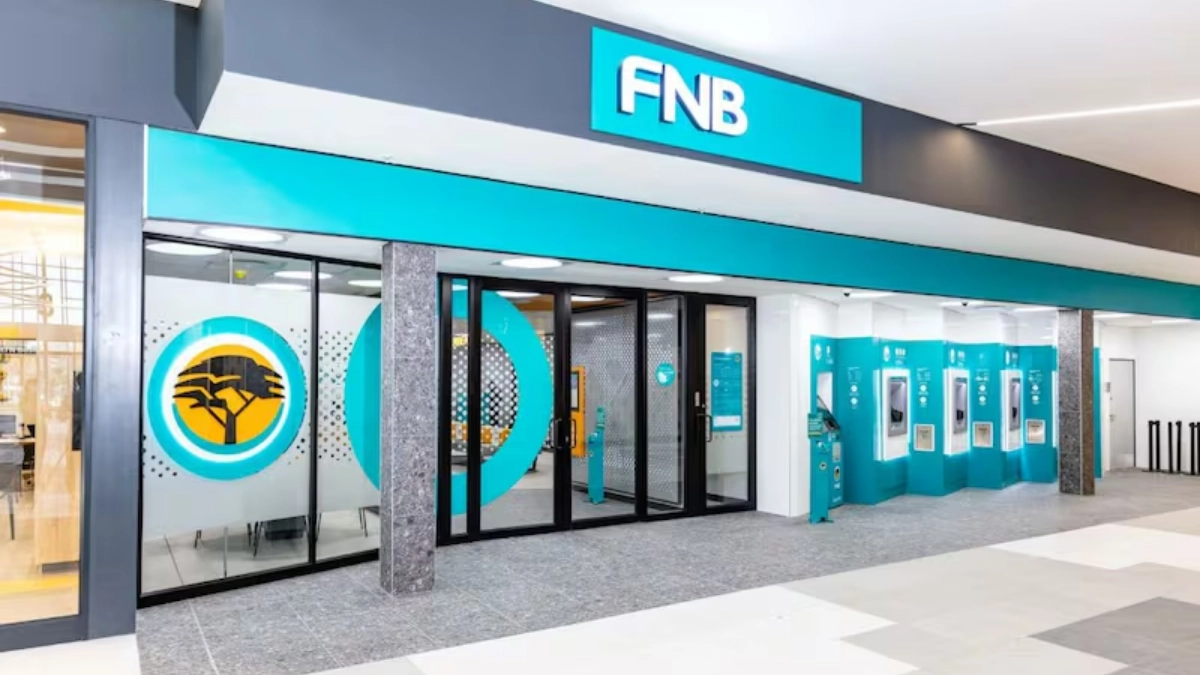
FNB customers in South Africa have received a meaningful boost on Smart ID access, with the Department of Home Affairs confirming that First National Bank is now in the final phase of testing under the state’s new digital banking partnership model. The update means FNB is moving closer to offering a broader Smart ID and passport application service through its branch network, even though a full public go-live date for the expanded rollout has not yet been announced.
The development matters because Home Affairs is using banks as a major delivery channel to reduce queues, widen access and speed up South Africa’s move away from the green barcoded ID book. Under the new model, Home Affairs says people will increasingly be able to apply for Smart IDs and passports at participating bank branches through a secure live digital system rather than relying only on traditional Home Affairs offices.
What the good news means for FNB users
The immediate good news is not that every FNB branch is already live for Smart ID applications. The good news is that FNB has moved into the final testing stage while the first branches under the broader banking rollout have already gone live elsewhere in the system. In a statement published on 9 March 2026, Home Affairs said nine participating bank branches were already live under the new model, with 17 expected by the end of the week, while FNB was in the final phase of testing.
That places FNB closer to public launch than before and keeps it firmly inside one of the biggest digital service reforms currently underway in South Africa. For FNB users, the practical implication is that the bank remains part of Home Affairs’ expansion strategy and is still positioned to become a much larger access point for Smart ID and passport services once the testing phase is completed.
FNB already has a large rollout commitment
The broader significance comes from the size of FNB’s original commitment. When Home Affairs, FNB and Standard Bank announced their expanded partnership in August 2025, the department said FNB would take a phased approach, starting with 15 branches immediately and scaling to 240 branches over the following year. Home Affairs also said the service would ultimately be open to all South Africans, including people who are not FNB clients.
That is a major number in the South African context. It shows that the FNB plan is not about a token pilot at a handful of premium branches. It is part of a much larger structural expansion designed to bring identity-document services closer to where people already bank, work and travel. If that rollout proceeds at scale, it could materially change how South Africans interact with Home Affairs for some of the country’s most important documents.
Home Affairs is aiming much bigger than one bank
FNB’s progress also fits into a wider state target. In Home Affairs’ revised 2025/26 Annual Performance Plan, the department set a target of equipping 100 bank branches with live capture functionality for Smart ID cards and passports under the new model. In its revised 2025 to 2030 Strategic Plan, Home Affairs said one of its key priorities is expanding live capture functionality to 1,000 bank branches over time as part of its digital transformation programme.
That means the FNB story is not just about one bank adding another convenience feature. It is part of a national delivery model that Home Affairs believes can help it modernise service access, support digital identity and gradually displace the older green ID system. As Southafriworld has tracked in its broader South Africa news coverage, Home Affairs reforms are increasingly being tied to digital channels, private-sector partnerships and reduced travel time for ordinary citizens.
Why this matters beyond convenience
The branch-based Smart ID model is important for more than convenience. Home Affairs says the new system allows banks to connect directly to its systems through a secure digital gateway. According to the department, applications at live branches can be processed within about five to ten minutes and do not require paper forms or prior bookings under the new model.
For many South Africans, that is potentially a major shift. Home Affairs still has only 349 offices nationally, and access remains uneven depending on location. The department has repeatedly argued that expanding through bank branches can cut travel time, lower congestion at government offices and make secure enabling documents easier to obtain in communities that are better served by bank infrastructure than by Home Affairs branches.
This also ties directly to the long-running plan to replace the green ID book. The government’s public service pages still note that Home Affairs is replacing the green ID book with the Smart ID card, while the department’s strategic plan says expanding live-capture access through banks, kiosks and other delivery channels is a critical enabler for that shift.
The FNB service is part of a bigger digital shift
Another important point is that the new partnership is not limited to branch counters alone. In the August 2025 announcement, Home Affairs said the partnership with FNB and Standard Bank would later extend to mobile applications as well. That suggests the longer-term objective is a more integrated experience where identity-document applications are increasingly handled through familiar digital banking channels, with physical visits used only where biometrics or collection are still required.
That wider digital shift has already been visible elsewhere in the Home Affairs system. In May 2025, the department announced that naturalised South African citizens and lawful permanent residents could, for the first time, apply for Smart Card IDs through the eHomeAffairs platform. Home Affairs said that reform meant every eligible person in South Africa could, in principle, obtain a Smart ID, with the next major task being to expand geographic access.
In that context, FNB’s progress is part of the second half of the reform story. The first step was expanding eligibility and online functionality. The next step is making physical access much broader and easier through branches and partner networks.
What FNB customers should expect next
For now, the most accurate takeaway is that FNB customers are closer to wider Smart ID branch access, but not all the way there yet. Home Affairs has confirmed the bank is in final testing, but the department has not yet published a branch-by-branch public launch list for the expanded FNB rollout in the same way it has identified live progress across the first wave of participating banks.
That means the story should be read as a sign of progress rather than a signal that the full service is already available everywhere. The positive angle is real, because FNB remains one of the largest planned partners in the Home Affairs branch strategy and its rollout commitment is substantial. But the public phase still depends on the successful completion of testing and the staged rollout approach that Home Affairs says it is following to maintain system stability.
For FNB users, this is still clear good news. The bank is not being left out of the digital identity push. On the contrary, it remains central to one of the most ambitious service-delivery expansions in the Home Affairs system. If testing is completed smoothly and the rollout follows the plan already announced, FNB could become one of the most important access points for Smart IDs and passports in South Africa over the next year.