






What we know so far
South Africa’s government has placed a new bill before Parliament that would sharply raise the penalties for employers who hire undocumented foreign nationals.
The Employment Services Amendment Bill was gazetted on 26 May 2026 after Cabinet approval, and has since been introduced to Parliament. It proposes a tiered system of fines imposed through the Labour Court.
Under the bill, a first offence could attract a fine of up to R100,000 per undocumented worker. A repeat offence within three years could draw R200,000 per worker. Employers found guilty of multiple contraventions could face up to R1 million, or 10 percent of annual turnover.
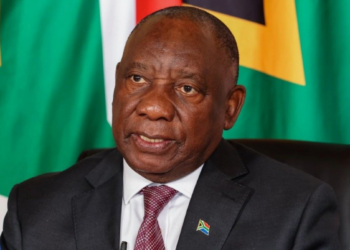
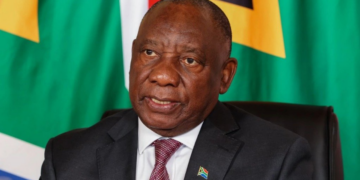
The bill forms part of a wider enforcement drive announced by President Cyril Ramaphosa in an address to the nation on 7 June 2026. The Government Communication and Information System confirmed the president set out a series of measures to tighten oversight of undocumented employment.
As part of that push, the Department of Employment and Labour has begun the phased recruitment of 10,000 labour inspectors during the current financial year. Ramaphosa first announced the additional inspectors in his State of the Nation Address on 12 February 2026.
The measures arrive alongside rising street-level tension. Groups such as Operation Dudula and the March and March movement have conducted what they describe as citizen inspections of businesses accused of hiring foreign nationals, and a national shutdown was called for 30 June.
Why it matters
The bill would extend legal exposure well beyond large companies. According to the gazetted text and government statements, the obligations apply to all employers, including private households that employ domestic workers.
That means a homeowner who employs a domestic worker without valid work authorisation could face the same penalty track as a formal business.
The enforcement drive lands in an economy under severe strain. Statistics South Africa reported an official unemployment rate of 32.7 percent for the first quarter of 2026, up from 31.4 percent in the previous quarter.
Youth unemployment is far higher. Stats SA recorded a jobless rate of 60.9 percent for those aged 15 to 24 in the same quarter.
Government argues that undocumented workers are vulnerable to exploitation because their immigration status discourages them from reporting abuses. In its statement on the bill, the state said investigations had uncovered workplaces where undocumented foreign nationals faced poor conditions, low wages, and excessive hours without proper compensation.
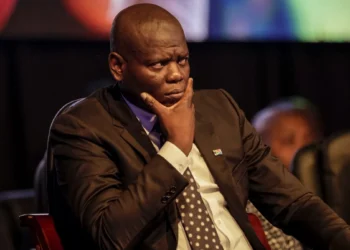
Deputy Minister of Employment and Labour Jomo Sibiya has framed the issue as one of legality and worker protection rather than nationality. He has said the department’s responsibility “starts and ends in the workplace,” with deportations remaining the role of Home Affairs and the police.
Migration researchers have urged caution about the framing. Professor Jo Vearey of the African Centre for Migration and Society told CapeTalk that available data does not show foreign nationals broadly displacing South African workers, and that many foreign domestic workers are legally documented.
Key details and figures
The bill amends the Employment Services Act of 2014 and extends its application to foreign nationals and non-profit employment agencies.
Before recruiting a foreign worker, employers would be required to satisfy themselves, in a manner set by regulation, that no suitably qualified South African citizen, permanent resident, refugee, or asylum seeker is available for the position.
Employing an undocumented foreign national is already a criminal offence under Section 38 of the Immigration Act of 2002, which can carry imprisonment. The proposed civil fines would run as a separate enforcement track through the Labour Court.
The national minimum wage rose to R30.23 for each ordinary hour worked from 1 March 2026, set by Government Gazette No. 54075. The same rate applies to farm and domestic workers.
Sibiya has said some employers treat existing penalties as a cost of doing business. He has argued that current fines are too low to deter non-compliance, which he says the new penalty structure is designed to correct.
The deputy minister has also confirmed the inspector recruitment is under way, and that joint enforcement operations involving the police, Home Affairs, and metro authorities are already running in several provinces.
What happens next
The bill is before Parliament and must complete the legislative process, including committee scrutiny and public participation, before any provisions become law. Its penalty structure is not yet in force.
The full text of the bill is published on the Department of Employment and Labour website.
The planned 30 June shutdown remains a flashpoint. March and March leader Jacinta Ngobese-Zuma has publicly called on supporters to avoid violence and looting during the action.
Ramaphosa has condemned vigilante action against foreign nationals while defending stronger state enforcement. How the government balances those two positions, and whether the bill survives committee scrutiny intact, remains unresolved.
The Council and Parliament have not set a final date for the bill’s adoption. Public comment timelines will be confirmed once the relevant portfolio committee schedules hearings.