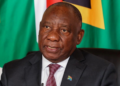







South Africans with DStv have received an unusual piece of good news: subscription fees are set to remain unchanged through 2026. Willington Ngwepe, the chief executive of MultiChoice (Pty) Ltd, said there will be no inflation-related DStv price increase for the South African market this year.
The development matters because DStv has traditionally adjusted prices annually, usually around the start of April. This time, however, the broadcaster’s South African licensing entity says it has chosen to keep pricing flat in recognition of the pressure households are facing. That means the key change is not a new package or a limited-time promotion, but a decision to avoid the usual yearly increase altogether.
For consumers, the next step is relatively straightforward. Subscribers should not expect the standard annual upward adjustment that many had become used to. Ngwepe said customers may instead receive communication confirming that their subscription fees will stay the same.
What we know so far
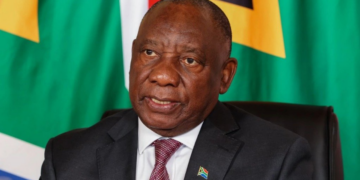
The central fact comes from direct public comments by Ngwepe, who said his entity is responsible for setting DStv subscription prices in South Africa. In that interview, he said there would be no inflation adjustment to pricing in 2026 and that prices would be kept flat in appreciation of current economic circumstances.
That clarification is important because earlier comments from Canal+ leadership had been narrower. Earlier this year, Canal+ Africa chief executive David Mignot said there were no immediate plans to raise DStv subscription fees and that no increase was planned for 1 April 2026. Ngwepe’s latest remarks go further by pointing to a flat pricing structure for the full 2026 calendar year rather than only the usual April adjustment window.
The broader context is that DStv is now operating under a different ownership structure from the one many subscribers knew in previous years. Canal+ took control of MultiChoice in late 2025, but South Africa’s broadcasting rules still require a local licensing structure for the domestic market. That is why the pricing commitment is coming from MultiChoice (Pty) Ltd, the South African licence-holding entity, rather than being framed purely as a Canal+ group decision.
There is also supporting evidence that DStv has been trying to position 2026 around value retention rather than price extraction. In January, DStv said it was adding value for South African consumers through stronger entry-level packages, lower decoder prices, flexible payments and rewards features. That official communication already hinted at a strategy built around affordability and retention.
Why it matters
The significance of the decision lies first in timing. South African households are already contending with fuel pressure, elevated living costs and broader economic uncertainty. In that environment, a discretionary entertainment service that freezes prices for a full year is making a noticeable choice not to add further pressure to monthly budgets.
The decision also matters because DStv is still one of the biggest paid entertainment products in the country. For many households, it is not just a television bill. It is tied to sport, local programming, news, family viewing and shared household entertainment. A flat price therefore has more practical value than a small one-off promotion because it provides predictability over a longer period.
There is a strategic reason behind the move too. MultiChoice has been under pressure from subscriber losses, tighter household budgets and competition from streaming services. In that context, holding prices steady can be read as both consumer relief and subscriber-retention strategy. While the company has not presented the move as a rescue plan, the choice to keep fees unchanged appears consistent with a broader attempt to reduce churn and keep existing households connected. This is an inference drawn from the company’s customer-value messaging and the wider pressures already reported around the business.
The freeze could also help protect DStv’s lower-tier and mid-tier packages. In a difficult economy, annual price hikes often push customers to downgrade or disconnect. By removing that trigger for 2026, the company may be hoping to slow the slide in affordability-sensitive parts of its subscriber base. Again, this is an inference based on the company’s stated economic context and value-focused positioning rather than an explicit formal explanation in the public comments reviewed.
Key details and figures
Several concrete details help define the scale of the decision and why it stands out:
- Ngwepe said DStv subscription fees will not increase in 2026 for the South African market.
- He said the decision was taken after weighing the costs in the relationship between the licensing entity and the content supplier.
- He also said customers could expect communication confirming that fees will remain the same.
- Earlier, Canal+ Africa said there would be no DStv increase on 1 April 2026, even before the broader full-year clarification.
- In January, DStv officially added three permanent channels to the Access package: Trace Ngoma, Trace Gospel and WWE.
- DStv also said the entry-level HD decoder remained at R499, or R799 installed, while Explora decoder prices had been cut by as much as 57%.
- The company launched a bill-splitting feature on the MyDStv app, allowing one account holder to split a subscription with one other person.
- DStv said subscribers had already redeemed more than 20 million DStv Coins to help offset subscription costs through its rewards programme.
These details show that the no-increase decision is not happening in isolation. It sits inside a wider effort to present DStv as more manageable for budget-conscious households in 2026.
What this means for households and subscribers
For households, the most obvious benefit is certainty. A family paying for DStv in January should, on the current public commitment, still be paying the same package fee later in the year rather than absorbing the usual inflation-linked rise. That makes budgeting easier, particularly for households already dealing with rising transport, fuel and food costs.
It also means the value proposition of DStv may look slightly stronger than it otherwise would have in 2026. If package content remains broadly stable while prices remain flat, the real cost increase is effectively zero on the subscription side, even though other household expenses are still moving higher. That makes the decision particularly relevant to price-sensitive customers who might otherwise have downgraded or cancelled. This is an inference based on the fee freeze and DStv’s own customer-value measures.
There is another practical point. The bill-splitting tool and rewards-based subscription support mean the company is not relying on only one affordability mechanism. Instead, it appears to be combining flat pricing with payment flexibility and product tweaks to keep subscribers engaged.
What happens next
The next major point to watch is communication to subscribers. Ngwepe said customers may receive confirmation that their subscription fees will remain unchanged, so the clearest immediate sign of implementation will be the absence of a normal annual price notice and the arrival of official messaging confirming a freeze instead.
The longer-term question is what happens in 2027. Ngwepe said pricing for 2027 would be communicated once a decision had been made. That means the 2026 fee freeze should not automatically be read as a permanent end to annual price adjustments. It is better understood as a one-year relief measure in a difficult economic environment.
For now, though, the good news is clear enough. South African DStv subscribers are set to avoid a 2026 subscription price increase, and that is a meaningful break from the usual pattern. In a year when many other household costs are still climbing, holding one major monthly bill steady is likely to be welcomed by customers across the market.