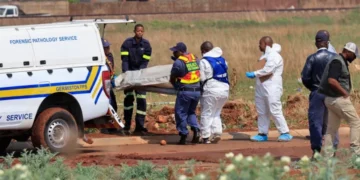
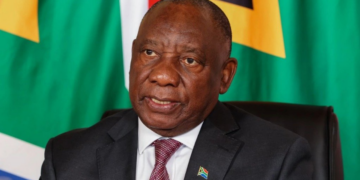




South Africa’s Cabinet has condemned the circulation of fake videos and images claiming to show attacks on foreign nationals, saying the material is false and is being used to harm the country’s international reputation during a tense period of anti-illegal immigration protests. The warning appears in the official statement on the Cabinet meeting of 6 May 2026, released on Thursday, 7 May.
The stronger and more accurate angle here is not that government says all concerns around violence and intimidation are fabricated. It does not. What Cabinet says is that specific viral videos and images being presented as proof of attacks on foreign nationals in South Africa are fake, and that they are being used to inflame an already volatile debate around immigration, jobs and public order.
That matters because the misinformation row is unfolding at the same time as a real diplomatic and political backlash over anti-immigration protests. Reuters reported on Thursday that several African countries, including Kenya, Malawi, Lesotho and Zimbabwe, warned their citizens in South Africa to be cautious, while Ghana asked the African Union to intervene after footage of a Ghanaian man being harassed spread online.
What we know so far
The official wording from Cabinet is unusually direct. In the government statement, Cabinet says the viral videos and images “are not only fake” but are intended to undermine South Africa’s reputation internationally and damage what it calls the country’s “better Africa agenda”. Cabinet also says South Africans have the right to protest the “spiralling illegal immigration challenge”, but adds that violence linked to those protests is unacceptable and must be dealt with by law enforcement.
Cabinet went further by condemning what it described as opportunistic attempts to hijack legitimate public concern about unemployment and limited economic opportunity by mobilising attacks on foreign nationals and tribal sentiment. In the same statement, it said government is continuing work on immigration enforcement through stronger border management, faster deportations, action against criminality within émigré communities, and steps to protect jobs and opportunities for South Africans.
This position is consistent with a separate GCIS-backed government statement published on 29 April. In that statement, government said it was tightening border controls, reforming immigration systems and urging the public not to take the law into its own hands. It said concerns about illegal immigration should be reported lawfully to SAPS, immigration authorities or other law-enforcement structures.
The current controversy is therefore sitting at the intersection of two realities. One is a real and visible wave of public protests against undocumented migration. The other is the circulation of misleading or fabricated footage that government says falsely portrays those tensions as wider or more violent than the verified record supports.
Why it matters
This matters first because misinformation in a volatile migration debate can carry real-world consequences. If fake videos are accepted as genuine evidence of attacks, they can intensify fear among foreign nationals, escalate diplomatic pressure from other governments, and make it harder for law enforcement and officials to distinguish verified incidents from manipulated or recycled material. Cabinet’s warning is effectively an attempt to contain that spiral.
It also matters because South Africa is already facing international scrutiny over anti-immigration protests and their fallout. Reuters reported that Ghana had facilitated the safe return of one citizen seen being targeted in a viral video, while Nigeria said at least 130 of its citizens in South Africa had asked to be repatriated under a voluntary government-assisted scheme. AP similarly reported that Nigeria’s foreign minister summoned South Africa’s top representative in Abuja to express concern over the latest protests.
That means the government’s statement is doing two jobs at once. Domestically, it is trying to defend the right to lawful protest while rejecting vigilantism and violence. Internationally, it is trying to reassure other African states that South Africa is not endorsing xenophobic attacks and that it rejects false or manipulated material that deepens panic and diplomatic tension.
There is also a policy layer to the story. Cabinet says it has directed the Department of Employment and Labour to intensify inspections in vulnerable sectors such as hospitality, farming, trucking and construction, while municipalities have been told to enforce trading by-laws more firmly. It also pointed to the Revised White Paper on Immigration as part of the state’s longer-term response to weaknesses in current immigration law.
Key details and figures
The key official fact is that Cabinet itself has now formally addressed the issue in a published government statement dated 7 May 2026. The statement says the fake videos and images are being circulated amid protests over illegal immigration and that government rejects both misinformation and violence.
The wider climate around the statement is also significant. Reuters reported that South Africa has seen a wave of protests against illegal immigration that have in some cases been accompanied by violence targeting migrants from other sub-Saharan African countries. Reuters also noted that immigrant populations in South Africa rose from 2% of the population in 1996 to 4% in 2022, citing Stats SA.
Nigeria’s case shows how quickly domestic tensions can spill over into diplomatic consequences. Reuters reported on 4 May that at least 130 Nigerians in South Africa had asked to be flown home following the protests, while AP reported that Nigeria described the repatriation effort as voluntary and said more people were expected to sign up.
Another important detail is what government is not saying. It is not claiming that all online reports of intimidation or all foreign-government concerns are fictitious. It is saying that specific viral videos and images being shared as evidence of attacks are fake, while at the same time insisting that actual violence, intimidation and lawlessness will not be tolerated. That distinction is central to reporting the story accurately.
What happens next
The immediate next step is likely to be continued official messaging and enforcement rather than a single dramatic policy announcement. Cabinet has already set out a line that combines tighter immigration enforcement, labour inspections and by-law enforcement with a warning against violence and misinformation. The government’s challenge now is to show that it can enforce immigration law without allowing intimidation, vigilantism or fake media to drive the public narrative.
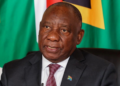
The bigger test will be whether that balance holds as protests continue and foreign governments keep watching developments closely. Reuters reported that Mozambique’s President Daniel Chapo discussed the issue with President Cyril Ramaphosa this week, while multiple African governments have already issued warnings to their nationals. That means the issue is no longer only a domestic political dispute. It has become a regional diplomatic concern too.
For now, the safest editorial conclusion is narrow and factual. South Africa’s Cabinet has condemned fake videos and images purporting to show attacks on foreign nationals, while also acknowledging that immigration protests are real and warning that any violence linked to them is unacceptable. The story is therefore about both misinformation and pressure on the state to manage a highly combustible immigration debate lawfully.