







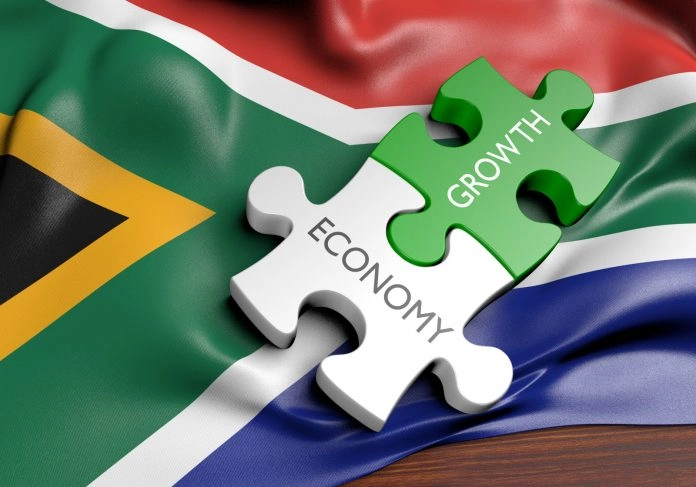
South Africa is heading into one of the most closely watched Budget weeks in years, with Finance Minister Enoch Godongwana set to table Budget 2026 in Parliament in Cape Town on Wednesday, 25 February. The budget is expected to confirm a notable improvement in the state’s public finances, including a smaller deficit than previously projected and progress toward stabilising government debt.
If the numbers land as expected, the shift could strengthen South Africa’s case for improved credit rating outlooks and lower borrowing costs, which would matter for everything from government financing to interest rate expectations and market confidence.
Why Budget 2026 is being framed as a “big turn”
For much of the past decade, South Africa’s fiscal story has been dominated by weak growth, rising debt service costs, bailouts for struggling state-owned entities, and repeated warnings from ratings agencies. Budget 2026 is being positioned as a moment where that narrative may finally start to change, not because all the problems are solved, but because the trend line on debt and deficits may be moving in the right direction.
Economists cited in recent pre-budget analysis expect Treasury to show:
- A fiscal deficit that comes in lower than earlier forecasts
- Further signs that debt is stabilising, rather than continuing to climb
- A stronger primary balance, which is the budget balance before interest payments
- Continued emphasis on reforms that support growth, including improvements in energy and logistics
These indicators matter because they influence how investors price South Africa’s risk, and how ratings agencies judge whether the country is becoming more resilient or more vulnerable over time.
What investors and households will look for in Budget 2026
While the budget contains hundreds of pages of technical detail, the most important signals usually boil down to a few key questions.
1) Is the deficit narrowing in a sustained way?
A smaller deficit reduces the pace at which government must borrow. That can help stabilise debt and may reduce pressure on bond yields over time.
2) Is debt stabilising, and where does it peak?
Debt levels affect how much government must spend each year on interest, which competes with spending on services such as health, policing, education, and infrastructure. Stabilising debt is often seen as a minimum condition for a more durable recovery.
3) Are there new taxes, or “quiet” tax increases?
Budget 2026 is expected to be politically constrained on major headline tax hikes. Instead, attention will focus on items like personal income tax bracket adjustments, medical tax credits, and excise duties. Even if tax rates do not change, failing to adjust brackets for inflation can increase the tax burden over time.
4) Is spending being controlled, or does pressure return?
The biggest spending risks usually include the public sector wage bill, support for state-owned entities, and unexpected shocks such as disaster response costs. Markets will want proof that spending discipline is holding.
5) Is there a credible plan to fund infrastructure?
South Africa’s growth problem is closely linked to infrastructure constraints. A budget that signals capital spending support, while still protecting fiscal stability, can shift confidence more than a budget that simply shifts money between departments.
Why ratings and outlook changes matter for South Africa
Credit rating actions are sometimes misunderstood as symbolic. In reality, they affect the price South Africa pays to borrow, and that feeds into the economy.
A ratings upgrade or a move to a positive outlook can:
- Improve investor confidence and widen the pool of buyers for government bonds
- Lower long-term borrowing costs, if markets believe fiscal risks are falling
- Support the rand, which can help reduce imported inflation pressures
- Make it easier for local banks and companies to raise funding at better terms
South Africa already received an important signal in late 2025 when a major ratings agency upgraded the sovereign and retained a positive outlook. Budget 2026 is now being watched for confirmation that the fiscal improvements behind that move are holding, and whether other ratings agencies could follow with their own outlook adjustments.
The backdrop: reforms, revenue performance, and a tighter inflation target
Budget 2026 comes after several changes that have influenced the fiscal environment.
Improved revenue performance
Higher prices for some key exports have supported revenue outcomes, and stronger collections can give Treasury more room to meet deficit targets without raising taxes aggressively. The durability of that revenue improvement will be a key question.
Policy signals aimed at stability
South Africa has also moved to a tighter inflation targeting framework, shifting to a 3% target with a tolerance band. This is intended to anchor inflation expectations and align South Africa more closely with trading partners. Over time, that can influence interest rate dynamics and investment decisions, although the transition also requires credibility and consistent policy delivery.
Confidence and reform momentum
Investors will also look for whether Budget 2026 reinforces reform momentum. This includes practical progress in energy reliability, logistics performance, and the effectiveness of state capacity to implement projects.
What Budget 2026 could mean for ordinary South Africans
Even a “better” budget does not automatically translate into immediate household relief. However, fiscal stabilisation can matter in several real-world ways.
- Borrowing costs and interest rate expectations: If markets believe debt risks are easing, bond yields may stay lower than they would otherwise, which can reduce pressure on interest rates over time.
- Tax pressure: If Treasury has more room, it may be able to avoid sharp new tax increases, or provide limited relief through bracket adjustments.
- Service delivery capacity: When interest costs rise, they squeeze departmental budgets. Stabilising debt helps protect space for frontline services and infrastructure maintenance.
- Business confidence: A budget that signals stability can support investment decisions, which affects jobs and growth.
The biggest limitation is that fiscal improvements do not remove structural constraints overnight. Weak growth, high unemployment, and service delivery failures still require sustained reform, not only better budget numbers.
Key risks that could derail the “turning point” narrative
Budget optimism usually comes with conditions. Several risks could weaken the positive story if they worsen over the next year.
- Growth remains too low: Fiscal improvement is easier when the economy grows faster. If growth stays weak, tax revenue struggles, and debt dynamics can worsen again.
- Spending pressures return: Wage agreements, emergency spending, and state-owned entity support can quickly absorb fiscal gains.
- External shocks: Commodity prices, global interest rates, and geopolitical instability can shift the rand and raise funding costs.
- Implementation risk: Markets react not only to promises, but to follow-through. If reforms stall, confidence can fade quickly.
What to watch on Budget day
For readers looking for the main signals from Budget 2026, these are the practical items to scan first:
- The deficit forecast for the next three years
- The debt-to-GDP path and where debt peaks
- The primary balance outlook
- Personal income tax brackets and rebates
- Medical tax credits and excise duty changes
- Infrastructure spending commitments and timelines
- Any new fiscal rule or spending cap framework
- Borrowing plans and bond issuance guidance
- Support plans for state-owned entities
- The credibility of the assumptions behind the numbers
If Budget 2026 delivers a clearer and more believable path to debt stability without a tax shock, it will strengthen the argument that South Africa is entering a more stable fiscal phase. If it does not, the “big turn” narrative may prove premature.