

What the EU actually launched
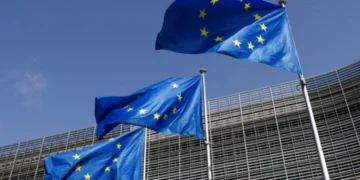
The European Union, together with Germany, Denmark and the Netherlands, launched two grant-funded projects for green hydrogen South Africa is trying to build, worth a combined R1.06 billion, at the Africa Green Hydrogen Summit in Cape Town on Tuesday, 15 September 2026.
The grants are real money, and they are not construction money. Neither project builds a plant, an electrolyser or a pipeline. Both fund the conditions under which somebody else might.
The summit’s own theme states the problem the money is meant to address. It ran under the banner “Moving Africa’s Green Hydrogen Sector from PowerPoint to Gigawatts”, across two days at the Century City Conference Centre, with more than 1,000 delegates from 17 countries.
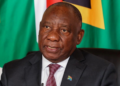
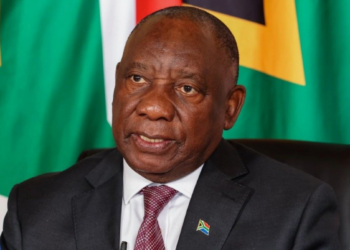
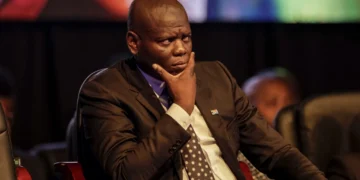
President Cyril Ramaphosa delivered the keynote virtually, read on his behalf by Minister of Electricity and Energy Dr Kgosientsho Ramokgopa, who hosted the summit. Minister of Trade, Industry and Competition Parks Tau and Acting Premier of the Western Cape Tertuis Simmers attended.
What the R1.06 billion buys
| Project | Grant | What it funds | Partners |
|---|---|---|---|
| Raw materials and green hydrogen derivative value chains | R690 million | Building and strengthening the environment for green hydrogen and battery value chains, with zones flagged in the Northern Cape, Limpopo and Mpumalanga | EU with Germany, Denmark and the Netherlands, run through the Department of Electricity and Energy |
| Capital mobilisation for green hydrogen | R370 million | Unlocking capital for investment, mobilising support for public and private investors | EU, KfW Development Bank and the Development Bank of Southern Africa |
The EU described the purpose in those terms. “These projects show how we can create the right conditions for private investors” to enter markets with high potential, it said.
That is a specific kind of spending. The R690 million goes into policy, standards and value-chain groundwork through a government department. The R370 million goes into de-risking, so that commercial lenders and investors will put money behind projects they currently will not.
Whether it produces a gigawatt of anything depends on decisions that have not been taken.
Where green hydrogen South Africa projects actually stand
The clearest account of that came from the President’s own address, delivered at the same summit.
| Priority project | Stage as described in the President’s address |
|---|---|
| Phelan Green Group electro-sustainable aviation fuel, Saldanha Bay | The most advanced of the six |
| Prieska Power Reserve, Northern Cape, green ammonia for the domestic market | Development stage |
| Green e-Fuels Producers Green Methanol Corridor, targeting European demand | Pre-feasibility stage |
| Green Hydrogen Solutions Project, smaller scale, domestic demand | Front-end engineering design completed |
| Two further priority projects | Not detailed in the address |
South Africa’s first wave of its national green hydrogen programme consists of six priority projects, selected through an assessment process designed to strengthen project preparation, reduce investment risk and improve investor confidence.
By designating these as priorities, the address said, government and its partners now have a mechanism to “help the remaining five projects reach final investment decision, construction and production”.
Five of six. A final investment decision is the point at which a project stops being a proposal and becomes a build, with capital committed and contracts signed. Until then, engineering studies and feasibility work are all that exist.
Ramaphosa also pushed back on the model itself, arguing that Africa’s ambition should extend beyond exporting renewable energy and raw materials, and that more of the value chain should sit on the continent so that Africa captures more of the economic benefit.
How R1.06 billion fits into R200 billion
The EU said the two projects form part of the Team Europe Global Gateway Investment Package for South Africa, worth more than R200 billion and announced in October 2025.
R1.06 billion is about 0.53% of R200 billion, a Southafriworld calculation from the two published figures.
That comparison needs care rather than outrage. The R200 billion figure is an investment package, built largely from loans, guarantees and mobilised private capital. The R1.06 billion is grant funding, which is a different and scarcer instrument. The two are not the same thing and should not be read as a delivery rate.
What the arithmetic does show is the shape of the commitment. Almost all of the R200 billion depends on investors and lenders choosing to deploy capital. The grants exist to make that choice easier. Neither figure is money already spent on building anything in South Africa.
The timing sits against a wider backdrop. The grants were launched in the same week the United States announced a visa restriction policy aimed at South African officials, a relationship Southafriworld has covered through the pressure on trade and investment with the United States.
What comes next
Ramaphosa said a second wave of projects will follow, bringing further credible projects into the portfolio. No timeline, number or selection date was given for that wave.
The Prieska Power Reserve targets the domestic market and the Green Methanol Corridor targets European demand, which means the two most-cited projects are aimed at different buyers with different offtake risk. Neither has a construction date.
Several things remain unresolved. No disbursement schedule has been published for either grant. No job figure has been attached to the R1.06 billion. The two remaining priority projects have not been named in the material Southafriworld reviewed. And no final investment decision has been announced for any of the five projects the President’s address identifies as still needing one.
The summit’s second day ran on Wednesday, 16 September. The measure of whether the grants worked will not be another summit. It will be a final investment decision with a date on it.
HOW WE REPORTED THIS CROSS-CHECKED
- The article distinguishes what the grants fund from what they do not. Neither project finances construction, and the article says so on the basis of the European Union's own description of each.
- The observation that five of six priority projects have yet to reach a final investment decision comes directly from the President's address at the same summit, and is quoted rather than inferred.
- Two of the six priority projects are not identified in the material Southafriworld reviewed, and the table says so rather than leaving the impression that all six are described.
- The figure that R1.06 billion is about 0.53% of R200 billion is a Southafriworld calculation from the two published figures. The article states explicitly that the two amounts are different instruments, that grants and an investment package are not comparable on a like-for-like basis, and that the percentage should not be read as a delivery rate.
- No job figure, disbursement schedule or construction date has been published for either grant, and the article says so rather than estimating.
- No comment was sought from the European Union delegation, the Department of Electricity and Energy or the Presidency for this article. Every quotation used was already on the public record.