









What Sasol has said about jet fuel supply to OR Tambo
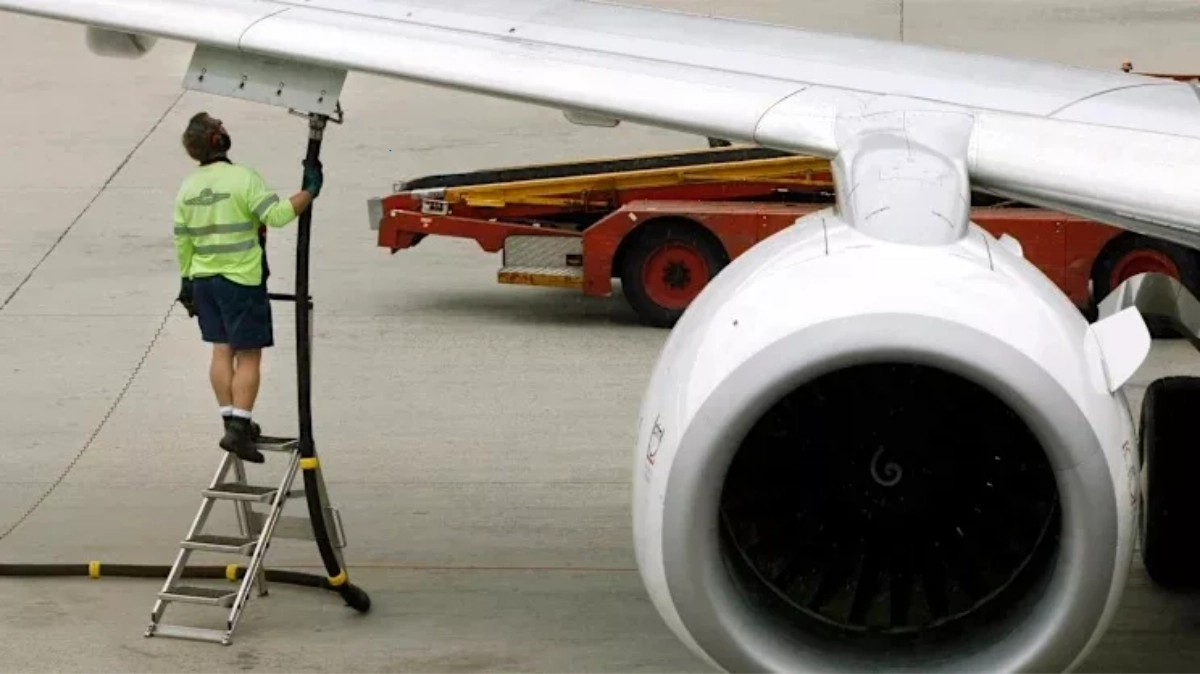
An unplanned stoppage at the Natref refinery has curtailed jet fuel supply to OR Tambo International Airport, and airlines have begun making contingency arrangements.
Sasol confirmed the position in a response to questions. It said the outage of a downstream unit has affected its ability to meet its full supply commitments for some fuel grades, including jet fuel for customers at OR Tambo.
The company said it will continue to partially supply its jet fuel customers at the airport while Natref works to restore normal operations. Sasol did not give a timeframe.
Natref, at Sasolburg in the Free State, is South Africa’s only inland crude oil refinery and the main supplier of fuel to the country’s economic hub.
The Airlines Association of Southern Africa said an emergency meeting was convened on Wednesday afternoon with the Airports Company South Africa and the Fuels Industry Association. Bloomberg attributed the convening to the Department of Energy, and Southafriworld notes that South Africa’s fuels portfolio currently sits with the Department of Mineral and Petroleum Resources, while the equivalent 2025 meeting was called by the Department of Transport.
What it means for passengers flying out of Johannesburg
No flight cancellations attributable to the outage have been reported, and no airline has announced schedule changes.
FlySafair, which carries more than half of South Africa’s domestic passengers, said it understands the disruption followed planned maintenance at Natref that was compounded by a technical problem. It has arranged to temporarily increase supplies from alternative providers.
Chief marketing officer Kirby Gordon said that together with (cite index=”35-1″>”a moderate tankering adjustment”,</cite> where aircraft carry extra fuel so they need less at their destination, the measures should allow the airline to maintain fuel security for its operations.
Tankering has a cost. Carrying additional fuel increases aircraft weight and therefore burn, which is one of the pressures already reflected in FlySafair’s fuel surcharge.
Passengers should watch for airline notifications rather than assume disruption. On the available information, the practical risk is delay and rerouting for refuelling rather than cancellation.
How this compares with the January 2025 Natref shutdown
South Africa has been here recently, and the earlier episode is the best available guide to what an escalation would look like.
| Detail | January 2025 | August 2026 |
|---|---|---|
| Cause | Fire on 4 January damaging the crude distillation unit | Unplanned outage of a downstream unit |
| Duration | Unit offline until 21 February | Not stated |
| Effect on flights | Some aircraft unable to refuel, passengers stranded | Partial supply continuing, no cancellations reported |
| Airline workaround | Refuelling at Windhoek and King Shaka | Alternative suppliers and tankering |
| Government response | Urgent meeting convened 24 January | Emergency meeting convened 26 August |
| Volume secured | 121.1 million litres via the Port of Durban | Not stated |
Terence Delomoney, group executive for operations management at the Airports Company South Africa, said during the 2025 episode that (cite index=”41-1″>”Our normal daily utilisation is approximately 3.6 million litres per day”,</cite> against about 25 million litres then held in tank at the airport.
ACSA has not published a current days-of-cover figure for this outage. In April 2026 it said OR Tambo was holding between six and seven days of cover, Cape Town four days and King Shaka more than 15 days, and that no flights had been cancelled for fuel reasons since the Middle East conflict began.
The comparison matters because those are the numbers that determine whether an outage becomes a disruption. Without them, the current severity cannot be assessed.
The import rule that limits South Africa’s options
The country has only two operational crude oil refineries, Natref at Sasolburg and Astron in Cape Town. That leaves little slack when one goes down.
A regulatory constraint compounds it. Under the Customs and Excise Act of 1964, jet fuel cannot be imported directly into import terminals and must be routed through a licensed manufacturing warehouse or refinery.
During the January 2025 shortage, SARS granted special permission for companies to register tanks as Special Purpose Warehouses, allowing the supply chain to bypass that requirement. The Fuels Industry Association warned in August 2025 that the rule limits flexibility in sourcing jet fuel and increases shortage risk when Natref is offline.
George Mothema, chief executive of the Board of Airline Representatives of South Africa, framed the commercial stake at the time, saying (cite index=”40-1″>”Airlines are dependent on the inventory that they sell in advance”.</cite>
Southafriworld has reported on South Africa’s draft fuel rationing and shortage policy, drawn up in response to the same structural exposure.
What has not been confirmed
Several things remain unknown, and they are the things that would tell a traveller whether to worry.
Sasol has not said how long the outage will last or which downstream unit is affected. No volume shortfall has been quantified. ACSA has not issued a public statement or a current stock position. No airline other than FlySafair has commented.
It is also not established which government department convened Wednesday’s meeting, and no communiqué from that meeting has been published.
The regional picture adds pressure. Namibia is separately facing a jet fuel shortage that has forced airlines to reroute flights, after a contaminated cargo left trading house Vitol replacing supplies for its customers, and that situation could run into the weekend. Windhoek was one of the alternate refuelling points South African carriers used in 2025.
Jet fuel supply has been tight globally since the United States and Israel went to war with Iran at the end of February, disrupting flows through the Strait of Hormuz, a pressure Southafriworld has tracked through flights disrupted by Middle East airspace closures and the September petrol price increase.
Two things will settle this. Sasol has to state a restoration timeline for the affected unit, and ACSA has to publish a current days-of-cover figure for OR Tambo.