





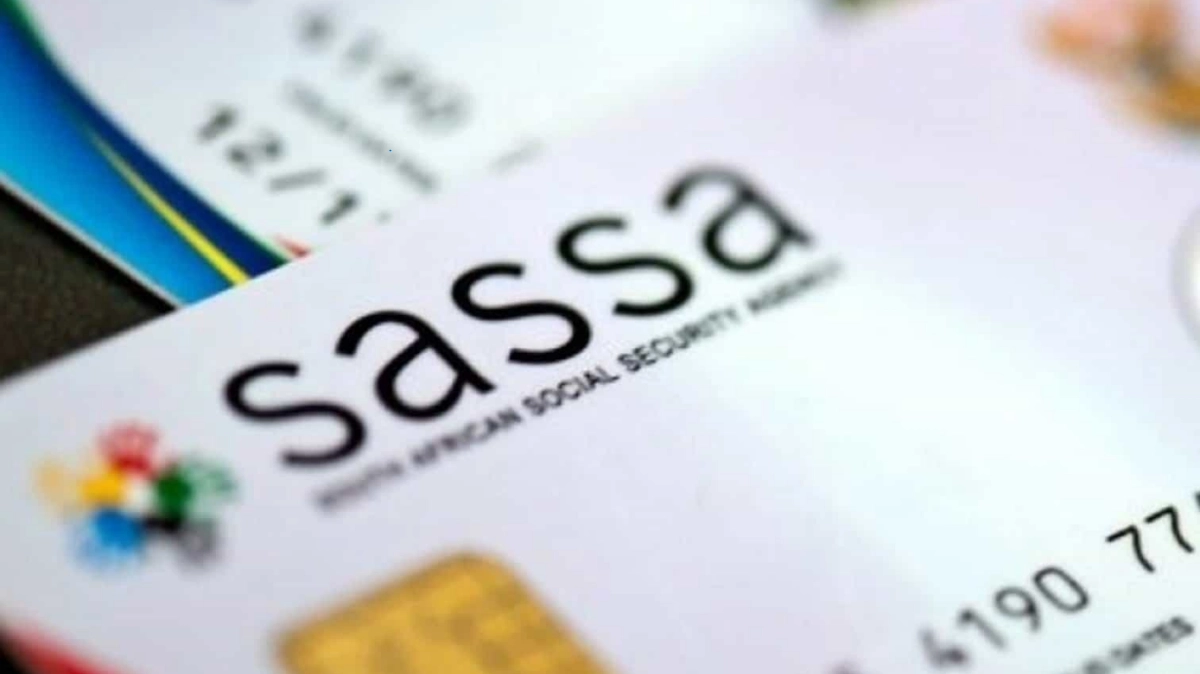
The SASSA older persons grant, still widely called the old age pension, pays a maximum of R2,400 a month from 1 April 2026, rising to R2,420 once you turn 75. You qualify from age 60 if you are a South African citizen, permanent resident or refugee, live in South Africa, and pass the means test. Applying is free and done in person at a SASSA office. Processing takes up to three months, and an approved grant is backdated to the day you applied.
What the SASSA older persons grant pays
| Item | Amount | Effective from |
|---|---|---|
| Older persons grant, ages 60 to 74 | R2,400 a month | 1 April 2026 |
| Older persons grant, age 75 and over | R2,420 a month | 1 April 2026 |
| Grant-in-aid, where you need full-time care | R580 a month | 1 April 2026 |
| Cost of applying | Free | Standing |
These are maximum amounts. The means test does not only decide whether you qualify. It also sets how much you actually receive, so a pensioner with some private income can be approved for less than the full R2,400.
Grant-in-aid is paid on top of the older persons grant, not instead of it, and only where a beneficiary needs full-time care from another person.
Who qualifies
You must be 60 or older, a South African citizen, permanent resident or refugee, and living in South Africa. You must not already receive another social grant for yourself, and you must not be cared for in a state institution.
Note the difference from the child support grant, which is open to citizens and permanent residents. Recognised refugees can claim the older persons grant.
The income and asset limits, and why the numbers disagree
This is where most readers get stuck, and the official sources currently contradict each other.
SASSA’s own means test explainer, published for the amounts that took effect on 1 April 2026, gives a monthly income limit of R9,350 for a single applicant and R18,700 for a married couple’s combined income. It puts the asset limit at R1,584,000 for a single applicant and R3,168,000 for a couple.
The national government services page for the grant gives different figures on a page that otherwise carries the current R2,400 amount. It lists income of no more than R86,280 a year if single, which works out to R7,190 a month, and R172,560 a year if married. Its asset limits are R1,227,600 and R2,455,200.
Other South African sites publish at least two further versions again, including R107,880 and R96,840 a year for a single applicant. Those are older thresholds that were never updated.
Confirm the current income and asset limits with SASSA on 0800 60 10 11 before assuming you earn or own too much to qualify, as the published figures conflict and the thresholds move with the grant value. If you were turned down in an earlier year on an income test, it is worth reapplying rather than assuming nothing has changed.
What counts as income is broad: wages, a private pension, an annuity, rental income, interest, dividends and maintenance. If your spouse already receives a social grant, that grant is not counted against you. Assets include property other than the home you live in.
Documents to take to the SASSA office
- Your 13-digit barcoded ID or Smart ID card.
- Proof of marital status, where applicable.
- Proof of residence.
- Proof of your income and any dividends.
- Proof of your assets, including the value of property you own.
- Proof of a private pension, if you have one.
- Bank statements for the previous three months.
- If you were employed, your UIF membership book or a discharge certificate from your last employer.
- If your spouse died within the last five years, a copy of the will and the first and final liquidation and distribution accounts where applicable. Where there was no will, the Intestate Succession Act decides who inherits, and the executor’s documents are what SASSA will want to see.
If you have no ID, SASSA accepts an affidavit in its standard format sworn before a Commissioner of Oaths who is not a SASSA official, plus a sworn statement from a councillor, traditional leader, social worker, minister of religion or school principal who can confirm your name and age. Your fingerprints are taken and you are referred to Home Affairs. This is not optional: if you do not obtain the ID, the grant is suspended. Many banks now let you get a Smart ID at a bank branch, which avoids the Home Affairs queue.
How to apply
- Go to the SASSA office nearest to where you live with your documents.
- Complete the application form in the presence of a SASSA officer. Only you or the officer may fill it in.
- Answer the interview questions about your income, assets and living situation. The officer will tell you whether you appear to qualify.
- Take the receipt you are given and keep it. It is your proof of application.
- Wait for the written outcome. Processing takes up to three months.
If you are too old or ill to travel, a family member or friend can apply for you. They should bring a letter from you or a doctor’s note explaining why you cannot attend. You can also appoint a procurator at the SASSA office to collect the money on your behalf.
One inconsistency to be aware of: the government services page states that application forms are not available online, while the same page links to an online grant application portal. Treat the office route as the reliable one and use the portal as a bonus rather than a substitute.
Reviews, suspension and the institution rule
Older persons grants are reviewed. SASSA notifies you three months in advance of a review or of the date your life certificate is due. If you are paid through a bank, an institution or a procurator, you must complete a life certificate at a SASSA office every year.
Your grant can be suspended if your circumstances change, if a review goes against you, if you fail to cooperate with a review, or if there was an error when it was approved. It lapses if you die, are admitted to a state institution, leave the country, or do not claim for three consecutive months.
There is one rule that catches families out. If you are admitted to an institution that has a contract with the state to care for you, the grant drops to 25% of the maximum from the fourth month after admission. It is reinstated in full from the day you are discharged.
If you are turned down
SASSA must tell you in writing why. You can appeal to the Minister of Social Development at the national Department of Social Development, and you have 90 days from being notified. Appealing is free.
This route is specific to the permanent grants. If the refusal you are dealing with is for the R370 grant instead, the SRD grant uses a separate appeal channel with its own tribunal and its own deadline.
Frequently asked questions
How much is the old age pension in 2026?
R2,400 a month from 1 April 2026, and R2,420 a month once you are older than 75.
At what age can I apply?
60. There is no separate earlier age for women.
Can I get the grant if I have a private pension?
Possibly. A private pension counts as income in the means test, and it can reduce the amount you are paid rather than disqualify you outright. Declare it.
When is the older persons grant paid each month?
First, ahead of the disability and children’s grants. In September 2026 that is 2 September.
What happens if I move into a care home?
If the home is state-contracted, your grant reduces to 25% of the maximum from the fourth month after you are admitted, and returns to full when you leave.
Do I have to reapply every year?
No, but you may be reviewed, and if you are paid through a bank, institution or procurator you must complete a life certificate annually.
What to watch
The next change to the amount comes from the February 2027 Budget and takes effect from the April 2027 payment cycle. Nothing in the 2026 Budget provided for a second in-year adjustment to this grant.
The more useful thing to watch is the means test. If the national services page is updated to match SASSA’s 2026 figures, or a fresh regulation is gazetted, the qualifying limits move and thousands of people who were previously over the line will not be. That is the trigger for updating this page.