


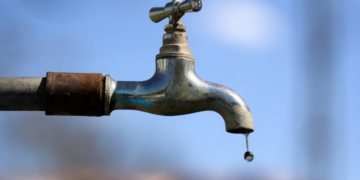


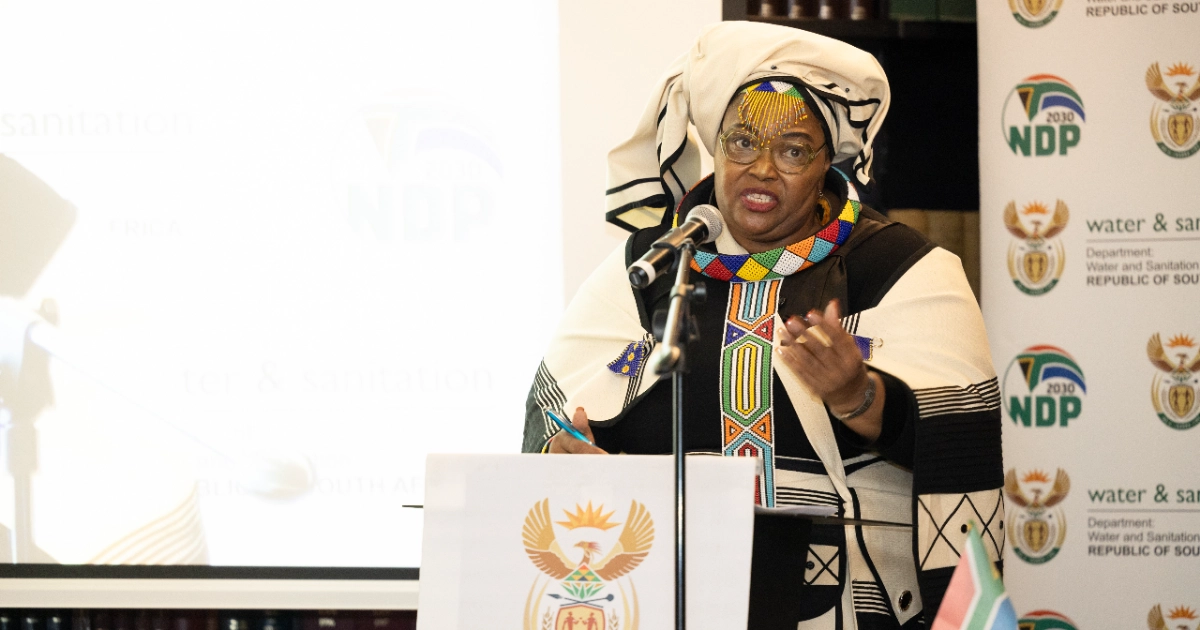
South Africa’s water crisis has received a notable funding boost in the 2026 Budget, with National Treasury allocating R14.245 billion for regional and local water and sanitation services in 2026/27. That is up from R14.135 billion in 2025/26 and comes as the country struggles with aging infrastructure, poor municipal performance and repeated water interruptions.
The stronger and more accurate angle here is not that South Africa’s water crisis is suddenly solved. It is not. What the official budget does show is that government is still putting substantial money into water-related municipal infrastructure and is reviewing how major water grants are structured in an effort to improve delivery.
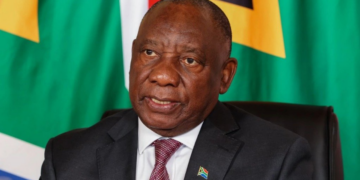
That matters because water has become one of the country’s most politically and economically damaging service-delivery failures. Reuters reported in February that President Cyril Ramaphosa had singled out worsening water shortages as one of South Africa’s major governance problems, with some areas in Johannesburg having gone without water for weeks.
What we know so far
The clearest official development is in National Treasury’s 2026 Budget Review. In the main spending tables, Treasury shows “regional and local water and sanitation services” rising from R12.924 billion in 2024/25 to R14.135 billion in 2025/26 and then to R14.245 billion in 2026/27. That makes the 2026/27 allocation the highest of the three figures shown in that table.
Treasury’s municipal grant tables add more detail. They show direct transfers for the Regional Bulk Infrastructure Grant at R3.649 billion in 2026/27 and for the Water Services Infrastructure Grant at R4.706 billion in 2026/27. On the indirect-transfer side, the same table shows a further R3.447 billion for regional bulk infrastructure and R1.431 billion for water services infrastructure in 2026/27.
That means the budget support for water-linked municipal infrastructure is spread across several channels rather than one headline programme. Treasury also says it is reviewing the Water Services Infrastructure Grant, the Regional Bulk Infrastructure Grant and the Municipal Infrastructure Grant to rationalise funding of water services.
That review is important because it suggests government is not only allocating money, but also reconsidering whether the current grant architecture is working properly. Treasury’s annexure says the three grants have already been reviewed and that reforms are envisaged for implementation in the outer years of the 2026 medium-term expenditure framework, although further alignment remains subject to approvals.
Why it matters
This matters because South Africa’s water crisis is no longer a local inconvenience. It is a national infrastructure problem affecting households, hospitals, schools, businesses and municipalities. Reuters reported in February that Ramaphosa said officials would be held accountable for failing to provide water, underscoring how central the issue has become to the country’s politics and service-delivery crisis.
The budget allocation is therefore good news in a limited but real sense. More money for water and sanitation services improves the state’s ability to fund bulk systems, municipal projects and backlog reduction. But funding alone will not repair broken governance, weak maintenance, poor billing systems or collapsing municipal execution. That is an inference supported by Treasury’s decision to pair funding with a grant-rationalisation process, and by Reuters’ reporting on the depth of the crisis.
The review of the three grants also points to a bigger problem government is trying to fix. Treasury says the aim is to align the grants to accelerate delivery of water services, including goals such as eradicating bucket toilet systems. That suggests the state recognises that fragmentation and poor alignment in grant design can slow delivery even where money is available.
There is also a municipal finance angle. The Budget Review notes that National Treasury has withheld equitable share and other conditional grants from municipalities that owe money to water boards under section 216 of the Constitution. That is important because it shows the water crisis is also tied to municipal debt, weak revenue collection and non-payment to bulk service providers.
Key details and figures
The most important number is R14.245 billion. That is Treasury’s 2026/27 allocation for regional and local water and sanitation services in the main budget table. The corresponding figures are R14.135 billion in 2025/26 and R12.924 billion in 2024/25.
The grant detail matters just as much. Treasury’s municipal transfer tables show R3.649 billion in direct transfers for regional bulk infrastructure and R4.706 billion in direct transfers for water services infrastructure in 2026/27. Indirect transfers add another R3.447 billion for regional bulk infrastructure and R1.431 billion for water services infrastructure in that same year.
Another key figure is the Municipal Infrastructure Grant itself, which Treasury shows at R20.652 billion in 2026/27. Treasury explicitly says the Municipal Infrastructure Grant is part of the review alongside the two water-focused grants, meaning the eventual reforms could affect how broader municipal infrastructure money supports water delivery too.
The broader context remains difficult. Reuters reported that worsening shortages had already triggered protests and exposed how badly local systems were failing in parts of the country. That is why even a substantial funding lift should be read as progress in the pipeline, not as proof that taps will suddenly run reliably everywhere.
What happens next
The next step is implementation. Treasury has already completed a review of the major water-related grants and says reforms are expected in the outer years of the 2026 medium-term framework, subject to approval. That means the good news is not only the amount of money, but also the possibility of a cleaner, more coherent funding model for water delivery.
The harder part will be whether municipalities and implementing agencies can turn those allocations into visible improvements. South Africa’s water crisis has always been about more than budgets. It is also about execution, maintenance, debt discipline and local governance. That is an inference based on the combination of Treasury’s grant review and Reuters’ reporting on the crisis.
For now, the safest conclusion is narrow and factual. There is real good news for South Africa’s water crisis in the form of a larger 2026/27 budget allocation and an active review of the key grants used to fund water delivery. But the official record does not support saying the crisis is fixed, only that government has put more money and reform effort behind trying to contain it.