









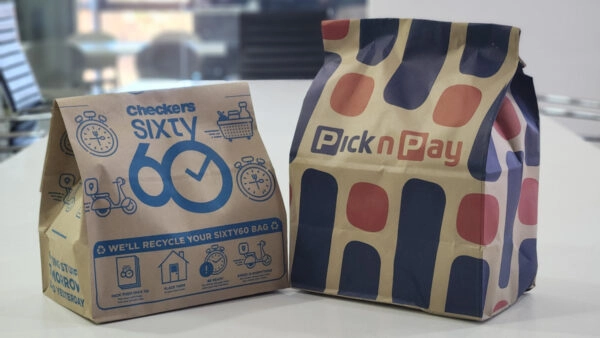
South Africa’s biggest grocery retailers, including Shoprite’s Checkers and Pick n Pay, are facing a new pressure point that has little to do with store openings, promotions, or supply chains. The concern is that a fast-growing online gambling market is absorbing a larger share of household spending, reducing the money available for essentials like groceries and basic household goods.
The warning has moved beyond anecdote. Official industry statistics from the National Gambling Board show that total gambling turnover reached about R1.5 trillion in the 2024/25 financial year, with betting dominating turnover and gross gambling revenue. Independent research and reporting have also indicated that many online gamblers say the money they spend on betting would otherwise have gone to groceries.
For retailers, the risk is straightforward. When households cut back, the first visible impacts are often smaller baskets, fewer impulse purchases, and a shift to cheaper items. In a market where grocery margins are typically tight and growth depends heavily on volume, a sustained diversion of spend into online gambling can become a material headwind.
What the R1.5 trillion figure represents
The R1.5 trillion figure refers to total gambling turnover, which the National Gambling Board defines as the rand value of money wagered and notes that it includes “recycling”, meaning funds that are staked more than once. In other words, it is a measure of wagering activity across legalised gambling modes, not a measure of profit made by gambling firms.
In the National Gambling Board’s audited statistics for the year ending 31 March 2025, turnover by mode was presented as follows:
- Betting: about R1.125 trillion (75.0%)
- Casinos: about R292.84 billion (19.5%)
- Limited Payout Machines: about R54.69 billion (3.6%)
- Bingo: about R27.53 billion (1.8%)
The National Gambling Board’s annual reporting also shows that betting accounted for 69.9% of gross gambling revenue in 2024/25, underscoring how strongly the market has shifted toward betting products relative to older land-based formats.
Why this matters for Checkers and Pick n Pay
Checkers and Pick n Pay compete in a consumer environment where price sensitivity remains high, and shoppers often juggle essentials with constrained disposable income. That makes grocery spend particularly exposed when a new category rapidly absorbs “spare” cash.
Standard Bank chief economist Goolam Ballim has warned publicly that increased spending on gambling can undermine improvements in household financial health and weaken the broader economic benefit that comes from stronger consumer spending. His comments highlight a core economic point: spending on goods and services typically has a different multiplier effect than gambling, which is largely redistributive.
Evidence that grocery spending is being displaced
The clearest recent evidence has come from survey work and retail-focused research examining how online gambling affects household budgets.
A study highlighted by Trade Intelligence and reported by ITWeb found that, in an online survey of 700 respondents in December, “groceries/food and household essentials” was the most commonly selected category that would have received the money otherwise spent on online gambling. Fast food and takeaways ranked second.
Moneyweb, reporting on the same broad theme, said 44% of surveyed respondents indicated they would have bought groceries if the money had not been gambled away.
Daily Investor has also reported that Trade Intelligence survey results point to grocery spending taking the biggest, or most widespread, knock as funds are diverted into online gambling, reinforcing the risk to food retailers that rely on steady household spend.
Retail leaders and analysts are increasingly vocal
Pick n Pay’s CEO Sean Summers has been among the most prominent retail executives to raise the alarm publicly about online gambling and its impact on consumer budgets, including calls to tighten controls on advertising.
The issue has also appeared in wider commentary about the retail environment, with coverage noting that some retailers now view the diversion of consumer spend into online gambling as more troubling than certain other competitive pressures, because it reduces the overall wallet available to spend in stores.
This does not mean online gambling is the sole driver of retailer performance. Grocery chains still face the fundamentals of price competition, operational execution, and changing shopper behaviour. The point is that a fast-growing gambling market can intensify the pressure on households and accelerate trade-down behaviour.
The policy response taking shape in Pretoria
Government has already moved to open a debate on stronger interventions.
National Treasury published a discussion paper on a proposed national online gambling tax, positioning it as a response to the negative externalities associated with gambling, especially online gambling, and the need to internalise related social costs.
Treasury’s paper also notes that, in the context of the Consumer Price Index, gambling and betting activities account for 1.6% of total household spending, placing it among the higher weighted categories in the basket.
In January 2026, Treasury extended the deadline for public comment on the draft discussion paper, indicating active engagement from stakeholders and continued policy work in this area.
Any new national tax would need to navigate practical questions, including how to deal with offshore operators and illegal platforms, and how to avoid unintended consequences such as driving more activity into less regulated channels.
A sector with governance and enforcement complications
Alongside the consumer-spend impact, parts of the public debate have focused on regulatory gaps and criminal risks.
amaBhungane’s reporting on South Africa’s gambling market has described the scale of online betting growth and raised concerns about unlicensed operators and vulnerabilities that can include money-laundering risks. The Financial Intelligence Centre has also expressed concern in this area, according to the investigation.
For the retail sector, this matters because the harm is not limited to reduced basket sizes. If problem gambling rises, it can deepen household financial distress, increase reliance on short-term credit, and place additional strain on communities that grocery retailers serve daily.
What this could mean for shoppers, retailers, and policymakers
If current trends persist, the knock-on effects could be felt in several ways:
Likely effects in supermarkets
- More aggressive price competition as retailers fight for a smaller share of wallet
- Increased reliance on promotions and private label to protect volumes
- Faster “trade-down” to cheaper products and smaller baskets
Likely effects for households
- Tighter food budgets, especially for lower-income and financially stressed groups
- Higher risk of arrears on essentials when gambling spend becomes habitual
Likely policy focus areas
- Tax and enforcement options aimed at reducing harmful consumption
- Advertising and marketing restrictions, especially where vulnerable groups are exposed
What to watch next
Three developments will shape how significant this “R1.5 trillion threat” becomes for grocery retail:
- Treasury’s next steps on a national online gambling tax after the consultation process.
- Regulatory enforcement outcomes, particularly around unlicensed online operators and consumer protection.
- Retailer commentary in results cycles, which will show whether the diversion of spend is visible in basket data and shopper behaviour at scale.