





What we know so far
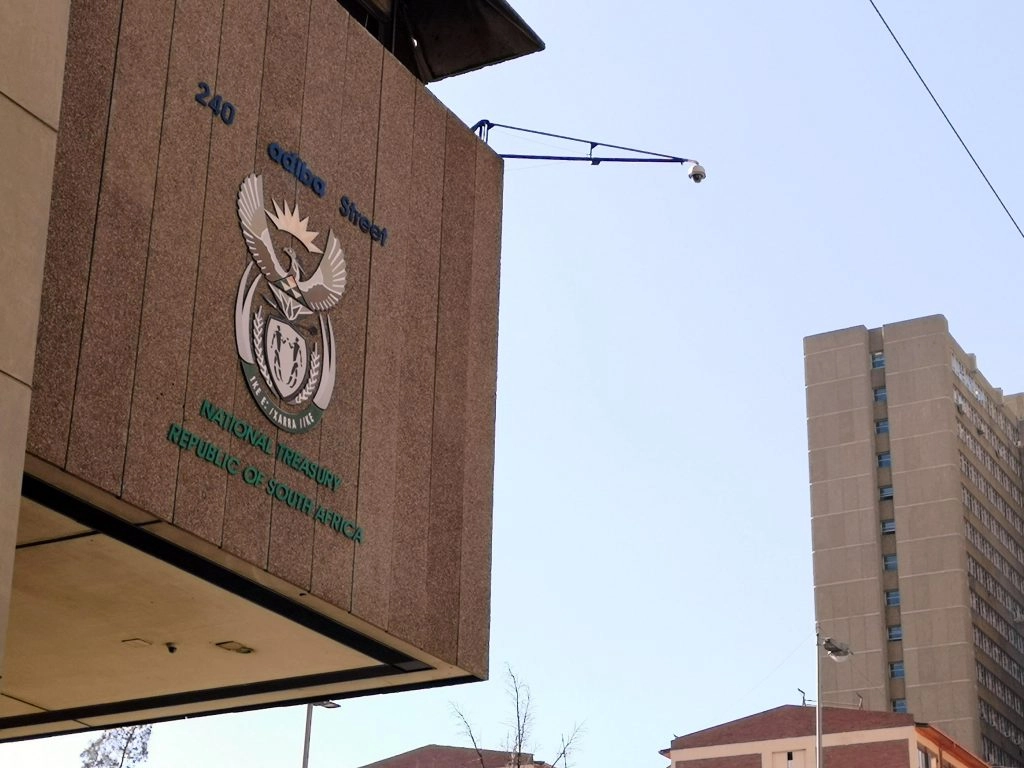
National Treasury announced on Tuesday that it is temporarily withholding the July 2026 equitable share transfers to dozens of municipalities across all nine provinces. The department confirmed the decision in a statement published through the Government Communication and Information System’s SAnews service.
The affected municipalities include the City of Johannesburg, Buffalo City, Nelson Mandela Bay and Mangaung. Treasury cited persistent and serious non-compliance with the Municipal Finance Management Act (MFMA) as the reason for the intervention.
The department invoked section 216(2) of the Constitution, read with section 38 of the MFMA, to justify the withholding. This constitutional mechanism allows Treasury to stop funds to any organ of state found in serious or persistent breach of financial management law.
Multiple outlets that reviewed the Treasury statement, including Daily Maverick, IOL and Daily Dispatch, put the total number of affected municipalities at 69. Moneyweb and the Mail & Guardian described Johannesburg as one municipality among 70 affected in total, a discrepancy likely stemming from whether Johannesburg is counted inside or alongside the list of other councils. Treasury’s own statement did not provide an exact figure, describing the group only as “dozens” of municipalities.
Councils were given written notice before the decision and were invited to submit reasons why their funds should not be withheld. Treasury described the move as corrective rather than punitive.
Why it matters
The intervention affects municipalities responsible for basic services, including water, electricity, sanitation and road maintenance, for millions of South Africans. Equitable share transfers are a core funding mechanism that supplement revenue municipalities collect from rates and service fees.
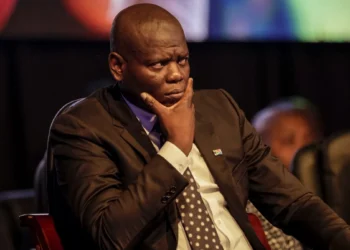
Johannesburg’s inclusion carries particular weight. The city contributes close to a sixth of South Africa’s gross domestic product, and its finances have been under sustained scrutiny since April, when Finance Minister Enoch Godongwana wrote to mayor Dada Morero demanding the city scrap a R10.3 billion, two-year wage agreement signed with the South African Municipal Workers’ Union.
Godongwana described that agreement as illegally signed and warned it could threaten the city’s long-term sustainability. Johannesburg’s leadership pressed ahead regardless, and the city’s council approved a R97.1 billion budget for the 2026/27 financial year in May despite Treasury’s objections.
The timing places the decision squarely ahead of local government elections scheduled for November. Polling has shown the African National Congress at risk of losing its position as the largest party in Johannesburg to the Democratic Alliance, and opposition parties were quick to frame Tuesday’s announcement as vindication of long-standing warnings about the metro’s governance.
ActionSA leader Herman Mashaba said the decision confirmed his party’s concerns about the city’s financial trajectory, linking it to the wage agreement and the metro’s broader spending record. The South African Local Government Association said it was aware of Treasury’s statement and would communicate its position in due course.
Key details and figures
Treasury grounded its decision in the Auditor-General’s 2024/25 Consolidated General Report on Local Government Audit Outcomes. According to figures cited in the department’s statement:
Municipalities have incurred R24.12 billion in fruitless and wasteful expenditure since the 2021/22 financial year. Irregular expenditure over the same period reached R145.21 billion, with R40.14 billion incurred in 2024/25 alone. Unauthorised expenditure totalled R118.13 billion since 2021/22, more than half of it on non-cash budget items.
Budget credibility has also deteriorated. In 2024/25, 116 municipalities, or 45 percent of the total, adopted unfunded budgets, up from 113 the previous year. By the same year-end, municipalities collectively owed R3.40 billion in interest to Eskom and R1.21 billion to water boards. Forty-eight municipalities had third-party statutory deductions overdue by more than a month.
Treasury said many municipalities have failed to process cases of unauthorised, irregular, fruitless and wasteful expenditure through their Municipal Public Accounts Committees, leaving those oversight structures largely non-functional. The department said this pattern amounts to a dereliction of fiduciary duty by both political and administrative leadership.
For Johannesburg specifically, Treasury’s April correspondence to the city, later reported by Daily Maverick, described creditor debt of roughly R25 billion against cash reserves of about R4 billion, alongside R22 billion in irregular spending flagged separately from the wage dispute.
What happens next
Treasury said transfers will resume once affected municipalities meet specific conditions and submit proof of compliance. According to Daily Maverick’s account of the conditions, municipalities must show at least a 25 percent reduction in their unauthorised, irregular, fruitless and wasteful expenditure balance as measured against unaudited draft financial statements for 2025/26, with progress assessed over the first quarter of the new municipal financial year.
Municipalities must also demonstrate that disciplinary boards are lawfully constituted and functioning, and that financial misconduct cases have been referred, recorded and acted on. Mayors of municipalities that adopted unfunded budgets in 2025/26 have been asked to commit in writing to never repeating this from 2026/27 onward.
Bloomberg’s reporting, carried by BusinessTech, added that municipalities must also produce signed payment arrangements with creditors before Treasury releases funds equivalent to outstanding invoices, adjusted for any prior shortfalls.
Treasury said it does not expect the short-term withholding to disrupt service delivery. Whether that holds for Johannesburg, which has already suspended some road maintenance over fuel costs and continues to owe money to Eskom and Rand Water, remains to be tested in the coming weeks.
Morero’s office did not respond to requests for comment sent by Bloomberg and the Mail & Guardian at the time of their reporting. It remains unclear whether Johannesburg or other affected municipalities will meet Treasury’s conditions before the November elections.