






What we know so far
The National Treasury published the draft General Public Procurement Regulations, 2026, for public comment on 16 April 2026, setting out detailed operational rules that would bring the Public Procurement Act of 2024 into force. The 102-page draft regulations, gazetted in Government Gazette No. 54528, represent the first comprehensive overhaul of South Africa’s public procurement system in more than two decades.
At the centre of the proposed framework is a significantly expanded set of black economic empowerment requirements for companies seeking government contracts. Bidders will be required to demonstrate that at least 40% of their prior procurement spending was directed to enterprises that are at least 51% owned and managed by black persons. They must also subcontract at least 30% of the estimated contract value to South African citizens.
For the first time under the new framework, failure to meet these BEE thresholds will constitute grounds for automatic exclusion from all state contracts. Under previous procurement regulations, non-compliance carried penalties but did not trigger outright disqualification at the pre-qualification stage.
The regulations also introduce a mandatory Prospective Supplier Database. Every company wishing to bid for government work must self-register before submitting any tender, disclosing ownership details, beneficial ownership structures, banking information and compliance records. Any entity flagged on a debarment list will be blocked automatically.
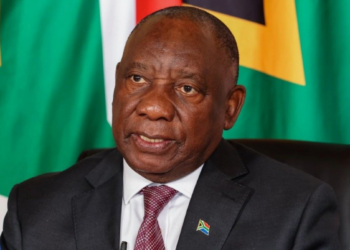
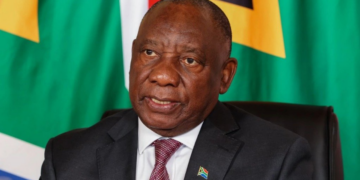
The draft regulations were published under section 63(1) of the Public Procurement Act 28 of 2024, which President Cyril Ramaphosa assented to on 18 July 2024. The Act has not yet come into operation and cannot take effect until the supporting regulations are finalised and a commencement date is proclaimed by the President.
Why it matters
South Africa’s government spends approximately R1 trillion annually on goods and services through public procurement. The draft regulations will determine how that money flows and which companies are eligible to receive it.
Critics argue the proposed rules will narrow the pool of eligible suppliers so severely that the state will be forced to pay inflated prices for goods and services. The DA’s finance spokesperson, Mark Burke, said in a statement on 21 April 2026 that the regulations amount to a doubling down on policies that have already proven destructive.
Burke argued that when competition for tenders is reduced to a small subset of companies meeting prescriptive ownership criteria, those companies can charge a premium. He said the government willingly pays more than it should, rather than prioritising quality at the lowest price, and that taxpayers ultimately carry the cost.
Research cited by Burke from the Free Market Foundation estimates that BEE already costs the South African economy R290 billion in direct compliance costs and lost economic activity. The state bears a significant portion of this through inflated procurement prices, as companies pass BEE compliance costs onto their final buyer.
Supporters of the regulations, however, say the framework is long overdue. The private sector coalition Pharmaceuticals Made in South Africa (Pharmisa) has argued that previous procurement rules allowed importers to front as local producers, undermining local manufacturing and gradually deindustrialising key sectors.
The Black Business Council’s Kganki Matabane told TimesLIVE that previous legislation did not allow for set-asides where only black-owned or women-owned businesses could bid, resulting in critical infrastructure contracts being captured by established and foreign companies. Matabane welcomed the regulations but criticised Treasury for taking nearly two years to develop them after the Act was signed.
Key details and figures
The draft General Public Procurement Regulations contain several structural changes beyond the headline BEE requirements.
Procuring institutions will be required to develop strategic procurement plans aligned with national development goals and the Medium-Term Expenditure Framework. Formal bid committee systems must be established, and independent gateway reviews will be mandatory for major projects. Public officials involved in procurement must meet prescribed competency requirements and adhere to ethical standards.
The regulations place a high premium on local content and beneficiation. Government institutions must include measures in their procurement policies to advance local production over imported goods. Bidders will be required to demonstrate how their contracts will create jobs for South African citizens, including targets for employment within specified geographical areas.
On unsolicited bids, the regulations set guardrails requiring that any such proposal must involve an innovative product or cost-effective new method of service delivery. Government departments must conduct a comprehensive feasibility study and publish an expression of interest to test the market before accepting an unsolicited bid.
The Solidarity Research Institute’s Theuns du Boisson has pointed to National Treasury’s own estimates that up to 40% of public procurement spending is wasted through fraud, inflated pricing and intermediary structures. Du Boisson argued that the new regulations expand preferential procurement requirements rather than addressing these underlying problems.
Solidarity deputy chief executive Anton van der Bijl said the regulations would significantly increase procurement costs by shrinking the available supplier base. He noted that companies meeting the BEE thresholds would face few practical constraints on what they charge for goods and services.
Due to the length and complexity of the draft regulations, National Treasury has extended the public comment period. Written submissions on the draft General Public Procurement Regulations must be received by 15 June 2026, sent to [email protected]. Submissions on the separate draft Public Procurement Tribunal Regulations were due by 15 May 2026.
What happens next
The constitutional validity of the underlying Public Procurement Act itself faces a direct challenge at the Constitutional Court. The matter is set down for hearing on 18 and 19 May 2026. The case was originally brought by the Premier of the Western Cape and the City of Cape Town, with Solidarity and investigative journalism unit amaBhungane subsequently admitted as parties.
The challengers argue that Parliament’s process in passing the Act was fundamentally flawed. AmaBhungane has detailed how the legislative timelines were compressed to push the Bill through before the May 2024 general election, how public hearings were held the day after submission deadlines closed, and how National Treasury introduced an entirely new chapter to the legislation after public submissions had been received.
Solidarity’s case focuses on the constitutional principles of fairness, efficiency and accountability. The trade union has described the government’s decision to issue new regulations under the Act while its constitutionality is being challenged as a significant escalation.
The DA has confirmed it will oppose the regulations in Parliament and has taken the underlying Act to the Constitutional Court. Burke stated that the party is also mobilising public awareness around the fiscal impact of the proposed framework.
If the Constitutional Court strikes down the Public Procurement Act, the draft regulations would fall with it. If the Act survives, the regulations could be amended following the public comment period before final promulgation. No commencement date for the Act has been proclaimed.
The outcome of the May hearing, combined with the public comment process closing on 15 June, will determine whether these procurement rules reach the statute books in their current form.