






What we know so far
South Africa inflation jumped to 5.0% in June 2026 from 4.5% in May, the highest reading in two years, Statistics South Africa announced on Wednesday.
The last time the annual rate was higher was June 2024, when it stood at 5.1%.
Prices rose 0.7% on average between May and June, matching the increase recorded between April and May.
Fuel is the driver. Stats SA said “transport was the largest contributor to both the annual and monthly changes” in the consumer price index.
The annual rate for transport accelerated to 12.7% in June from 9.4% in May.
Fuel prices climbed 34.3% in the 12 months to June, made up of a 50.8% increase in diesel and a 31.7% increase in petrol.
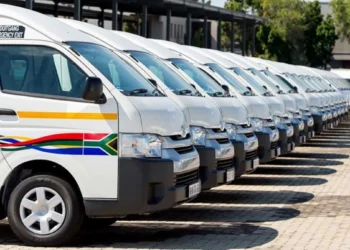
Passenger transport inflation rose 8.1% month on month in June, meaning taxi and bus operators are already passing the cost through.
The figure arrives a day before the South African Reserve Bank’s Monetary Policy Committee announces its next interest rate decision on Thursday.
What South Africa inflation at 5% means for your money
The number that matters most is not 5.0% on its own. It is the distance between 5.0% and where the Reserve Bank is required to keep it.
South Africa replaced its long-standing 3% to 6% inflation target range in 2025 with a point target of 3%, carrying a tolerance band of one percentage point either side. That gives an effective ceiling of 4%.
June’s 5.0% is therefore a full percentage point above the top of the band, not a reading comfortably inside a wide range as it would have been under the old framework.
That distinction matters for household budgets because it shapes what the Monetary Policy Committee does with the SARB Policy Rate, the instrument previously known as the repo rate, which feeds directly into bond and vehicle finance repayments.
The committee has already moved once. At its May 2026 meeting it raised rates for the first time in three years, on a split vote of four to two.
Governor Lesetja Kganyago said at the time that in adverse conditions “it is crucial that central banks maintain their credibility” and prevent higher inflation from becoming entrenched.
The Reserve Bank then revised its forecast for average 2026 inflation to 4.4%, up sharply from the 3.7% it had projected in March.
June’s 5.0% print sits above that revised path, which is what makes Thursday’s decision consequential rather than routine.
Key details and figures
The June 2026 consumer price index in detail:
| Measure | June 2026 |
|---|---|
| Annual headline inflation | 5.0% |
| May 2026 comparison | 4.5% |
| Monthly change | 0.7% |
| Transport, annual | 12.7% |
| Fuel, annual | 34.3% |
| Diesel, annual | 50.8% |
| Petrol, annual | 31.7% |
| Passenger transport, monthly | 8.1% |
Food told a mixed story rather than a uniform one.
Pork, tomatoes, sausages, corned meat and hake recorded the largest annual increases. Seasonal fruit, beetroot, white rice, potatoes and dried beans recorded the largest annual decreases.
Black tea rose 8.3% over the year and instant coffee 7.0%.
Rent is surveyed quarterly and was updated in June. Actual rents rose 1.1% from the March quarter, taking the annual increase to 4.1%.
Within that, rent rose 5.4% for townhouses, 4.6% for flats and 3.7% for houses.
June marks a fourth consecutive month of acceleration. Annual inflation ran at 3.1% in March, 4.0% in April, 4.5% in May and 5.0% in June.
The starting point makes the climb steeper than it looks. Inflation averaged 3.2% in 2025, a 21-year low, and the headline rate was 3.0% as recently as February 2026.
One factor is holding the figure down rather than pushing it up. The Reserve Bank noted in its April 2026 Monetary Policy Review that temporary relief measures, including a R3 per litre reduction in the fuel levy, should moderate the near-term inflation impact of higher oil prices.
The Bank attributed the deterioration in the outlook to higher global energy prices driven by the escalating Middle East conflict, and cautioned that sustained Brent crude above $100 a barrel could keep inflation above target until the fourth quarter of 2028.
What happens next
The Monetary Policy Committee announces its decision on Thursday, 23 July. The committee meets six times a year.
Bank of America analysts expect a 25 basis point increase at that meeting.
The Reserve Bank’s own projections have inflation averaging 4.4% this year, easing to 3.7% in 2027 and returning to the 3% target in 2028.
Two things will determine whether that path holds. The first is the oil price and the rand, both of which sit outside the Bank’s control.
The second is the fuel levy relief. Because the R3 per litre reduction is described as temporary, its eventual withdrawal would add to pump prices at whatever point it lapses. No date for that has been published.
The diesel figure is worth watching more closely than the petrol one. Diesel moves freight, farm equipment and backup generation, so a 50.8% annual increase feeds into food and goods prices with a lag rather than immediately.
That lag means the food basket, which softened in parts during June, may not stay soft.
The next consumer price index release covering July 2026 is due from Stats SA in August, and the producer price index for June follows shortly after the CPI, giving an early read on cost pressure at the factory gate.
Stats SA publishes the CPI under release code P0141 and makes the full historical series available through its time series data.