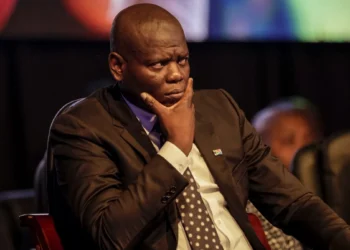

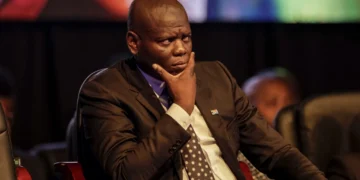


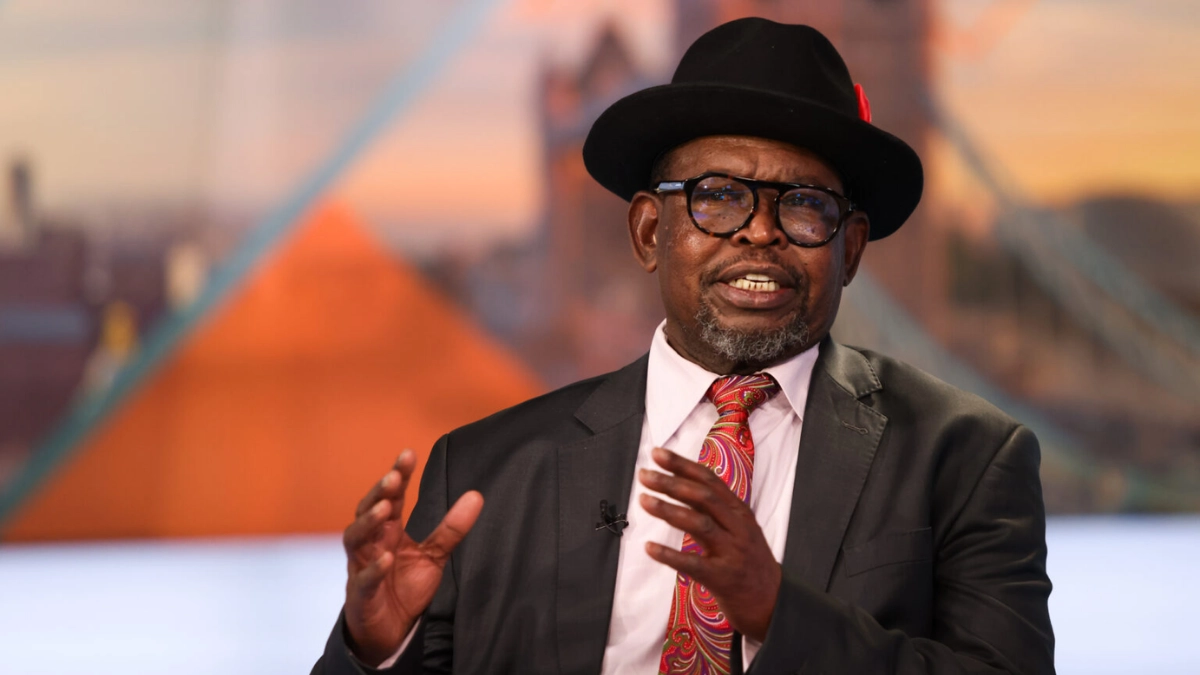
Finance Minister Enoch Godongwana has confirmed that the United States refused to accredit his delegation and that of South African Reserve Bank Governor Lesetja Kganyago for the G20 Finance Ministers and Central Bank Governors Meeting scheduled for 16 April in Washington, leaving Africa’s only full G20 member without representation at the table.
Godongwana disclosed the accreditation refusal during a transit stop at Amsterdam’s Schiphol Airport on Sunday, as he travelled to Washington to attend the broader International Monetary Fund and World Bank Spring Meetings. Speaking to Bloomberg, he confirmed the consequence was comprehensive. “We are members of the G20. However, the US has not accredited us, which means that South Africa will not be part of the G20 for the whole of this year,” he said.
National Treasury spokesperson Mfuneko Toyana confirmed the development on Monday. “Neither the minister nor any South African officials will be attending,” Toyana said.
The Department of International Relations and Cooperation did not characterise the situation diplomatically. DIRCO Director-General Zane Dangor, speaking at the Cape Town Press Club on Monday, called the exclusion a formal violation of the G20’s own rules. South Africa is not a guest of the G20, he argued. It is a founding member, and its participation at ministerial level is a right the host nation cannot unilaterally remove.
What we know so far
The United States assumed the G20’s rotating annual presidency from South Africa in late 2025 and will pass it to the United Kingdom at the end of 2026. As the current presidential host, Washington controls the administrative and logistical processes attached to each ministerial gathering held under its presidency, including accreditation.
No formal mechanism exists within the G20 to expel a member state, but control over accreditation for host-organised meetings gives the presiding country effective gating power over who participates in specific ministerial tracks. Godongwana drew a precise distinction. He described South Africa’s situation not as an expulsion but as a “lock-out,” an administrative measure that leaves membership formally intact while preventing the country from exercising it.
Dangor confirmed that South Africa had formally raised the matter at a recent G20 Sherpas meeting, the forum attended by senior government representatives who manage the summit process and negotiate communiques on behalf of their principals. The issue remained unresolved at the time of his Cape Town Press Club remarks.
Dangor also disclosed that France had signalled it would raise South Africa’s exclusion at the next G20 forum, marking the first public commitment from a fellow G20 member to contest the situation formally.
Godongwana will attend the IMF and World Bank Spring Meetings, which run from 13 to 18 April in Washington. Those proceedings are separate from the G20 ministerial meeting and operate under different accreditation arrangements. His presence at the IMF and World Bank sessions does not change South Africa’s absence from the G20 finance ministers’ table on 16 April.
Why it matters
South Africa is Africa’s only full G20 member. The continent’s other presence in the forum is through the African Union, which holds a permanent seat added in 2023 but does not carry the same institutional weight as a founding bilateral member.
The G20 Finance Ministers and Central Bank Governors Meeting is a principal forum at which global economic policy positions are shaped ahead of the heads-of-state summit. The discussions that take place at ministerial level influence international monetary cooperation, debt relief frameworks for developing nations, trade and investment policy positions, and the agenda that eventually reaches G20 leaders. South Africa’s absence means it will have no direct voice in those deliberations during the US presidency, and no access to the bilateral and corridor conversations that typically occur alongside formal sessions.
Dangor argued that the precedent itself carries systemic risk beyond South Africa’s individual situation. If a host nation can selectively deny accreditation to a full member, other G20 members face the possibility of identical treatment in future presidencies. France’s decision to formally raise the matter reflects that concern, not only solidarity with Pretoria.
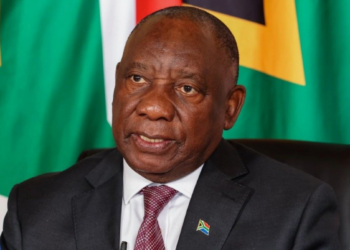
The exclusion also arrives against a backdrop that has already reshaped South Africa’s international positioning. In March 2026, France withdrew its invitation to President Cyril Ramaphosa to attend the G7 Leaders’ Summit in Evian-les-Bains in June, following what Presidency spokesperson Vincent Magwenya described as sustained pressure from the United States. South Africa’s former ambassador to Washington was declared persona non grata by the Trump administration in early 2025. US aid to South Africa was cancelled by executive order. A 30 percent blanket tariff was imposed on South African exports to the United States, though that rate was subsequently rendered defunct by a court ruling.
Key details and figures
The G20 Finance Ministers and Central Bank Governors Meeting is scheduled for 16 April 2026 in Washington, DC.
The IMF and World Bank Spring Meetings run from 13 to 18 April 2026 in Washington, DC.
The G20 groups 19 major economies, the European Union, and the African Union. Its membership accounts for approximately 80 percent of global GDP and two-thirds of the world’s population.
South Africa is a founding member and Africa’s only full bilateral G20 member.
The United States took over the G20 presidency from South Africa in late 2025. The United Kingdom will assume the presidency in late 2026.
In November 2025, US President Donald Trump announced on social media that South Africa would not receive an invitation to the 2026 G20 Leaders’ Summit in Miami. That announcement followed the US boycott of South Africa’s G20 Leaders’ Summit in Johannesburg in November 2025, at which Washington sent a junior embassy official to the handover ceremony rather than a senior representative. South Africa declined to recognise that official as a legitimate counterpart for the G20 presidency transfer.
Germany, China, the United Kingdom, France, Canada, and Brazil had all previously expressed concern about the principle established by South Africa’s exclusion, with several members warning it could set a precedent affecting other member states.
What happens next
The G20 Finance Ministers and Central Bank Governors Meeting will proceed on 16 April without South African representation. Godongwana is expected to conduct separate engagements on the sidelines of the IMF and World Bank Spring Meetings in Washington during the same period.
France has committed to raising South Africa’s exclusion formally at the next G20 meeting. Whether that produces a formal response from the US or from the broader G20 membership ahead of the Miami summit remains to be seen.
Godongwana indicated that South Africa’s strategy is to wait out the US presidency and re-enter full G20 participation under the UK presidency from late 2026. “We are beginning in November with the UK presidency,” he said.
Dangor’s framing suggests Pretoria will continue contesting the exclusion through formal G20 governance channels rather than treating it as settled. Whether diplomatic resolution is possible while the US holds the presidency is unclear. No formal written response from the US Embassy in South Africa had been received by publication time.
The situation represents a material shift in South Africa’s international standing. It is no longer hypothetical that Pretoria could be locked out of the forum where global economic decisions are shaped. For this year at least, it has been.