








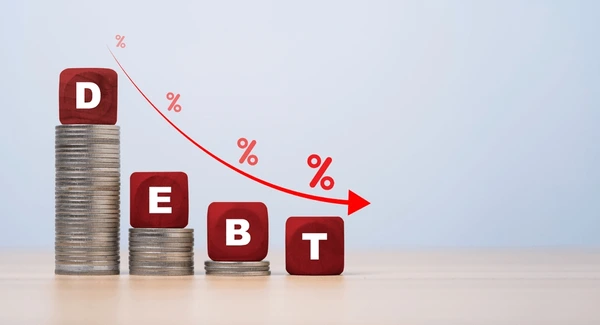
South Africa’s government debt is expected to stabilise this financial year for the first time since the period following the 2008 global financial crisis, with National Treasury projecting a shift from a long run of rising debt ratios to a gradual decline over the medium term.
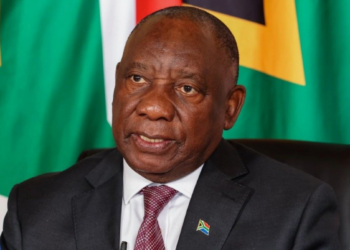
Finance Minister Enoch Godongwana delivered the 2026 Budget Speech in Parliament on 25 February and said government has reached a turning point in managing the public finances, pointing to a smaller deficit, a strengthening primary balance and easing debt service pressure relative to revenue.
What the Budget 2026 numbers show
The core signal from Treasury is that debt has reached its peak as a share of the economy. The Budget Speech projects gross debt stabilising at 78.9% of gross domestic product in 2025/26, then falling to 77.3% in 2026/27 and declining further to 76.5% by 2028/29.
At the same time, Treasury is projecting a continued improvement in the fiscal balance. The consolidated budget deficit is expected to narrow to 4.5% of GDP in 2025/26, down from the 4.8% estimated in the 2025 Budget, and then fall to 4.0% in 2026/27 and 3.1% the year after.
The mechanism underpinning the debt stabilisation claim is the primary balance, which is the budget balance before interest costs. In the Budget Speech, Treasury projects the main budget primary surplus reaching 0.9% of GDP in 2025/26, rising to 1.6% in 2026/27, 1.9% in 2027/28 and 2.3% by 2028/29.
A key nuance is that stabilising debt as a share of GDP does not mean total debt is shrinking in rand terms. Treasury’s Budget Review projects the debt stock rising from about R6.12 trillion in 2025/26 to about R6.94 trillion in 2028/29, while the debt ratio falls because nominal GDP is expected to grow faster than debt accumulation.
Why debt stabilisation matters for households and businesses
Debt stabilisation is closely watched because it can change the cost of funding government and, by extension, the cost of funding parts of the economy. When debt rises faster than the economy for long periods, interest costs tend to take up a larger share of revenue, leaving less room for infrastructure, services and social spending.
Treasury’s Budget Review notes that debt service costs are revised down compared with prior projections and that, as a share of revenue, debt service costs are expected to peak in 2025/26 before declining. It also projects debt service costs averaging 5.2% of GDP over the medium term.
For business, the debt path can influence bond yields, credit spreads and perceptions of sovereign risk. Treasury reports that yields on government bonds of all maturities fell below 9% by the end of January 2026 for the first time since March 2018, and links the improved funding environment to stronger investor confidence and reduced perceptions of risk.
What changed compared with last year’s outlook
Treasury’s Budget Review attributes part of the improvement to better fiscal outcomes during the first 10 months of 2025/26 and to lower refinancing pressures through liability management tools such as its bond switch programme. It states that the gross borrowing requirement for 2025/26 was revised down to R563.4 billion from the 2025 Budget projection of R588.2 billion.
The Budget Review also points to a supportive market backdrop, including South Africa’s first sovereign credit rating upgrade in 16 years from S&P Global Ratings in November 2025, and a narrower sovereign risk premium than a year earlier.
Reuters reported that Godongwana has also linked the improved fiscal picture to stronger domestic demand and favourable commodity dynamics, while emphasising that fiscal consolidation alone is not enough without faster growth to lift investment and employment.
Treasury’s strategy to keep debt on a declining path
Treasury’s published framework describes a medium term fiscal strategy focused on growing the main budget primary surplus while supporting economic growth and sustaining public investment.
The Budget Speech also cites weaker nominal GDP growth as one reason the debt peak is slightly higher than earlier projections, and notes a decision to take advantage of strong investor demand by increasing issuance in 2025/26.
In practical terms, Treasury’s approach depends on maintaining spending discipline while keeping revenue performance stable, and ensuring that reforms supporting growth continue. If growth underperforms, the debt ratio can rise again even with fiscal restraint because tax revenue growth weakens and debt service costs can become heavier.
Risks that could derail the stabilisation
The debt outlook is still exposed to shocks, especially those that affect growth, borrowing costs and the exchange rate. Treasury’s Budget Review highlights contingent liabilities and guarantees as ongoing fiscal risks. It projects the total government guarantee amount increasing to R661 billion by 31 March 2026, with the increase mainly linked to additional guarantees issued to Transnet during the financial year.
Global conditions also matter. If international interest rates stay higher for longer or if global risk aversion rises, emerging market borrowing costs can increase quickly. Domestic constraints, including logistics capacity, policy execution risk, and the pace of reform in energy and transport, can influence whether the projected growth improvements materialise.
What happens next
The immediate marker for markets is whether Treasury’s assumptions hold through the next set of fiscal updates, including the Medium Term Budget Policy Statement later in the year. Investors will also watch for details on any longer term fiscal anchor and how government plans to manage contingent liabilities while funding infrastructure and core public services.
For now, the official budget documents present a clear headline shift: debt is projected to stop rising as a share of GDP this year and to edge down over the next three years, ending a 17 year run of rising debt ratios.