





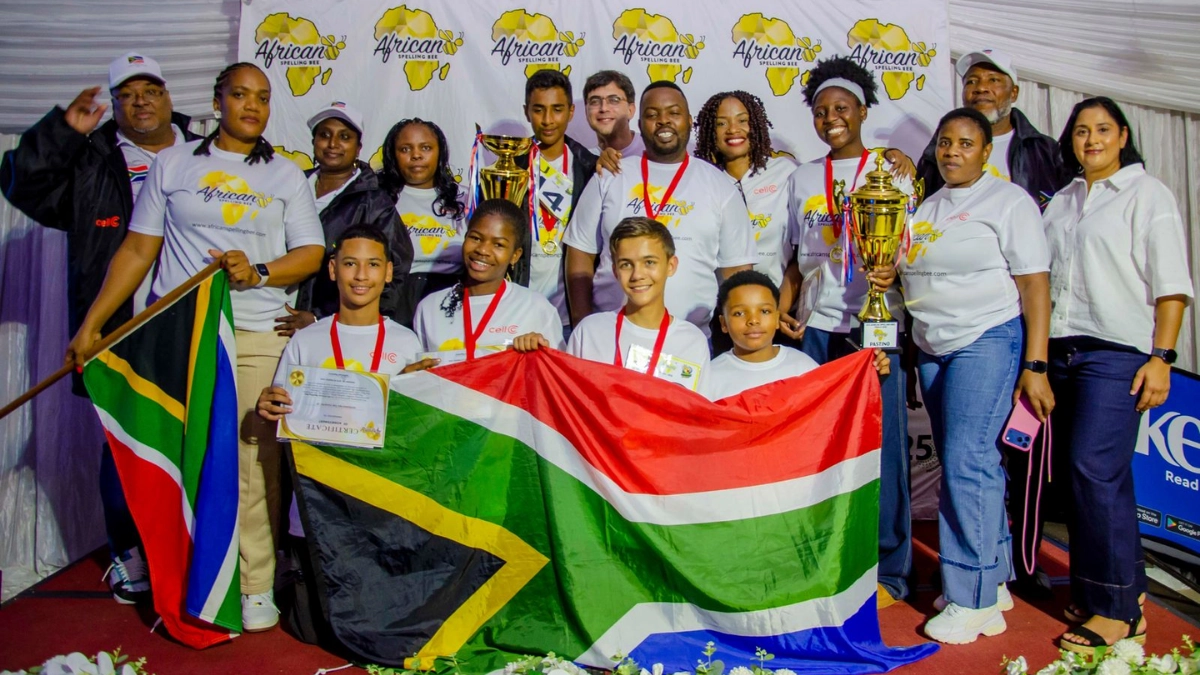
South Africa’s national spelling team has been crowned the best in Africa after finishing first in the overall team rankings at the 8th African Spelling Bee in Harare, Zimbabwe. The Department of Basic Education said Team South Africa topped the continental standings at the competition, which ran from 18 to 21 March 2026, with Nigeria finishing second and Zimbabwe third.
The result is a meaningful literacy story, not just a feel-good school victory. The DBE says spelling bee competitions strengthen vocabulary, reading comprehension and critical thinking, while also helping build a stronger reading culture among learners. That makes the Harare win relevant beyond the trophy itself, especially in a country where literacy improvement remains a national education priority.
The stronger and more accurate angle here is not that a single learner won an isolated title. The verified record shows that South Africa won the overall team competition against 10 other African countries, with six learners representing the country after reaching the finals of the 2025 National Spelling Bee at Sun City. One of those learners, Ashton Singh, also placed second in the Junior Division.
What we know so far
The DBE’s official report says 11 African countries each brought six top champions to Harare to compete for the continental title. South Africa’s team consisted of Ashton Singh from KwaZulu-Natal, George van Wyngaard from Gauteng, Mbulelo Tolom from North West, Rhyle Adams from the Western Cape, Ifeoma Osondo from the Western Cape and Xilumbi Xivuri from Limpopo.
The department says the competition tested more than standard English spelling. In line with the African Spelling Bee’s effort to be a “truly African” contest, learners had to spell words drawn from English as well as 21 African languages. The DBE highlighted examples such as griot, Moshoeshoe and Ouidah, showing that the challenge required pronunciation, memory and cultural knowledge as well as spelling ability.
That matters because the competition’s design supports a broader educational purpose. Rather than treating spelling as rote learning alone, the format pushes learners to engage with language, sound, meaning and African heritage. That makes the South African team’s victory more substantial than a narrow classroom exercise. It was a win in a contest built around multilingual and culturally grounded literacy.
Why it matters
The DBE’s reading director, Dr Nompumelelo Nyathi-Mohohlwane, said participation in spelling bee competitions plays a vital role in literacy development because it enhances vocabulary, improves reading comprehension and fosters critical thinking. She added that such competitions motivate learners to read widely, engage with diverse texts and develop a deeper appreciation for language.
That is consistent with the DBE’s longer-standing approach to the programme. The department’s Spelling Bee South Africa material says the national championship is aimed at improving learners’ performance in languages and promoting a love of reading through reading clubs and spelling activities. In other words, the Harare result fits into an established literacy strategy rather than being a once-off extracurricular success.
There is also a national pride element to the win. Inside Education reported that South Africa edged Nigeria by just 0.1% in what officials described as a tightly contested final, ending Nigeria’s run of dominance over the previous four years. While that margin detail appears in secondary reporting rather than the DBE’s own summary, it helps explain why the result is being treated as such a major achievement.
The result also speaks to how learners progress through the South African system before reaching a continental stage. The North West education department said Mbulelo Tolom earned his place in Team South Africa by winning the 2025 South African National Spelling Bee finals at Sun City, after moving through school, cluster, local education area, district and national competition levels. That pathway underlines how much competitive filtering sits behind a six-person team.
Key details and figures
The central figures in this story are clear. Eleven countries competed, each with six champions, and South Africa finished first overall in Harare. Nigeria placed second, Zimbabwe third, and Ashton Singh secured second place in the Junior Division for South Africa.
The composition of Team South Africa is also important because it shows national spread. The six learners came from KwaZulu-Natal, Gauteng, North West, Western Cape and Limpopo, reflecting representation across multiple provinces rather than a single-region team. That gives the win a stronger national character and supports the idea that the result belongs to the broader school system, not just one province or school.
Another important detail is what the team achieved next. The DBE quoted South African Spelling Bee CEO Roger Dickinson as saying this is not the end of the journey, and that the next step is for Team South Africa to represent the country at the World Spelling Bee Championships in Shanghai in mid-July 2026. That means the Harare win is both an endpoint and a qualifying step toward a bigger global competition.
For Southafriworld readers, the practical value of the story is larger than the title “champions”. It shows that literacy competitions can produce measurable educational outcomes, give learners national and continental exposure, and build confidence in language learning at a time when reading proficiency remains a major issue in South African education. The DBE’s own framing makes clear that the department sees spelling bees as part of a serious literacy pipeline, not just a ceremonial event.
What happens next
The immediate next phase is the world stage. According to the DBE’s official article, Team South Africa is now due to represent the country at the World Spelling Bee Championships in Shanghai in mid-July 2026. That shifts the story from a continental result to an international test, with Harare now serving as proof that South Africa can compete with the strongest spelling teams in Africa.
For now, the safest editorial conclusion is narrow and factual. South Africa has been crowned the best spelling team in Africa after winning the overall team rankings at the 8th African Spelling Bee in Harare. The official record supports that result clearly, and it also shows why the victory matters: it is being treated by the DBE as a literacy achievement, a reading-culture success and a springboard to world competition.