










South Africa played a real but carefully defined role in Artemis II’s safe return to Earth. NASA confirmed on 10 April 2026 that Orion splashed down in the Pacific Ocean off the coast of San Diego at 5:07 p.m. PDT, bringing astronauts Reid Wiseman, Victor Glover, Christina Koch and Jeremy Hansen home after a nearly 10-day mission around the Moon. But the splashdown itself was only the final visible moment. Behind it sat a global tracking and communications chain that included the South African National Space Agency’s Hartebeesthoek facility.
The stronger and more accurate angle here is not that South Africa recovered the capsule from the ocean or single-handedly “saved” the mission. The verified record shows something narrower and more important: SANSA contributed tracking and navigation support as part of an international network that helped NASA know where Orion was, how fast it was moving and whether it remained on the right path during critical mission phases, including the return leg to Earth.
What we know so far
NASA says Artemis II was the first crewed Artemis flight and the first human trip around the Moon in more than half a century. The mission launched on 1 April 2026 and ended on 10 April 2026 after traveling 252,756 miles from Earth at its farthest point, making it a record-setting human lunar flyby. NASA said the spacecraft’s entry, descent and landing systems performed as designed and that the crew returned safely after the test flight.
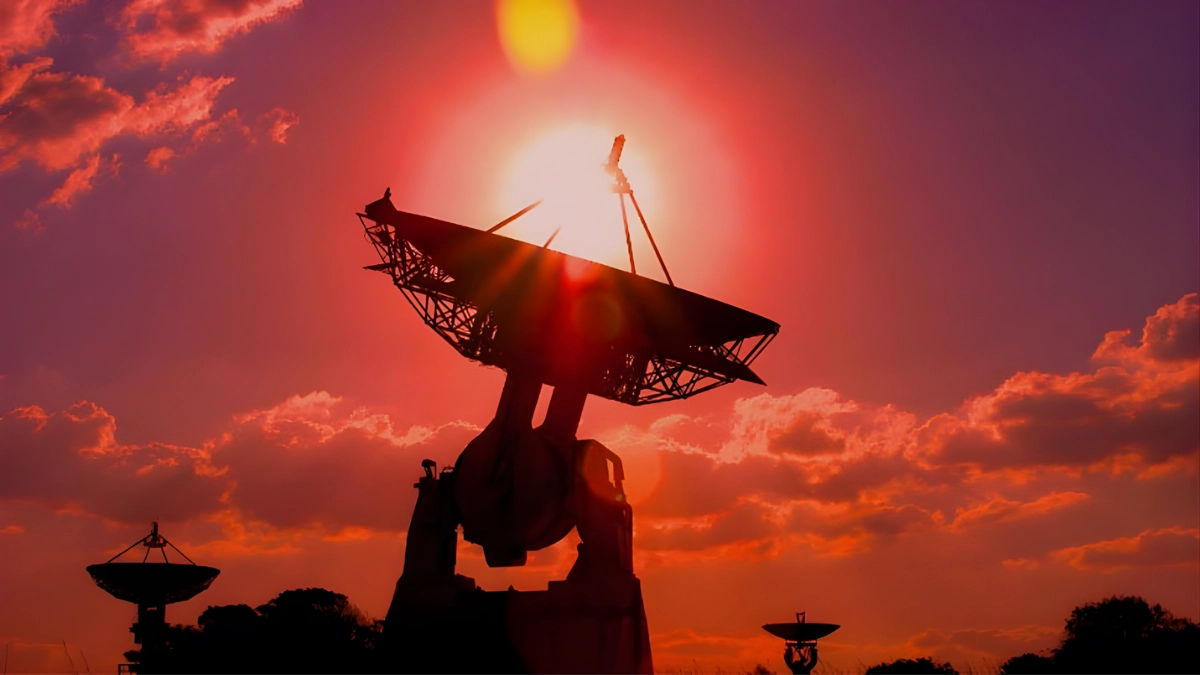
The South African piece of the story comes from SANSA’s Hartebeesthoek station in Gauteng. In an on-the-record interview with News24, SANSA Space Operations executive director Raoul Rogers said the agency’s antennas and engineers were part of the effort to bring Artemis II home safely, relaying real-time information through an international partner into NASA’s systems during mission-critical windows. He said SANSA’s job was to track, listen and make sure the spacecraft was where it was supposed to be.
That claim fits the broader official NASA communications architecture for Orion missions. NASA has previously stated that Orion’s lunar journeys rely on both the Near Space Network and the Deep Space Network, and that the Near Space Network’s navigation services for Orion’s trips to and from the Moon extend through ground stations in Santiago, Chile, and Hartebeesthoek, South Africa. NASA said those stations provide navigation data during outbound and return phases so engineers can track Orion’s trajectory accurately.
NASA’s newer Artemis II communications briefing, published in January 2026, did not list every ground station by name, but it did say Artemis II depended on global infrastructure, relay satellites, the Near Space Network and the Deep Space Network to keep Orion connected from launch through return. That means South Africa’s role should be understood as part of a larger international system rather than as a standalone national operation.
Why it matters
Tracking matters because deep-space missions are not guided by guesswork. NASA has explained that navigation services show flight controllers where spacecraft are along their trajectory through space. In Orion’s case, that matters especially during course corrections and the return from the Moon, when even small errors in position or velocity can affect how and where the spacecraft comes back toward Earth.
Rogers told News24 that ranging and Doppler data allow engineers to determine where the spacecraft is and how fast it is moving, which in turn informs decisions about whether the capsule is safe to bring into the atmosphere and where it will splash down. He said those measurements become especially important around re-entry, where the entry angle must be precise: too steep and the spacecraft risks burning up, too shallow and it can skip away from the atmosphere.
That is why the phrase “helped bring Artemis II home” is justified, but only when used carefully. South Africa’s contribution was in the tracking-and-data layer that supports mission safety and precision, not in the Pacific recovery operation. The United States Navy ship USS John P. Murtha handled post-splashdown recovery, while the spacecraft’s safe path home depended on a much larger technical system spanning multiple countries and networks.
The story also matters because it places South Africa back into a lineage many readers may not realise still exists. Rogers said South Africa’s relationship with NASA in space tracking dates back to 1963, when a US tracking station operated locally and later supported Apollo-era missions. That long arc is also reflected in NASA and SANSA’s formal partnership documents, which say Hartebeesthoek played a role in Apollo support and that South Africa is again being positioned as part of the infrastructure behind Artemis-era lunar exploration.
Key details and figures
The key mission figures are straightforward. Artemis II launched on 1 April 2026, flew around the Moon, reached 252,756 miles from Earth at its farthest point, and splashed down on 10 April 2026 at 5:07 p.m. PDT off San Diego. NASA described the mission as the first crewed Artemis flight and a major step toward later lunar surface missions.
The key South African operational detail is that SANSA worked through a third-party contractor feeding data into NASA’s systems in real time, according to Rogers. He also said SANSA’s antennas lock onto the spacecraft during specific windows and then hand over to the next station in the chain, illustrating the relay nature of modern spaceflight support.
There is also a forward-looking infrastructure angle. SANSA and NASA renewed their lunar exploration partnership in 2022 around the development of a new Matjiesfontein ground facility, and SANSA announced in 2024 that the site would host a NASA Lunar Exploration Ground Sites antenna. SANSA says the Matjiesfontein project is meant to expand South Africa’s role in direct-to-Earth communications and navigation support for Artemis and later lunar operations.
That future context matters because Hartebeesthoek, while important, is not yet the same scale as NASA’s Deep Space Network. Rogers told News24 that SANSA’s roughly 12-metre antennas are more limited in range and data throughput than NASA’s largest deep-space dishes. The country’s current contribution is therefore technically significant, but also part of a larger effort to grow South Africa’s role in the global deep-space network.
What happens next
The immediate next step is not another Artemis II milestone, because that mission is now complete. The more important follow-through is what South Africa’s role in Artemis support becomes from here. NASA says Artemis II has now shifted focus toward Artemis III and the long-term return to the lunar surface, while SANSA is building out Matjiesfontein as a future deep-space communications site linked to lunar exploration.
For Southafriworld readers, the clearest conclusion is narrow and factual. South Africa helped Artemis II return home by contributing tracking and navigation support through SANSA’s Hartebeesthoek operations as part of an international network, while NASA handled the overall mission and final recovery. That makes this a credible South African science and technology story, not because the country was the headline actor, but because it was a real operational partner in one of the most important space missions of 2026.