





Health Committee begins clause-by-clause work on the Tobacco Bill
South Africa’s new smoking laws have entered the stage where the detail is decided. Parliament’s Portfolio Committee on Health has begun clause-by-clause deliberations on the Tobacco Products and Electronic Delivery Systems Control Bill, moving the years-long, repeatedly delayed legislation closer to reality.
The committee started processing the Bill this week after voting in favour of its desirability in June, a step that put the committee in line to send the Bill to the National Assembly and ultimately to the President.
The first session focused specifically on the preamble and definitions of the Bill. Smokers’ rights, illicit trade and the regulation of newer nicotine products were among the issues under scrutiny, with MK Party MP Moshome Motubatse calling for the reference to a precautionary approach in regulating electronic nicotine delivery systems to be removed.
Committee chairperson Faith Muthambi said the work on the preamble and definitions “brings us closer to fulfilling our commitment to implement a clear differentiation within the law.” She commended the broad alignment among all political parties represented in the committee.
What would change for smokers, vapers and spaza shop owners
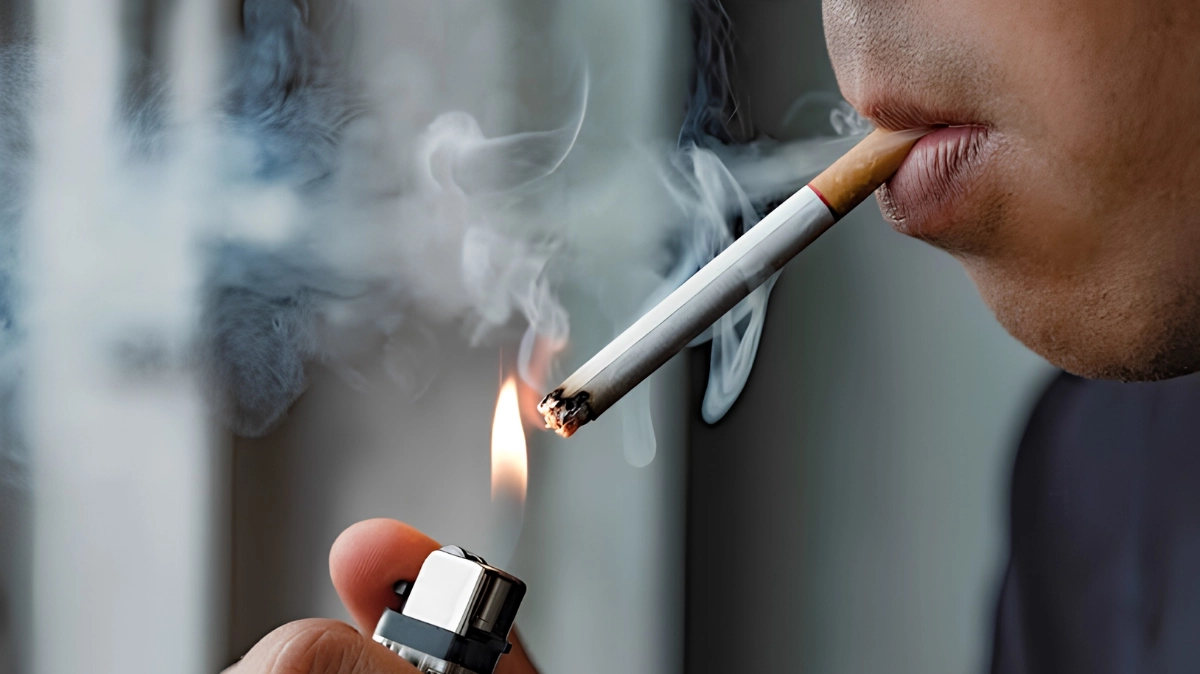
The Bill as tabled reaches into daily life. It seeks to ban indoor smoking and vaping in public spaces, enforce plain packaging with graphic health warnings, remove all retail product displays, prohibit advertising, sponsorship and promotion, restrict sales through vending machines including in certain private spaces where children or non-smokers are present, and treat vaping products the same as traditional cigarettes. Violations would carry penalties including fines and lengthy jail terms.
The Bill as drafted would also introduce jail time and heavy fines for cigarette and vape manufacturers that sell to minors, punish smokers and vapers who disturb neighbours in private dwellings, ban advertising at points of sale, and restrict online sales of tobacco products.
Several of those provisions are now in play. MPs are planning to amend the Bill to soften its restrictions on vapes, allow informal traders to continue selling single cigarettes, and strip out some of the harshest penalties, with Democratic Alliance health spokesperson Michele Clark saying the DA and ANC study groups had met and agreed on certain concessions.
For a spaza shop owner, the single cigarette question is the difference between a legal line of trade and an offence. For a vape user, differentiation determines whether the product is regulated identically to a cigarette.
Where the Bill stands and how it got here
The legislative record so far:
| Stage | Detail |
|---|---|
| Bill first tabled | 2022 |
| Public hearings held | 27 municipalities across all nine provinces |
| Attendance at public hearings | Nearly 7,900 people |
| Oral submissions at hearings | 1,113 |
| Additional virtual submissions | 52 |
| Desirability vote | 24 June 2026, carried 10 to 1 of 11 members |
| Current stage | Clause-by-clause deliberations, preamble and definitions completed |
| Next stages | Committee report, then National Assembly debate, then the President |
Muthambi told the committee that the extent of public participation showed democracy in action. At the desirability vote she said the subject matter was desirable and that South Africa needs the law, but that the vote was not an endorsement of the text as it stands and was instead a mandate to improve it.
The definitional fight is the central one. In its current form the Bill treats combustible and non-combustible products through the same regulatory approach, and that is set to change, with Muthambi announcing that lawmakers have formally recognised the distinction between combustible and non-combustible products, which she called a key milestone.
She has said the Department of Health, in its responses to public comments in March 2026, officially accepted differentiation as a guiding principle and made some concessions and proposed amendments to that effect.
Illicit trade is the other pressure point. Stakeholders argued that stricter laws would push consumers to the black market, an outcome the sector experienced after the COVID-19 lockdown ban on cigarette sales. Muthambi said the committee accepts that illicit tobacco products seriously undermine tobacco control measures and represent a heightened public health risk, and that most committee members highlighted ratification of the Protocol to Eliminate Illicit Trade in Tobacco Products as crucial.
What still has to happen before anything takes effect
Nothing in the Bill applies yet. It remains a bill before a committee, and no provision binds anyone until it passes both Houses and is signed into law.
Several things are unresolved. The committee has not published a completion date for the clause-by-clause process, the final penalty structure has not been settled, the wording that will give effect to differentiation has not been adopted, and no date has been set for the National Assembly debate.
Members were asked to submit their proposed amendments to the secretariat, with the drafting team expected to work through the proposals as the committee continues its clause-by-clause consideration.
The next fixed markers are the committee’s deliberations on the remaining clauses, the adoption of its report on the Bill, and the National Assembly debate that follows.