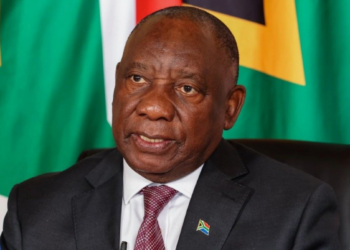
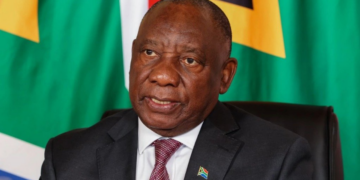
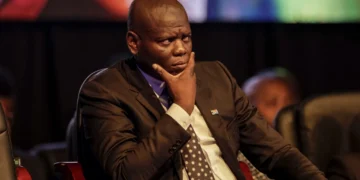




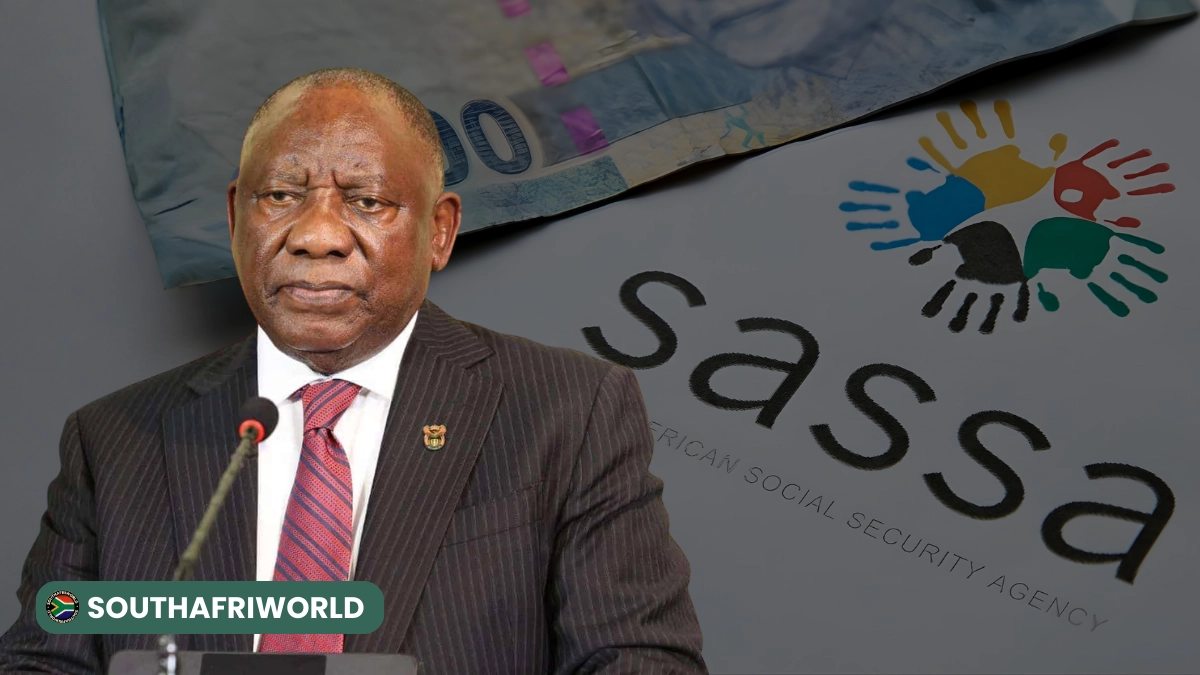
President Cyril Ramaphosa has set out a new direction for social assistance in South Africa, saying the government wants to redesign the Social Relief of Distress grant so it does more than provide temporary cash. Speaking at the News24 On The Record Summit in Cape Town on 19 March 2026, Ramaphosa said the grant should give unemployed South Africans broader support to search for work and sustain a livelihood.
The development is significant because it is the clearest public indication yet of how government wants to move from the Covid-era SRD grant towards a longer-term form of income support for working-age adults with no other protection. But the change is not immediate. No new grant amount, start date or final legal framework has been announced, and the current R370 SRD grant remains funded until 31 March 2027.
That means the main change for now is policy direction rather than implementation. Ramaphosa has now repeated, in stronger terms, what he first signalled in the 2026 State of the Nation Address: that the SRD grant will be continued and redesigned this year. The next step is policy refinement by the Department of Social Development, National Treasury, the Presidency and the Department of Employment and Labour, with government indicating it wants the work aligned before the 2026 Medium-Term Budget Policy Statement.
What we know so far
Ramaphosa’s latest remarks did not announce a brand-new grant already ready for payment. Instead, they described a redesign of the existing SRD system. At the News24 summit, he said government must strengthen the social protection system to reach unemployed South Africans with a basic level of support, and that redesigning the SRD grant would help recipients access a wider range of support to search for work and sustain livelihoods.
That message builds directly on the president’s State of the Nation Address of 12 February 2026. In that speech, Ramaphosa said the SRD grant had kept millions of South Africans out of food poverty since its introduction during Covid-19, that it would be continued, and that it would be redesigned this year to better support livelihoods, skills development, work opportunities and productive activity.
The Treasury documents published with the 2026 Budget show that government has not yet moved beyond the current SRD architecture. The Budget Review says the grant received an additional R36.4 billion to keep payments going until 31 March 2027 at the current value of R370 per beneficiary each month. The same document shows the state expects the SRD grant to serve about 8.2 million beneficiaries in 2026/27.
The 2026 Budget also makes clear that the SRD grant was treated differently from the other main grants this year. While the old age grant, disability grant and care dependency grant rose by R80 to R2,400, the child support grant and grant-in-aid rose to R580, and foster care increased in two steps, the SRD grant was left unchanged and merely continued in its current form over the year ahead.
This is an important distinction for the story. South Africa has not yet introduced a fully separate new social grant for unemployed adults. It is still using the SRD grant as the base while developing a more durable replacement or redesign.
Why it matters
The reason the policy matters is that South Africa’s grant system has long had a gap for working-age adults who are unemployed but do not qualify for support aimed at children, pensioners or people with disabilities. Treasury’s 2026 Estimates of National Expenditure says the Department of Social Development is finalising a longer-term support package for those aged 18 to 59 without income protection.
That makes the SRD redesign more than a routine administrative adjustment. It goes to the heart of how South Africa intends to support millions of unemployed people while still trying to connect them to skills, work opportunities and economic participation. Ramaphosa’s wording suggests government wants the future system to combine cash support with employment pathways instead of treating the grant as a stand-alone income transfer.
The fiscal and political stakes are also high. Treasury says social grants are allocated R292.8 billion in 2026/27 and form part of a broader social wage that supports 26.5 million beneficiaries. Any move from a temporary SRD arrangement to a more permanent support mechanism therefore has major consequences for public finances, eligibility rules and how government defines social protection for the unemployed.
It also matters because the policy is still unfinished. In the Budget Review’s response to Parliament, government said the policy paper on the future of the SRD grant was not ready in time for the 2026 Budget. It said the extension to March 2027 was specifically intended to give the state enough time to complete the policy work, and that the intention is to finish the refinement before the 2026 MTBPS.
That means households should read the president’s latest remarks as a sign of direction, not as an immediate payment announcement. The speech suggests a stronger push towards a jobseeker-linked or livelihood-linked support system, but the details that would define any new grant still need to be finalised.
Key details and figures
What Ramaphosa actually said
Ramaphosa said government must strengthen social protection to reach unemployed South Africans with a basic level of support. He added that by redesigning the SRD grant, recipients would have access to a wider range of support to search for work and sustain a livelihood.
What is already funded
The current SRD grant has not been replaced yet. Treasury allocated an extra R36.4 billion to keep it running until 31 March 2027 at R370 per month per beneficiary. Budget documents project about 8.2 million SRD beneficiaries in 2026/27.
What policy work is under way
Treasury’s 2026 Estimates of National Expenditure says the Department of Social Development is reviewing social security policy, updating the draft Basic Income Support policy to strengthen links to employment pathways and sustainable livelihoods, and finalising a longer-term support package for people aged 18 to 59 without income protection. The same document says R237.6 million over the medium term is allocated to this policy work, and that the department intends to submit the draft Basic Income Support policy to Cabinet for approval.
The broader grant backdrop
Government’s 2026 Budget increased most permanent grants but left SRD unchanged. The old age, disability and care dependency grants rose to R2,400, the war veterans grant to R2,420, foster care to R1,290 in April and R1,300 in October, and the child support grant and grant-in-aid to R580.
These figures matter because they show that the current debate is not about ordinary annual grant increases. It is about whether South Africa is ready to create a more durable income-support system for unemployed working-age adults, and how closely that system will be tied to work-seeking and skills development.
What happens next
The next phase will be policy and budgeting rather than immediate rollout. Government has already said the Department of Social Development is leading the process with National Treasury, the Presidency and the Department of Employment and Labour. The intention, according to the Budget Review, is to complete the refinement before the 2026 MTBPS, although no fixed final timeline has yet been announced.
That leaves several open questions. Government still needs to decide whether the redesigned support will remain inside the SRD framework or become a formally distinct grant, what the eligibility criteria will be, how it will be linked to job search or skills pathways, and how it will be financed over the longer term. None of those details has yet been settled publicly.
For now, the most accurate reading is that Ramaphosa has outlined a new social grant path rather than unveiled a finished new grant. The current SRD grant continues at R370 until March 2027, while government works on a broader support model aimed at unemployed South Africans who fall outside the traditional grant system.