





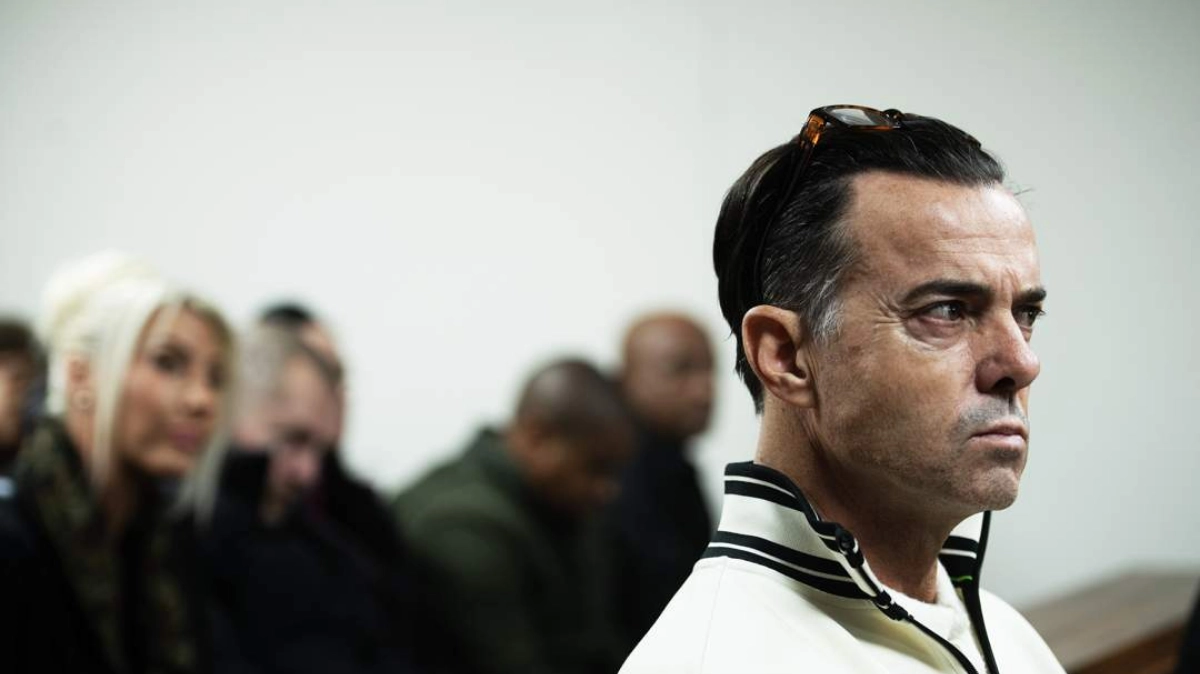
Peet Viljoen bail has been refused. Magistrate Nicca Setshogoe of the Pretoria Specialised Commercial Crimes Court delivered judgment on Monday, 17 August 2026, finding that the disbarred attorney and former reality television personality poses a flight risk. He remains in custody at Kgosi Mampuru II Correctional Centre. Viljoen faces more than 400 charges and denies all of them. None of the allegations has been tested at trial and he is presumed innocent.
How the case reached this point
| Date | Development |
|---|---|
| May 2010 | Alleged fraudulent sale of 46 City of Johannesburg-owned properties |
| 2017 | Viljoen and co-accused enter guilty pleas |
| April 2024 | Gauteng High Court in Pretoria sets those proceedings aside |
| May 2025 | Viljoen and his wife leave South Africa |
| 16 June 2026 | Arrested by the Hawks at OR Tambo after deportation from the United States |
| 8 July 2026 | Formal bail application begins |
| 23 and 24 July 2026 | Legal argument heard, judgment reserved |
| 17 August 2026 | Bail refused |
What the State alleges
The charges include fraud, corruption, theft, forgery and uttering. The Directorate for Priority Crime Investigation says that in May 2010 several properties owned by the Johannesburg Property Company were unlawfully sold to buyers who had no knowledge of the alleged scheme. The properties were transferred and sold, but the Johannesburg Property Company is alleged not to have received payment.
Prosecutors allege that forged sale agreements, municipal resolutions, powers of attorney and affidavits were used to move the properties. The alleged prejudice is about R27.6 million, involving 46 properties.
Prosecutor Willem van Zyl opposed bail on the basis that Viljoen is a flight risk and that his release would not serve the interests of justice. The State placed a bundle running to more than 480 pages before the court, and argued that Viljoen’s own social media posts, including statements that he would not return to South Africa, should weigh against him.
What the defence argued
Advocate Andre Steenkamp told the court that his client had come back to South Africa knowing he would be arrested on arrival, which he said showed the opposite of an intention to abscond. “He returned, yet he knew he would be arrested,” Steenkamp said.
The defence offered a bail package with house arrest at the home of Viljoen’s sister in Olympus, Pretoria, daily reporting to police and surrender of his passport. Reports of the cash amount offered differ: several outlets put it at R200 000, made up of R150 000 payable immediately and R50 000 already held from an earlier release, while at least one reported a figure of R250 000.
In an affidavit before the court, Viljoen said he intends to face trial and to pursue a civil claim against the National Prosecuting Authority. “I believe that the state’s case against me is weak and flawed,” his affidavit reads.
The correction on the rand figure
Some coverage of Monday’s ruling has put the alleged fraud at R276 million. The figure carried across the Hawks account and the bulk of court reporting since June is R27.6 million, tied to 46 municipal properties. Anyone citing this case should use R27.6 million unless the National Prosecuting Authority confirms otherwise.
What happens next
A refusal of bail is not the end of the road. Section 65 of the Criminal Procedure Act allows an accused to appeal a magistrate’s bail decision to the High Court. An accused may also bring a fresh application if genuinely new facts emerge.
The magistrate’s full reasons and the next date on which the matter returns to court had not been published at the time of writing. Southafriworld will update this article once the court record is available.
Viljoen was arrested on arrival in South Africa after being held in United States immigration custody, a route that has become more visible in South African courts, as seen in the case of an Interpol-wanted suspect arrested in South Africa earlier this year.